
Colombo
Rosmead Place by Thilanka
A small first stop in a quiet residential neighbourhood. Our driver needed a little time to find the entrance.
Search on Booking.com → NL
Asia · Country guide
Travelling through Sri Lanka with children, from our first morning in Colombo to the stories we brought home.
We spent eight weeks travelling through Sri Lanka with our daughters. It is Shamila’s birthplace, giving the trip a personal connection. These are our experiences along the way and the practical things other families might find useful.
See our route ↓Itinerary · 2023
Our 2023 route map shows the journey around the island. Use it to choose which part you would like to explore further.
Tap a numbered pin to find the stories from that place.
Read how the trip began →From place to story
Choose a place that interests you. Open the story to read our full experience and see the photos.
 Our full travel storyColombo with kids
The Rosmead Place by Thilanka is a boutique hotel near the centre. It was full of art and looked very modern. Our room was lovely, the beds were comfortable and the smell of breakfast woke us up. After sleeping off the jet lag until eight, we ventured downstairs. Nowhere are our children greeted with as much affection as in Sri Lanka.
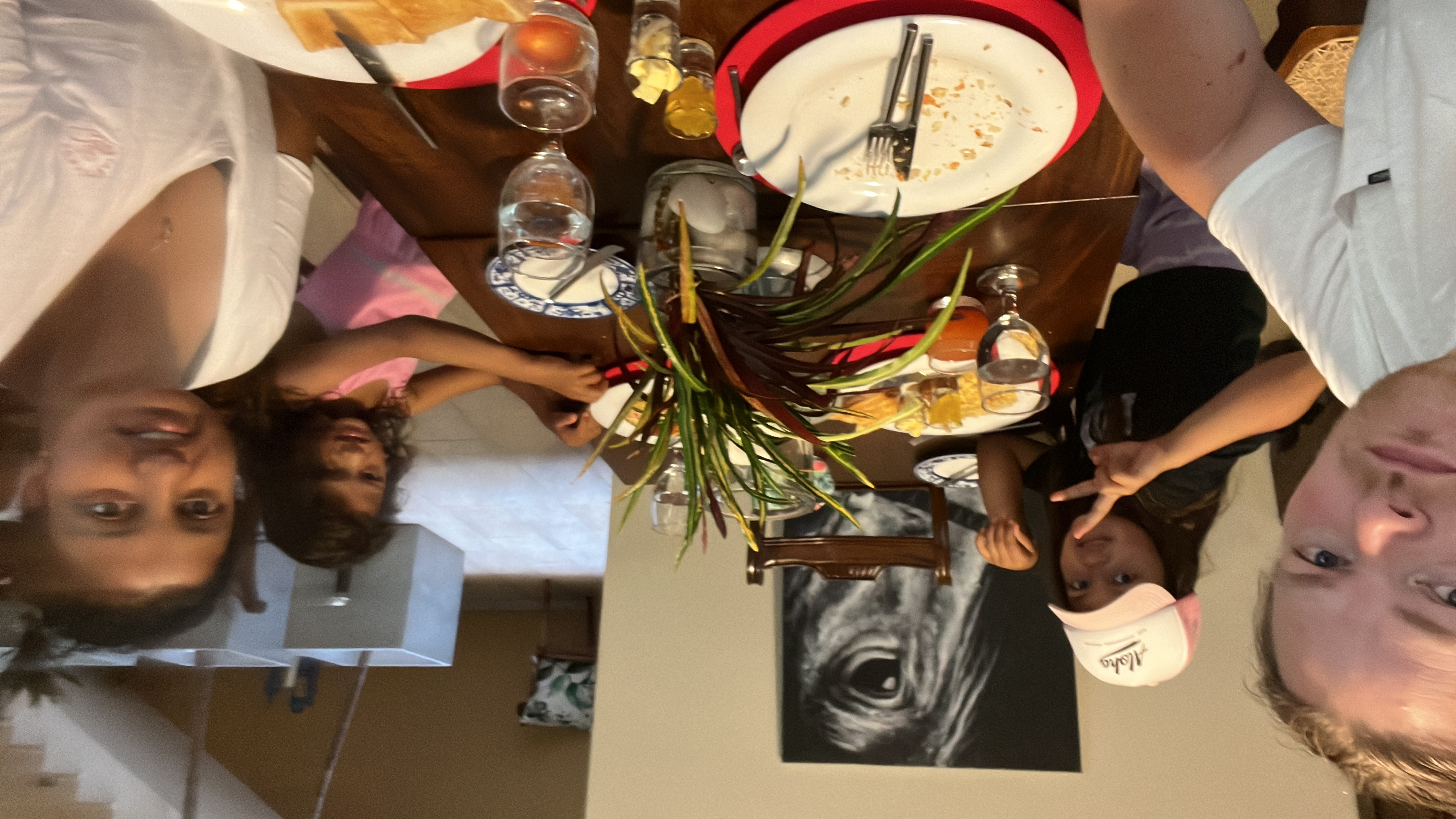
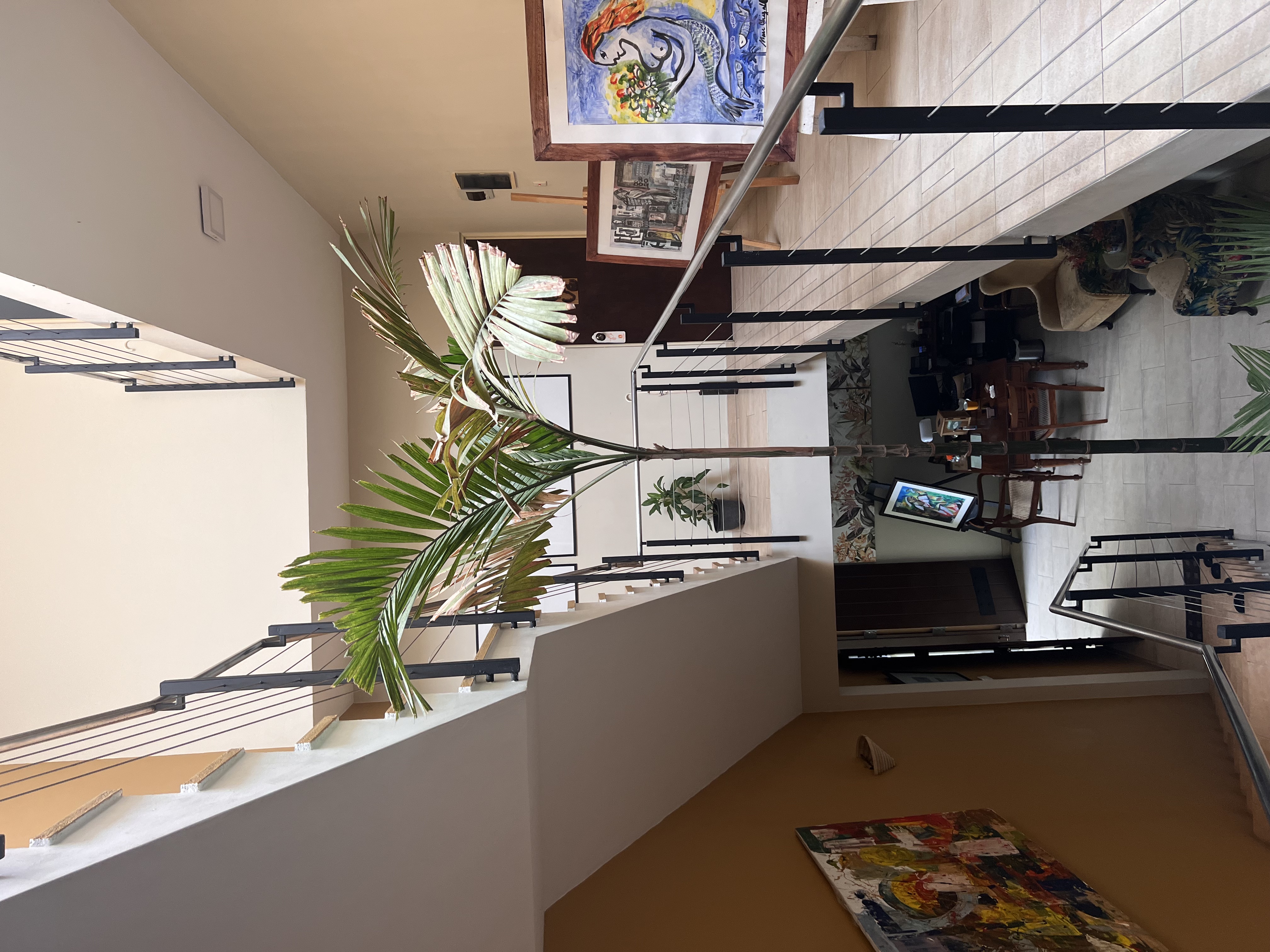
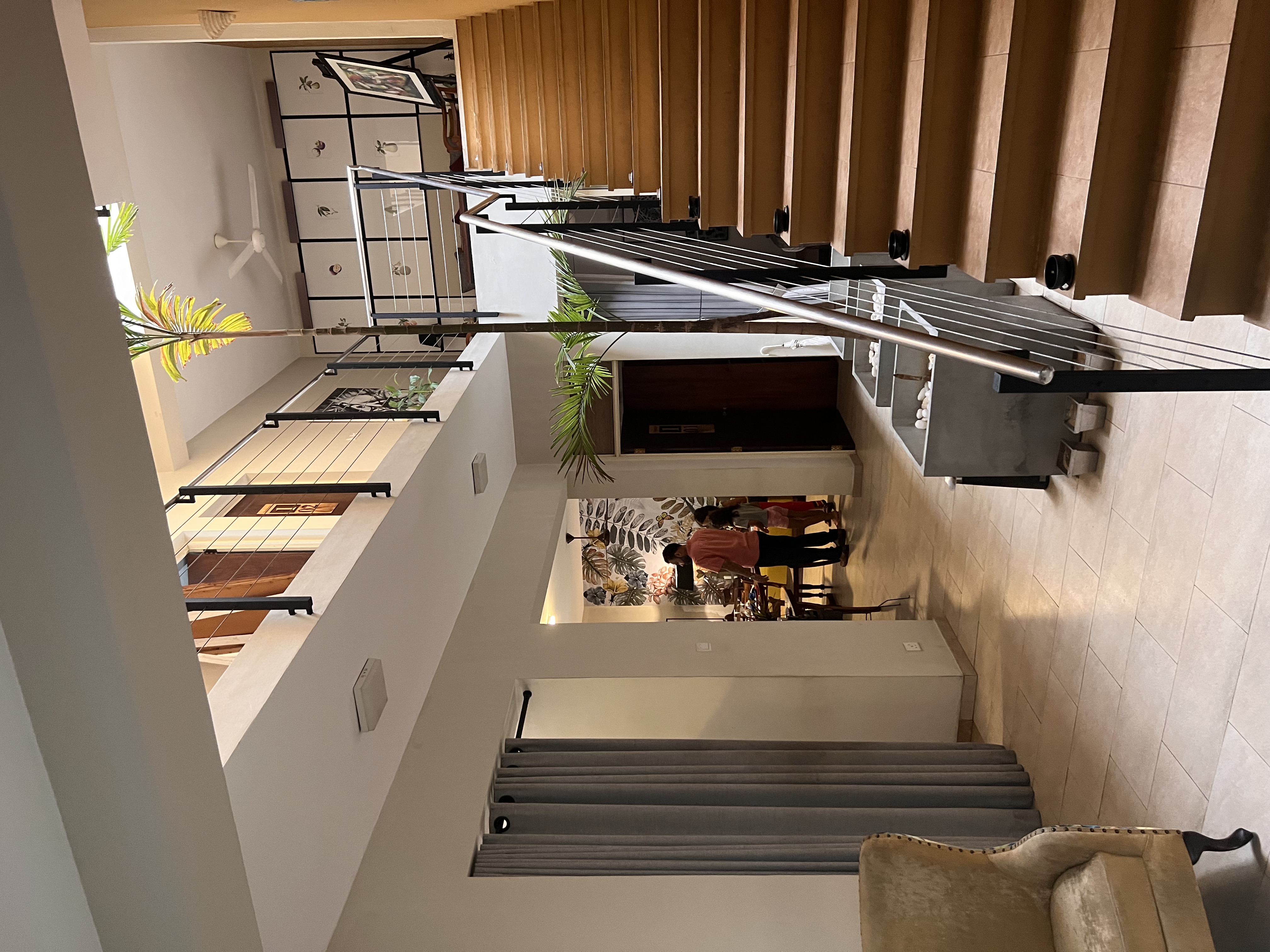
The dining area was open, with beautifully laid tables and large planters full of greenery, indoors and out. The hotel felt like an oasis in the city. Breakfast included fruit and fresh juices, ideal for children who enjoy fruit.
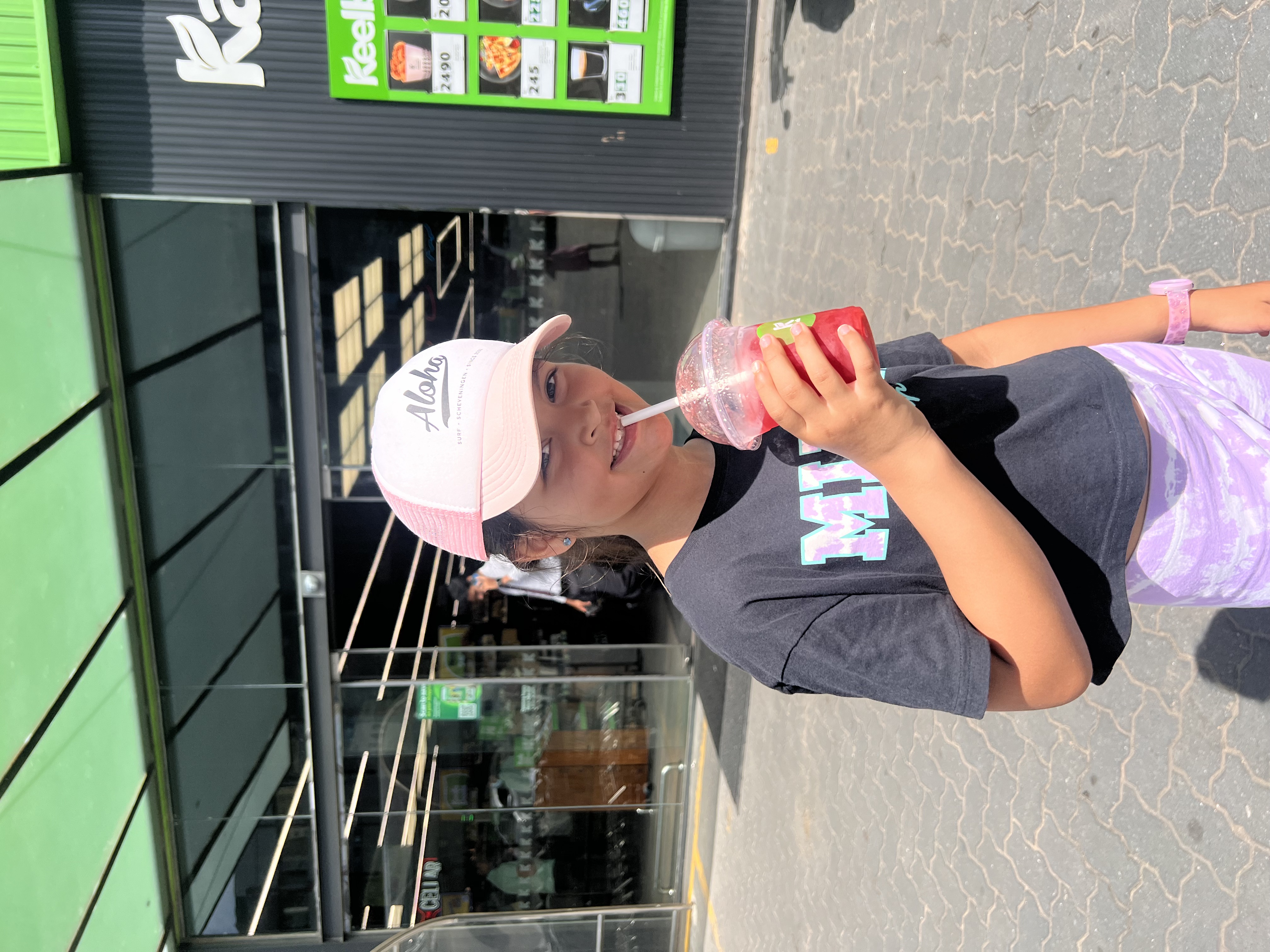
After breakfast, we began our day in Colombo with the children. First stop was Keells supermarket, a short walk away. It was large, with fresh produce and handheld scanners, much like Albert Heijn at home. I mention that because some people imagine the whole of Sri Lanka as desperately poor and old-fashioned. Colombo showed another side.
It was reassuring for the children to find something familiar in new surroundings. We bought cold water and biscuits for later. Jaïra chose a cup of fresh watermelon juice. At seven, she mainly drank water, milk or tea, so fresh fruit juice with no added sugar was a real treat for her.
LOTUS TOWER
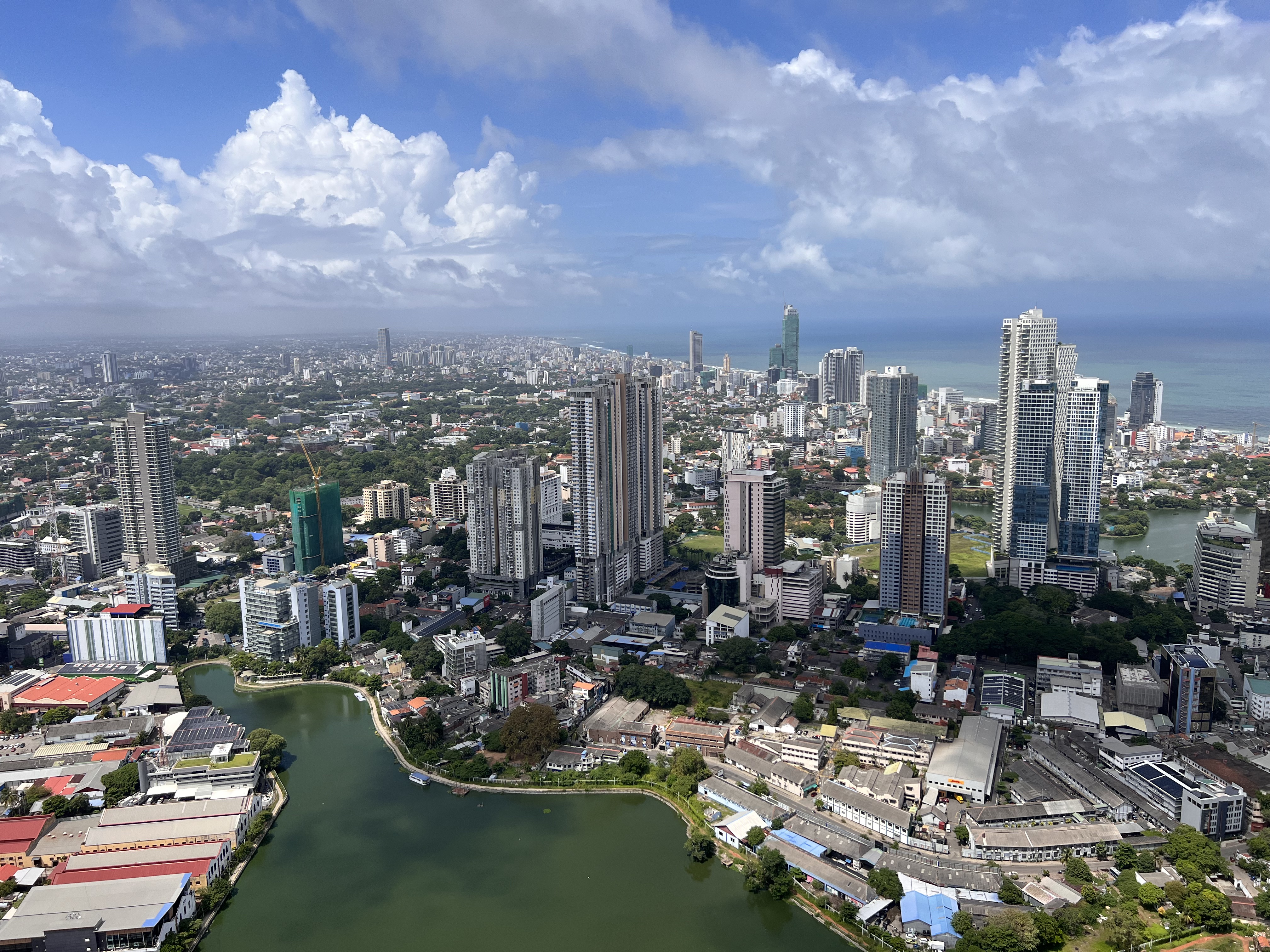
After the supermarket, we headed north around Beira Lake. On its northern side stood the 350-metre Lotus Tower. The Chinese-funded project was intended as a technological landmark. It had also attracted allegations of corruption and questions about the transparency of its contracts. Several Sri Lankans spoke openly to us about their concerns over Chinese influence.
Even so, visiting the tower seemed a good way to get our bearings in Colombo.
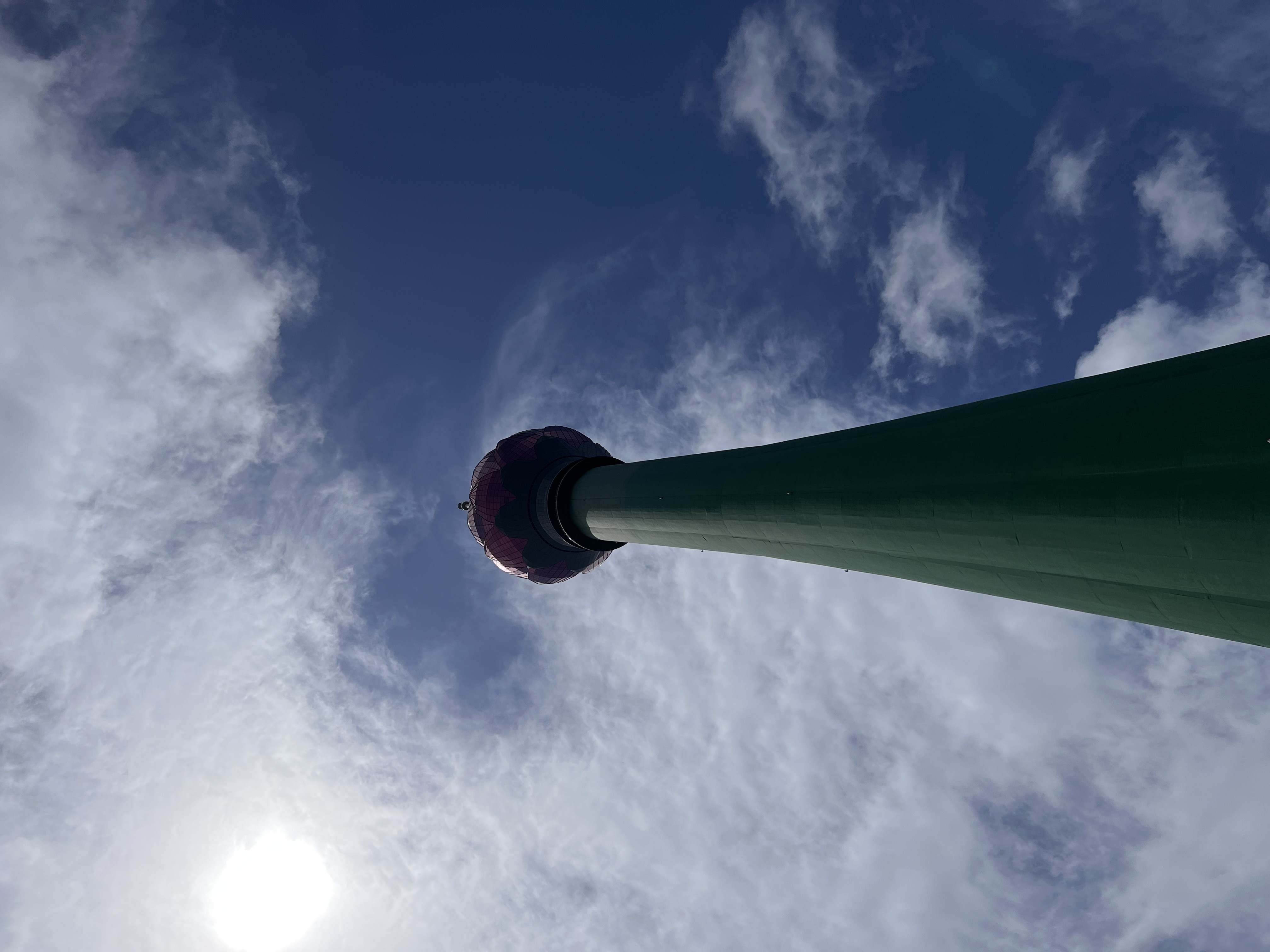
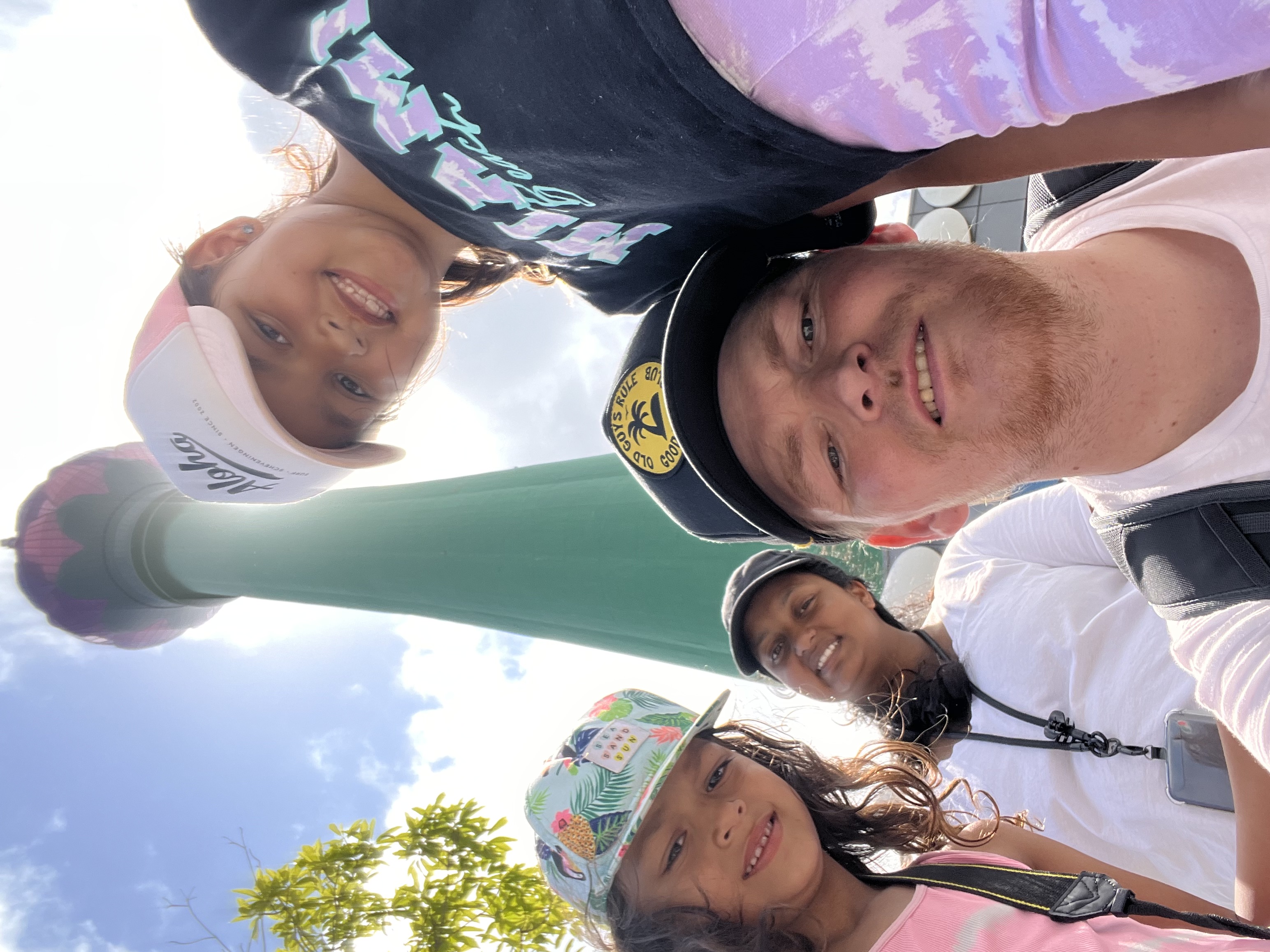
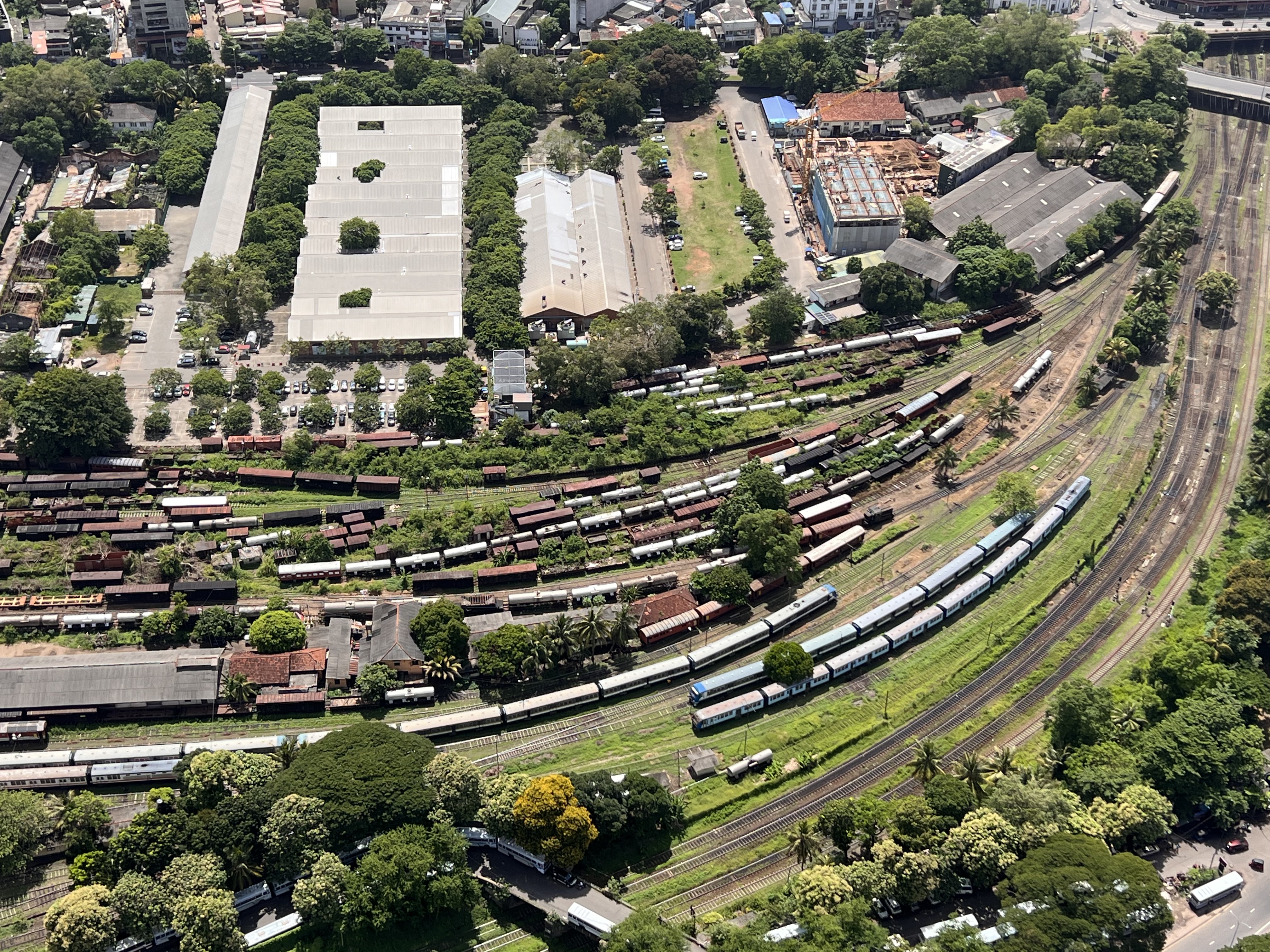
It was relatively expensive:20 US dollars per adult and 10 per child at the time.
Colombo’s historic Wolvendaal Church
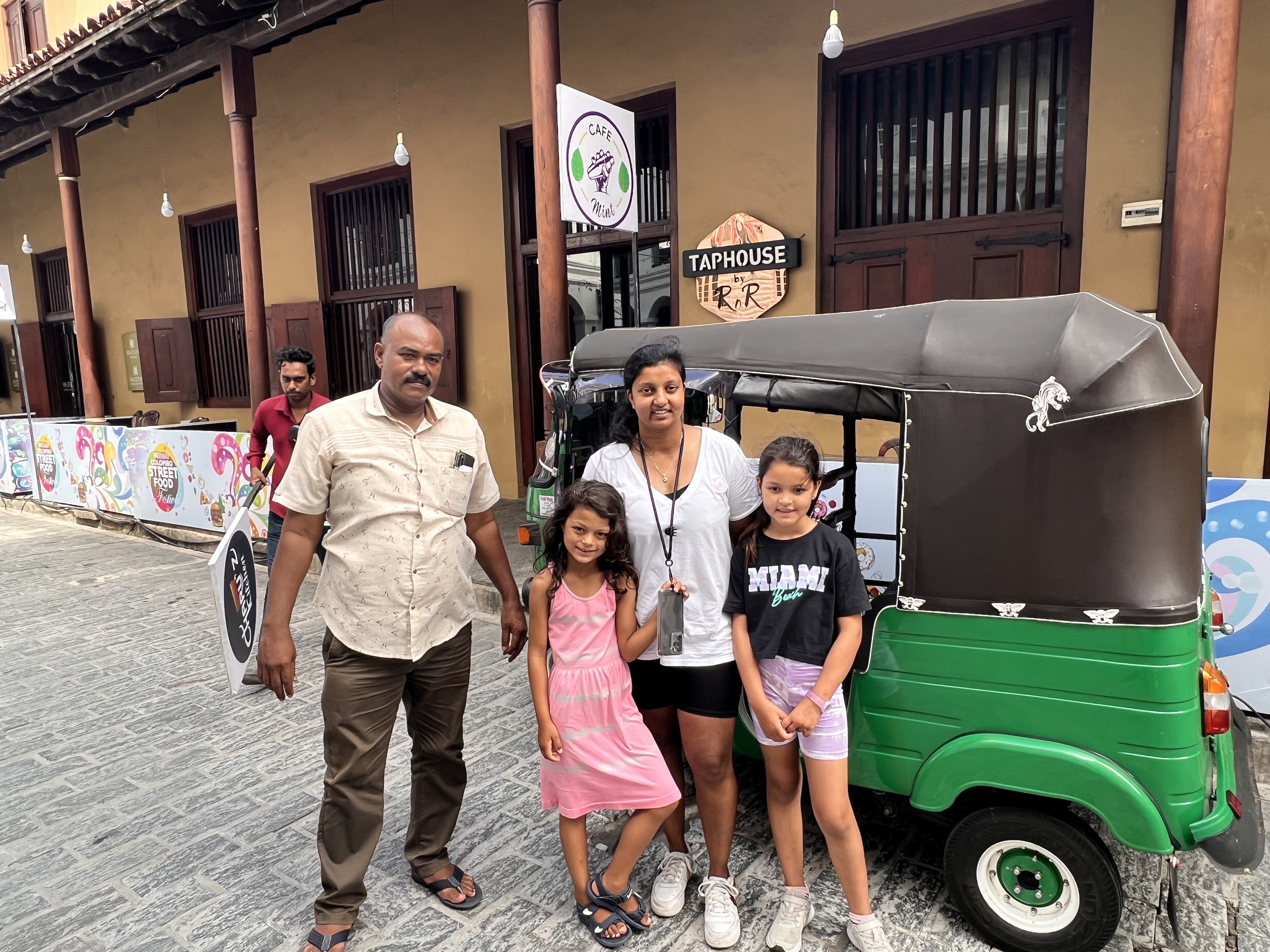
After leaving Lotus Tower, we asked a tuk-tuk driver, Ranjeeth, to take us to Wolvendaal Church. He agreed on around 800 rupees. Founded in 1749, the church is one of Sri Lanka’s old Protestant churches, with Dutch colonial architecture.
The church’s architecture reflects the Dutch colonial period, with a wooden pulpit, substantial columns, carved woodwork and old furniture inside.
For the children, the history made it interesting. Besides the Dutch name, there were inscriptions in old Dutch they could recognise. It was a good opportunity to explain the connections between the Netherlands and Sri Lanka. The Dutch Museum would normally have been useful for that too, but it was closed for renovations during our visit.
Sri Bala Selva Vināyagar Temple in Colombo
Ranjeeth drove us from Wolvendaal Church to Sri Bala Selva Vināyagar Temple, in central Colombo. Its elaborate architecture and quiet atmosphere caught our attention.
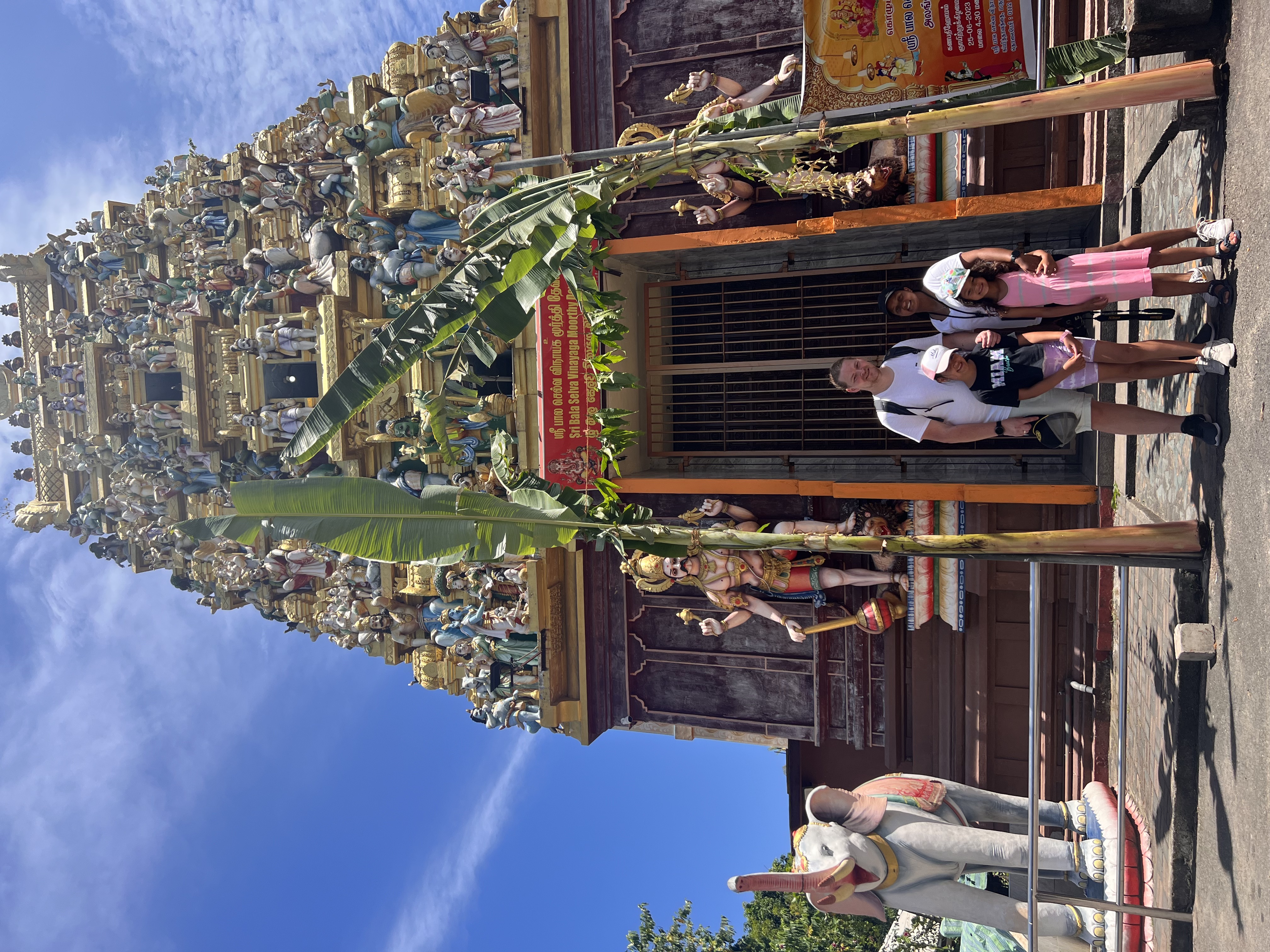
This Hindu temple is dedicated to Vināyagar, also known as Lord Ganesha. Its decorated façade, colourful figures and intricate sculptures reflect South Indian temple architecture.
The children did not know where to look first. Questions about why the place was sacred and why people worshipped this god came naturally. We like introducing them to different religions, even though they are Christian themselves.
They often notice parallels with our faith more quickly than we do. They focus on similarities, while we unconsciously notice differences. Visiting the temple gave us another chance to talk about Sri Lanka’s religious traditions.
Sri Lanka’s white house
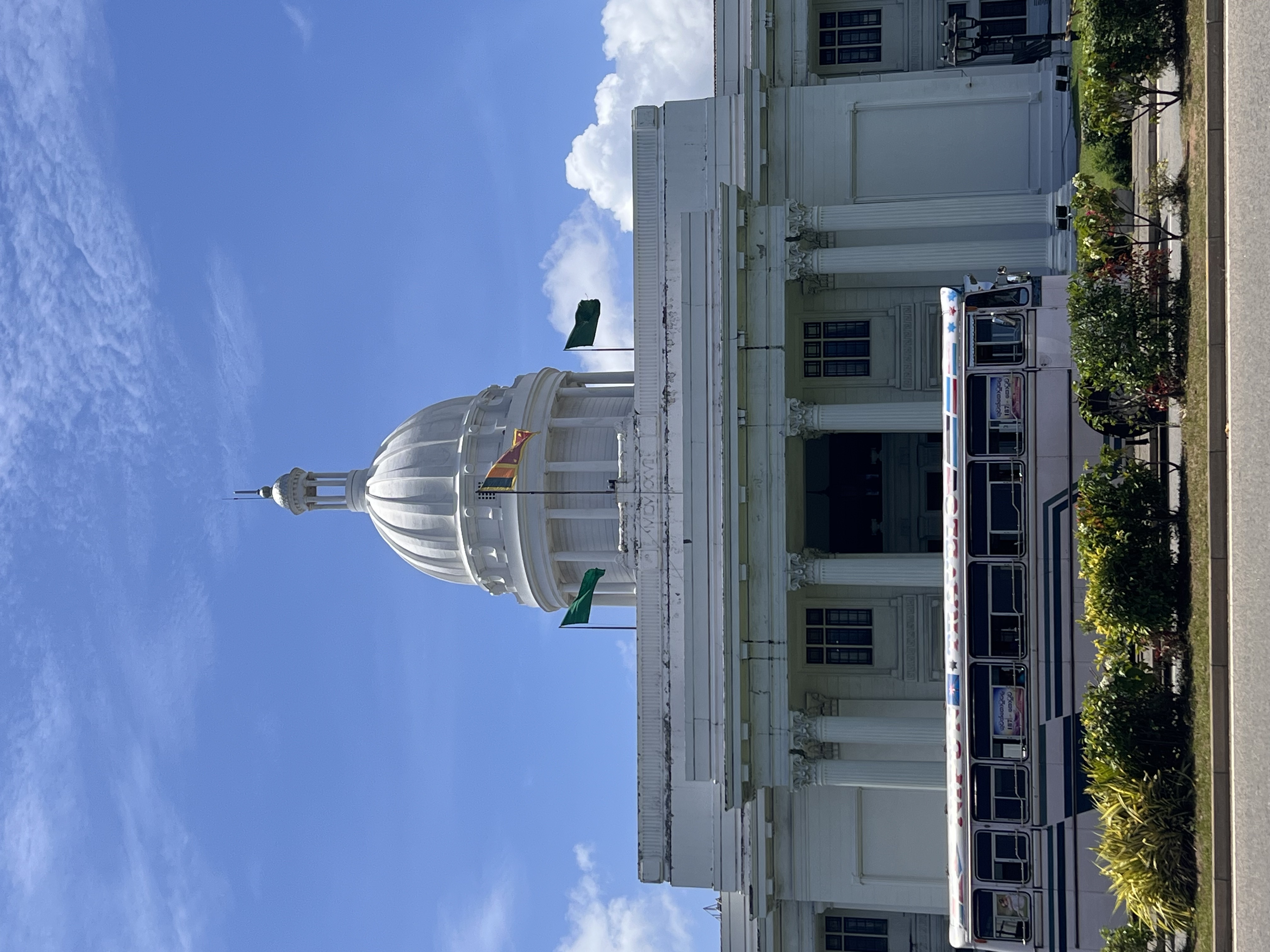
A little further on, we reached a familiar-looking white building. We had not suddenly arrived in Washington: the white neoclassical building, reminiscent of the US Capitol, was Colombo’s Town Hall.
Construction began in 1924, when Ceylon was still under British colonial rule, and was completed in 1927. It housed the mayor and municipal council. After independence, it continued to serve as the city council’s offices.
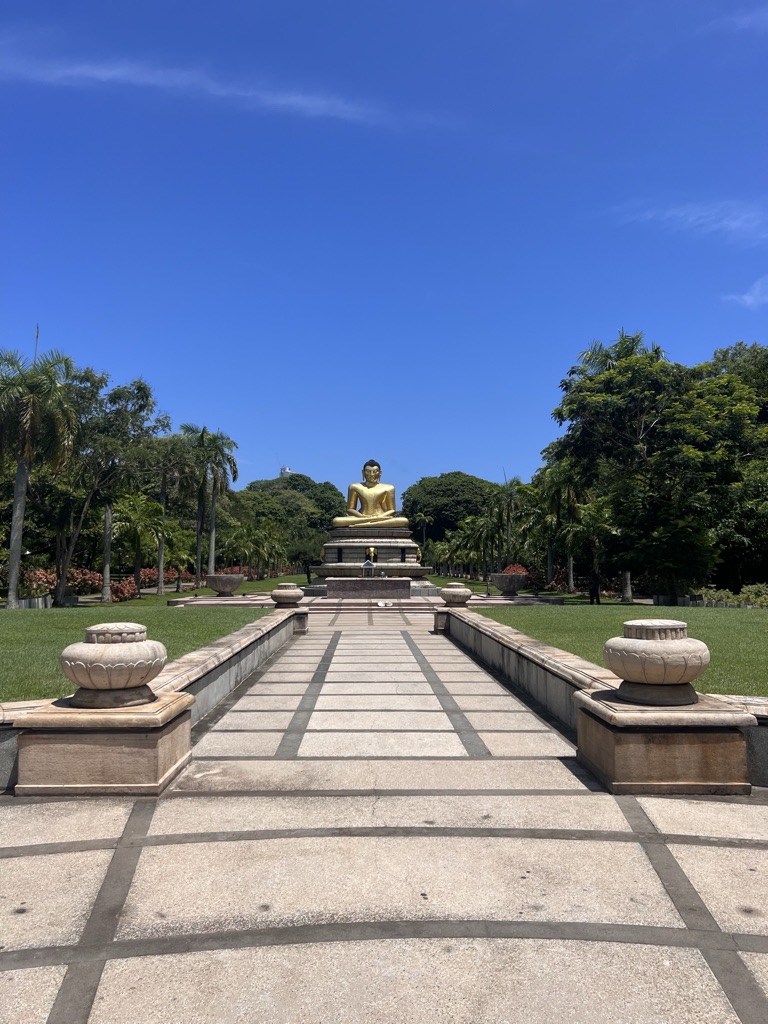
Opposite, near the entrance to Victoria Park, stood a large golden seated Buddha. The Town Hall was an understated name for such an impressive building.
Independence Square and Independence Memorial Hall in Colombo
Ranjeeth drove us to Independence Square and Independence Memorial Hall, commemorating Sri Lanka’s independence. With its many columns, the hall resembled a temple. It also gave us a place to sit in the shade. The children had done well so far, but it was very hot in the sunshine.
Gangarama Seema Malakaya
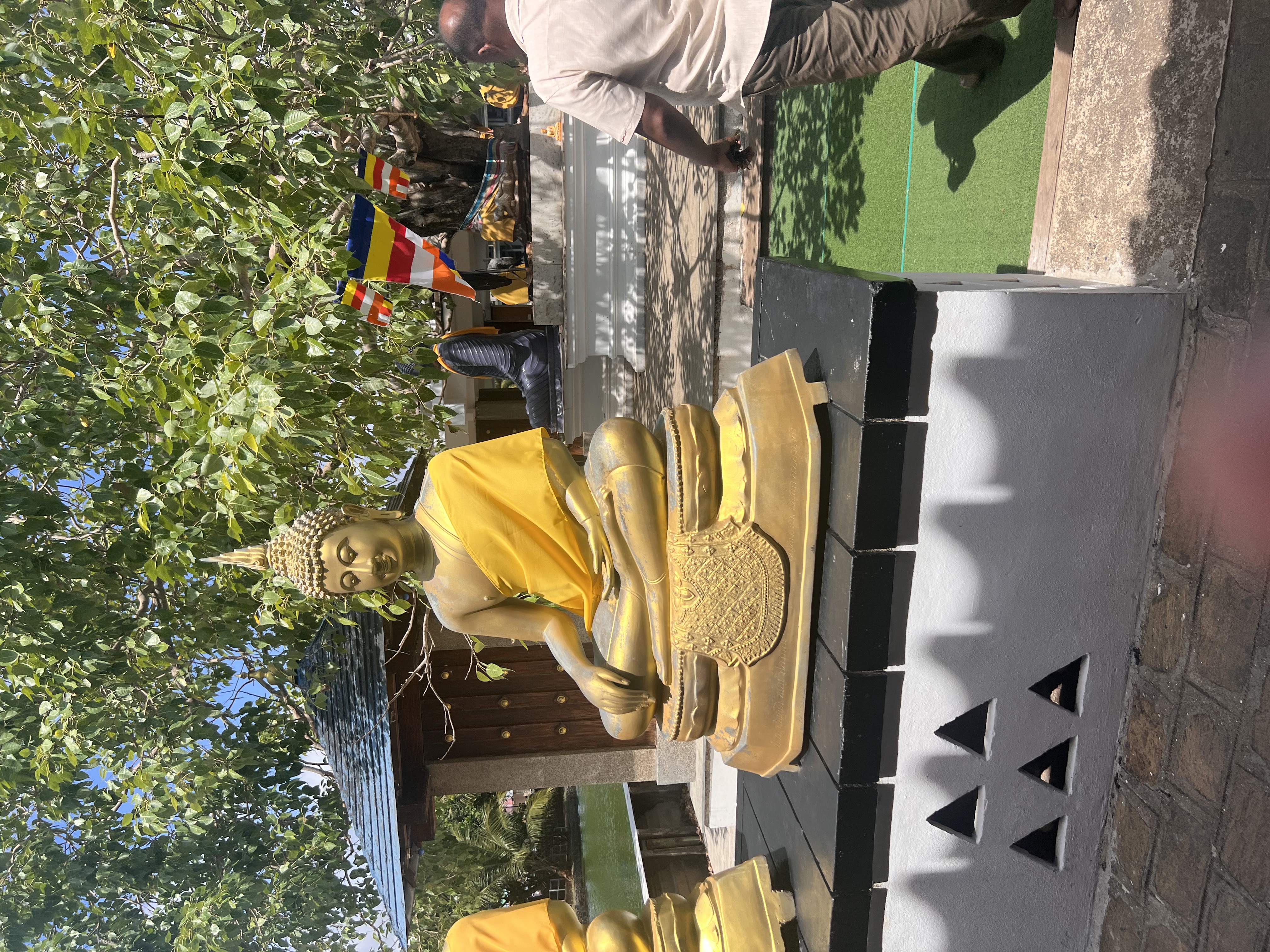
Next, we visited Gangarama Seema Malakaya, a Buddhist temple beside and over the water. With its walkway and collection of Buddha figures, it offered a quieter place to pause during our day in Colombo.
From that quiet spot, we could see how many luxury towers and hotels were being built nearby. Colombo was changing quickly.
Our last temple of the day: Gangaramaya
Gangaramaya Temple was close by. Its buildings combined architectural elements from Sri Lanka, Thailand, India and China. At the entrance were two figures of Guan Gong with large blades, an unusual sight.
Inside were hundreds of large and small Buddha figures from different Asian countries. A relic said to be a hair of the Buddha was among the temple’s treasures, though it was not normally displayed. I did not see it.
It was not the most beautiful or impressive temple for us, perhaps because our understanding of Buddhism was rather limited. For someone wanting to learn more about Buddhism, it could be an interesting place to visit.
Dutch Hospital
We asked Ranjeeth to take us to Dutch Hospital. Once a hospital during the Dutch colonial period, the historic building had become a shopping and dining area. Its old architecture remained alongside modern facilities.
We looked for somewhere to eat. It seemed quiet until one of the children asked about all the signs fixed to the columns. A street-food festival was due later that day. We were too early, but decided to return. For lunch, we chose Java Lounge, a Sri Lankan coffee chain that began in Colombo and had since expanded.
I enjoyed seeing a coffee culture developing alongside Sri Lanka’s famous tea culture.
Galle Face
With a few hours until the festival, we walked to Galle Face, Colombo’s seafront promenade. It is a lovely place at sunset, when people gather to eat, talk and play. It was still hot and fairly quiet, so we cooled down in One Galle Face Mall opposite. The large, modern shopping centre challenged some familiar preconceptions about Sri Lanka.

There were international brands including Montblanc, Victoria’s Secret, Adidas, Nike and Benetton, as well as local shops. Jaïra wanted to spend her pocket money on a long skirt ‘so I can wear it properly when visiting temples’. What could I say to that?
After shopping, with Jaïra and me secretly very grateful for the air conditioning, we went outside onto the grass beside the sea. We found a spot and watched everything around us. As the sun went down, Jaïra danced, children flew kites and Joëlla was startled by a long snake passing nearby. It belonged to someone who was keeping an eye on it.
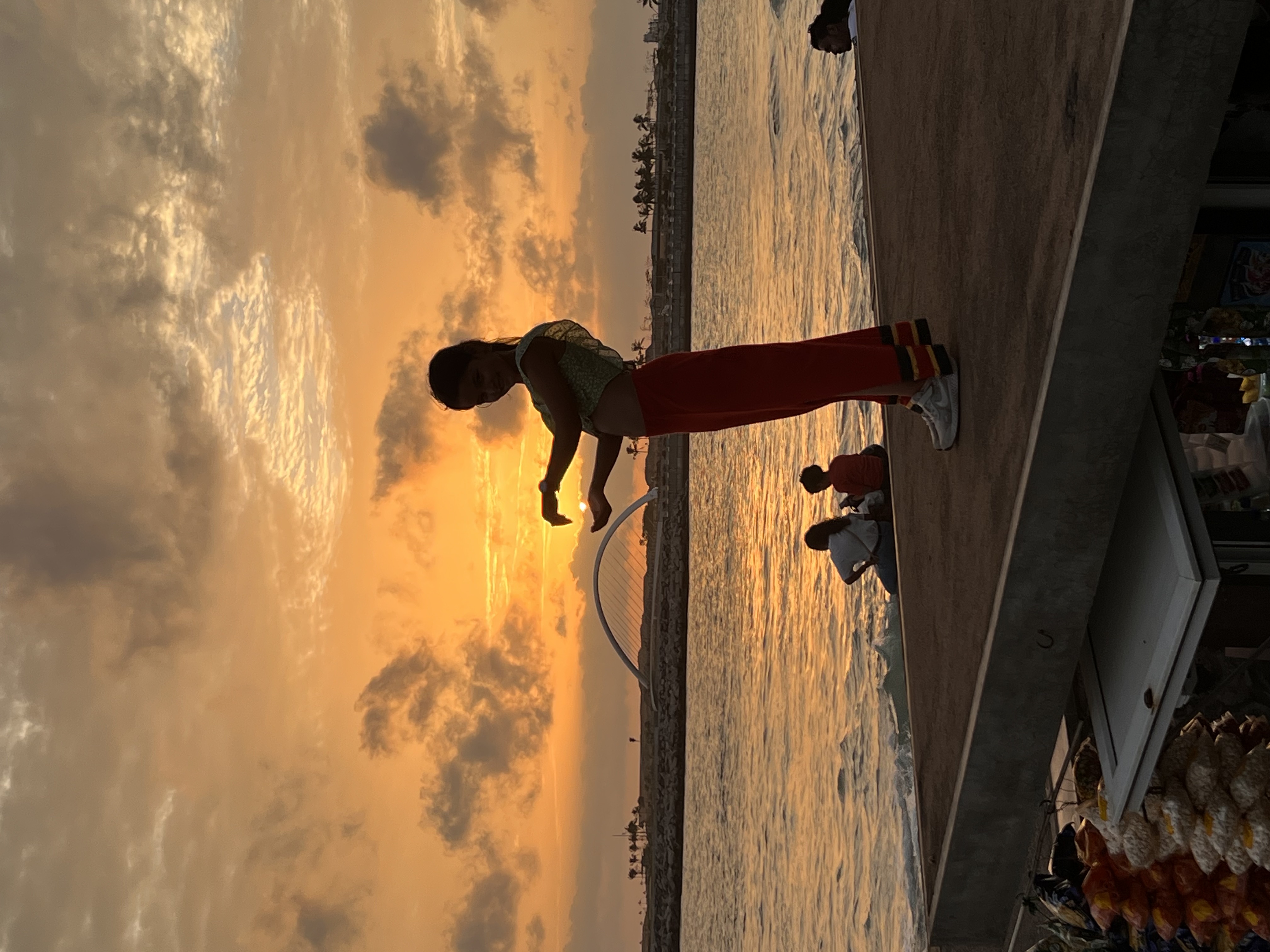
It grew busier as the sun set. Small food stalls, couples and families gathered around us. Afterwards, we walked back towards Dutch Hospital for the street-food festival.
STREET-FOOD FESTIVAL AT DUTCH HOSPITAL
On the way, a man in a suit, apparently heading home from work, asked where we were from and said how pleased he was to see tourists. When he heard Shamila was born here, he told us enthusiastically about a festival with dancing. He flagged down a tuk-tuk and arranged an exceptionally low fare. Before we knew it, we were following his enthusiasm towards an unfamiliar place across the lake.
It turned out to be Gangaramaya Temple, where we had already been that day. We decided against going in again. The children were hungry, so we continued to Dutch Hospital.
Then came the unwanted gem-shop stop. The driver pulled up outside a jewellery shop without asking. ‘Just one minute, sir.’ I hate that sort of situation. Sales tactics can be pushy, so do not feel obliged to buy anything. We have encountered this elsewhere too. You can remain calm, look briefly and leave, or decline to go in. Refusing may mean finding another tuk-tuk in a side street.
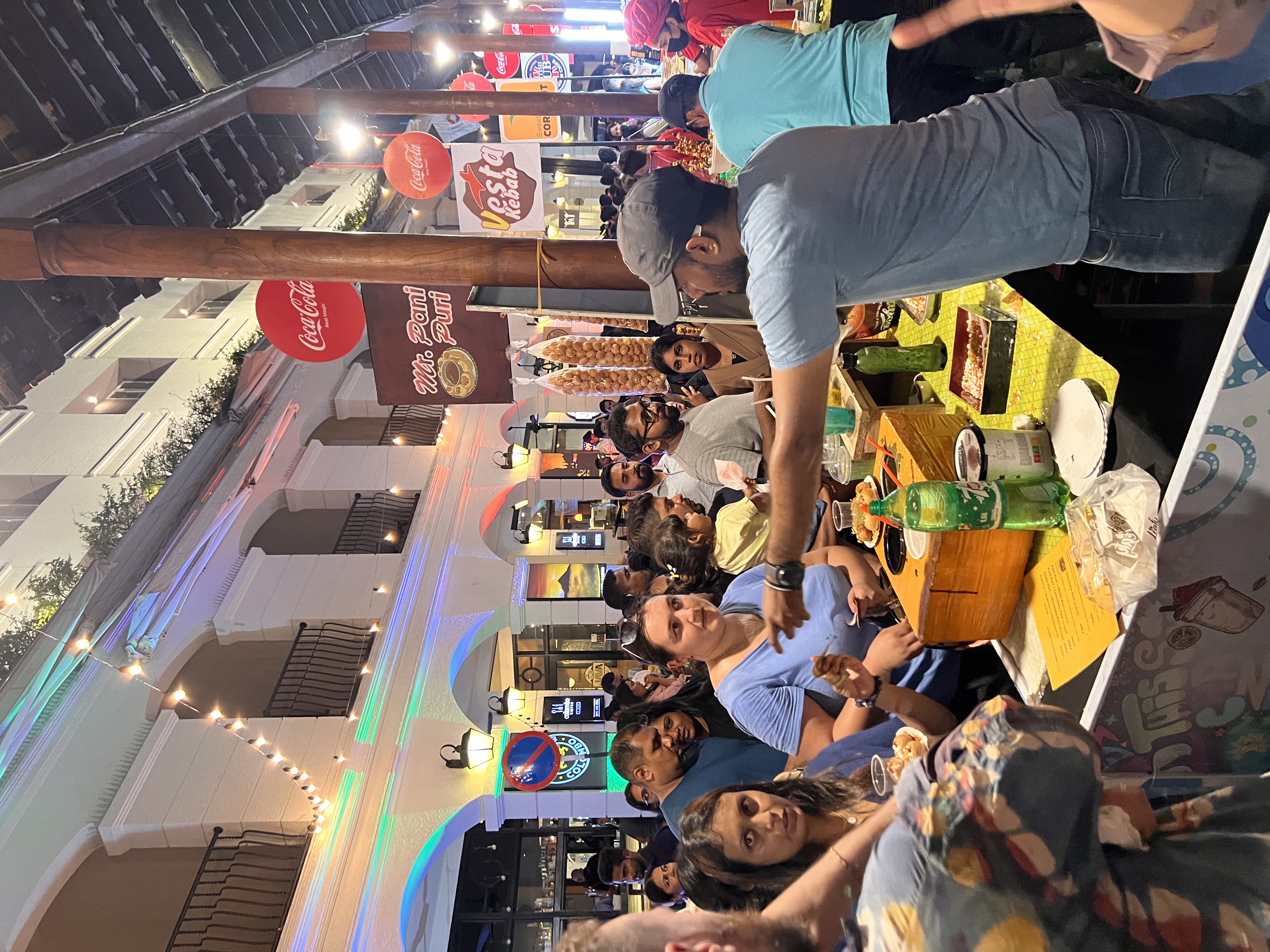
At Dutch Hospital, the festival was busy. The children browsed the stalls to choose something to eat: meat, vegetarian dishes, curries, sweets and even fish and chips. A live band played further along the street. Jaïra and Joëlla chose corn on the cob, which they had loved since our trip to Palestine, where it was sold on street corners.
We chose pani puri. Delicious! The crisp, hollow puris were filled with spiced potatoes, pulses and chutneys, with a tangy, spicy tamarind-and-mint liquid. We can find it in the Netherlands, but not easily, so we made the most of the chance.
After an evening of dancing, food and music, we found a tuk-tuk for the last ride of the day. We reached the hotel tired but happy. Tomorrow, we would leave for Negombo.
The girls had walked eighteen kilometres in a very hot Colombo without complaining. Balancing the day helped: something for us, something for them.
 Our full travel storyGampola
From Kitulgala we continued to Gampola, among green hills. The town was the capital of a Sinhalese kingdom in the fourteenth century.
From Kitulgala to Gampola
We left Kitulgala and drove through the hills towards Gampola, looking out over mountains and rivers along the way.
Mount Havana in the hills
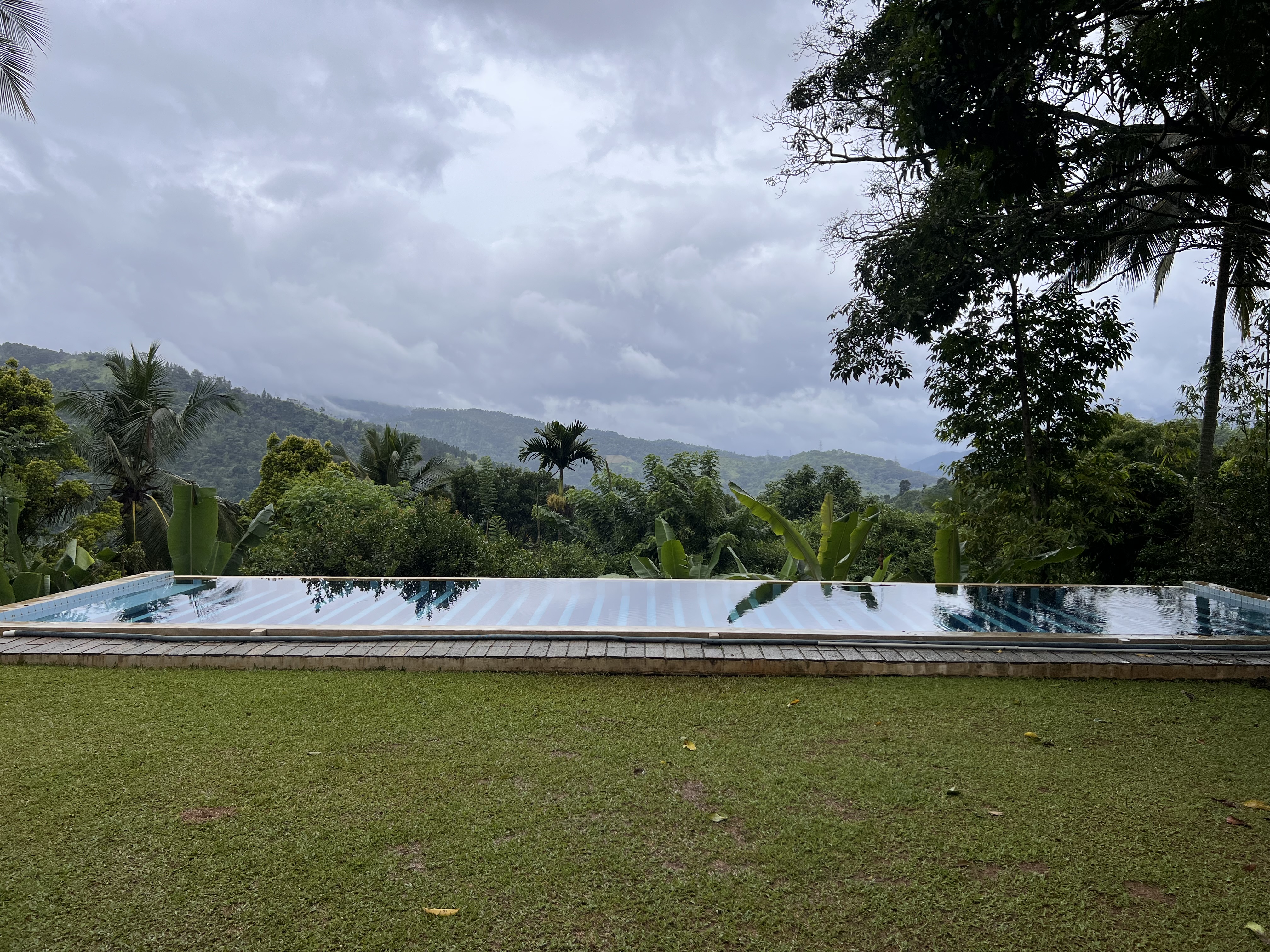
Mount Havana is on an estate in the hills outside Gampola.
Find information about rooms and directions on Mount Havana’s website ↗.
Temples in the surrounding area
There are several temples from the Gampola period in the wider area around Gampola and Kandy:
1. Gadaladeniya: a fourteenth-century Buddhist temple with Indian and Sri Lankan architectural influences, paintings and statues.
2. Embekka Devale: known for the wood carvings on its pillars and wooden roof structure.
3. Lankatilaka Vihara: a temple on a rocky hill with views over the surrounding area.
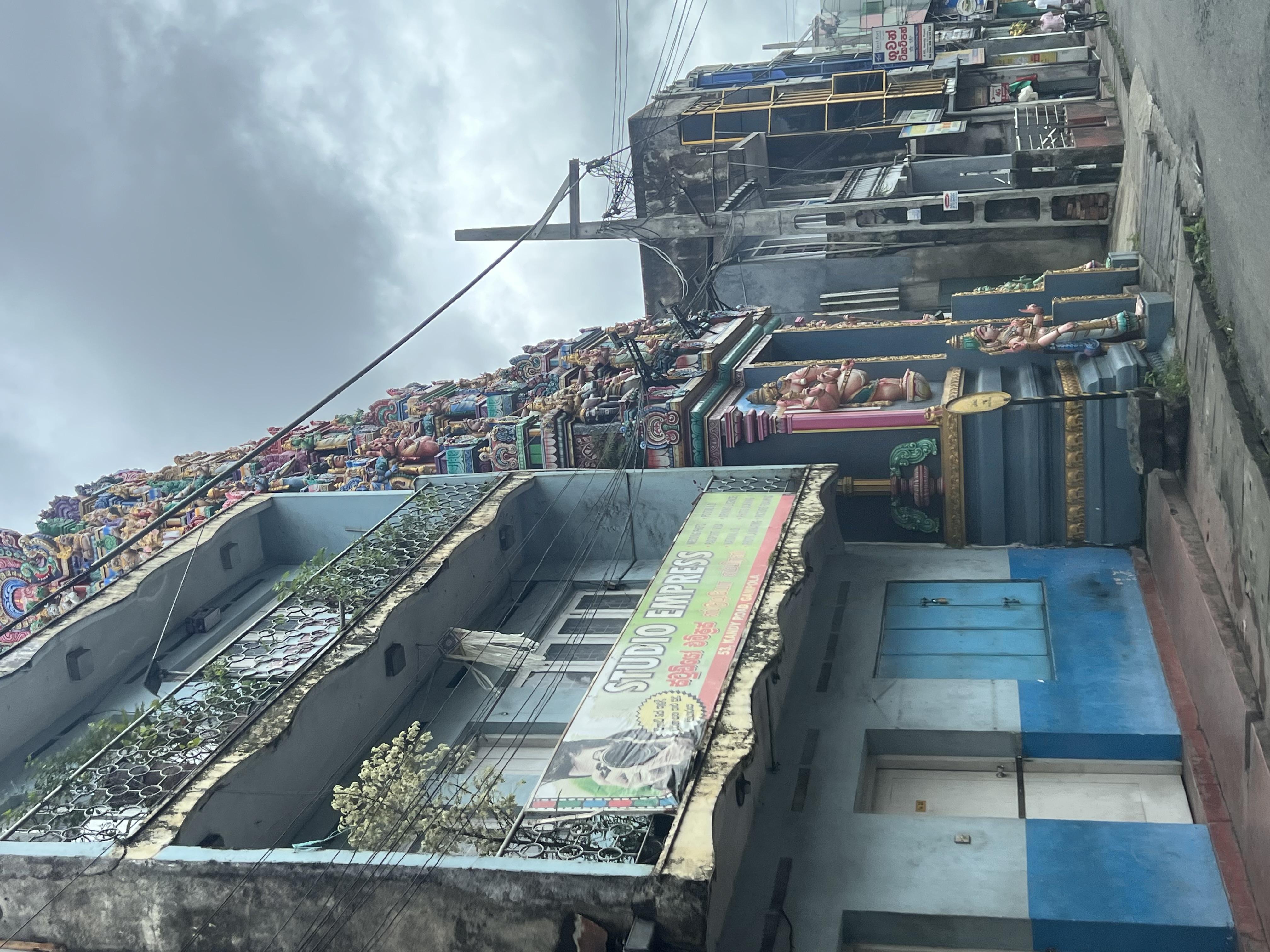
4. Gampola itself: our diary includes a photograph of a street with a temple. It was an ordinary street that caught our attention.
Continuing through the hill country
Gampola was one of our stops between Kitulgala and Kandy. The route map shows the places from our own travel diary.
 Our full travel storyNegombo with children
This morning, we left for Negombo. Two large backpacks and two smaller ones for the children were not much luggage for a family, but perhaps too much for a tuk-tuk. Negombo is close to Colombo and the airport, making it many travellers’ first and last stop. We had not started there, but we did not want to skip it.
We arranged a van through www.yenaratours.com. We found it useful for booking a van or taxi when:
a tuk-tuk would not fit us or the luggage, and
PickMe was not an option.
The price was shown when booking, avoiding an argument later. For just under thirty US dollars, we left Colombo for Negombo. Despite a good night’s sleep, Coconut and Mango soon nodded off, perhaps because it was already so hot.
Negombo is on the west coast near the airport, with beaches, a fishing community and a strong Christian heritage reflected in its churches.
We were staying atThe Panorama Negombo, a friendly little hotel down a side street. We had our doubts as we turned into the road, but received a warm welcome on arrival. The room was excellent, with four beds, and there was a pool. Promising!
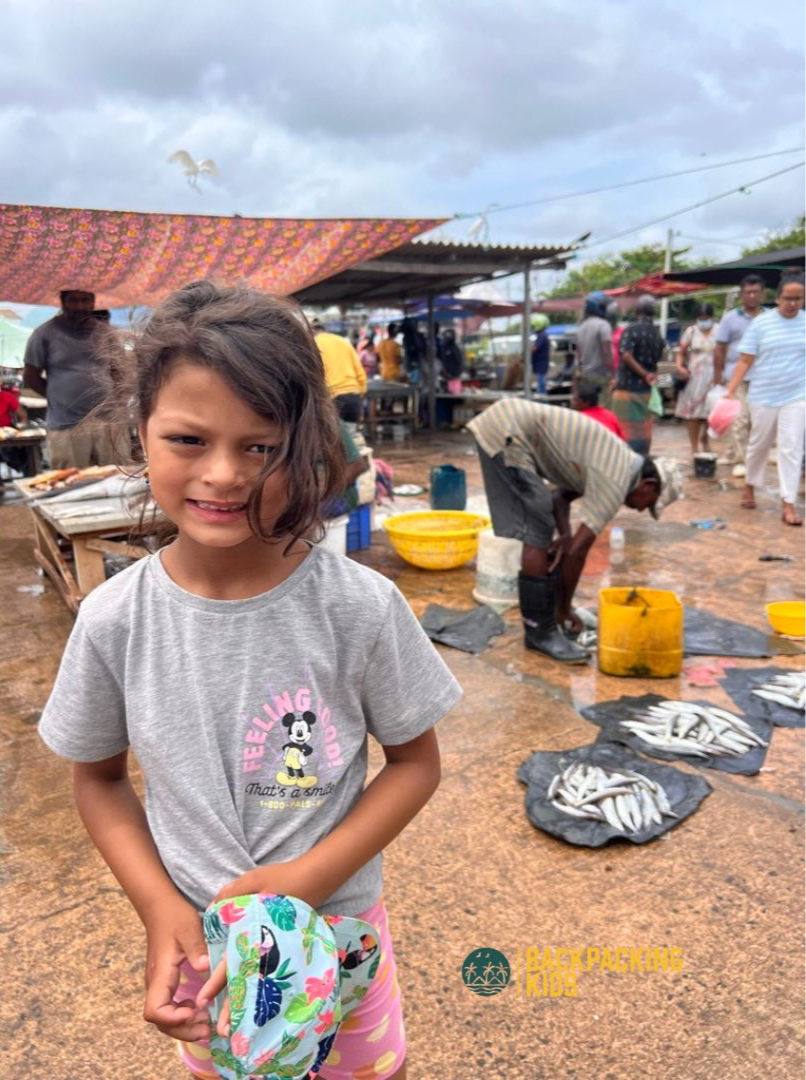
After dropping off our things, we went back to the road and asked a tuk-tuk driver to take us to the fish market. We watched fishers and buyers doing business. Some visitors might find it dirty, and the children certainly noticed the smell, but we liked showing them how it worked. Fish matters in daily life beside the sea.
Half an hour was enough for the market. Then we asked the driver to take us to St Sebastian’s Church, an important Catholic church in the local community. It was one of the places attacked on Easter Sunday in 2019, when many lives were lost. St Anthony’s Shrine in Colombo, Zion Church in Batticaloa and several luxury hotels in Colombo were attacked too.
Shamila organised a collection for victims of those dreadful attacks. Somehow, this particular church had become their face for us. Perhaps because we had also visited it in 2016.
We want our children to learn about religions. Although they are Christian, we try to give them a broader understanding so they can grow up with more empathy and fewer preconceptions. We want them to make choices because they believe in them, rather than because they know nothing else.
Learning about different religions and meeting people of other faiths can help us question our preconceptions. For us, these visits are opportunities to talk with the children about understanding and respect.
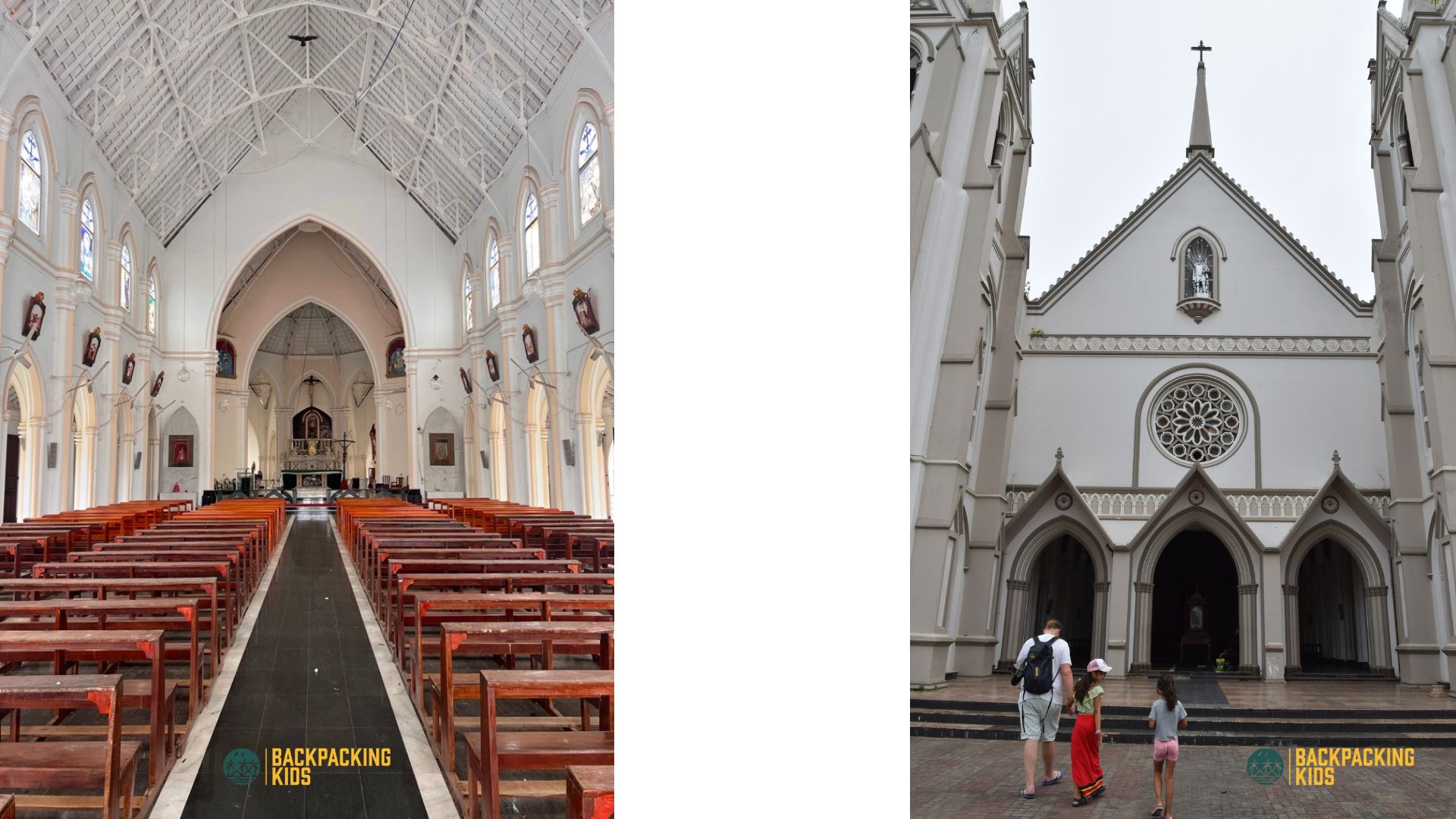
It was Friday, and the church was quiet. The many open windows and doors let the breeze through. Thinking about what had happened here was overwhelming. Just as I took a photograph, a raven flew through its centre. I looked back in surprise: there it really was. It reminded me of 1 Kings 17:4–6, where God sends Elijah to a stream during a drought and ravens bring him food. To me, it recalled provision even in difficult times.
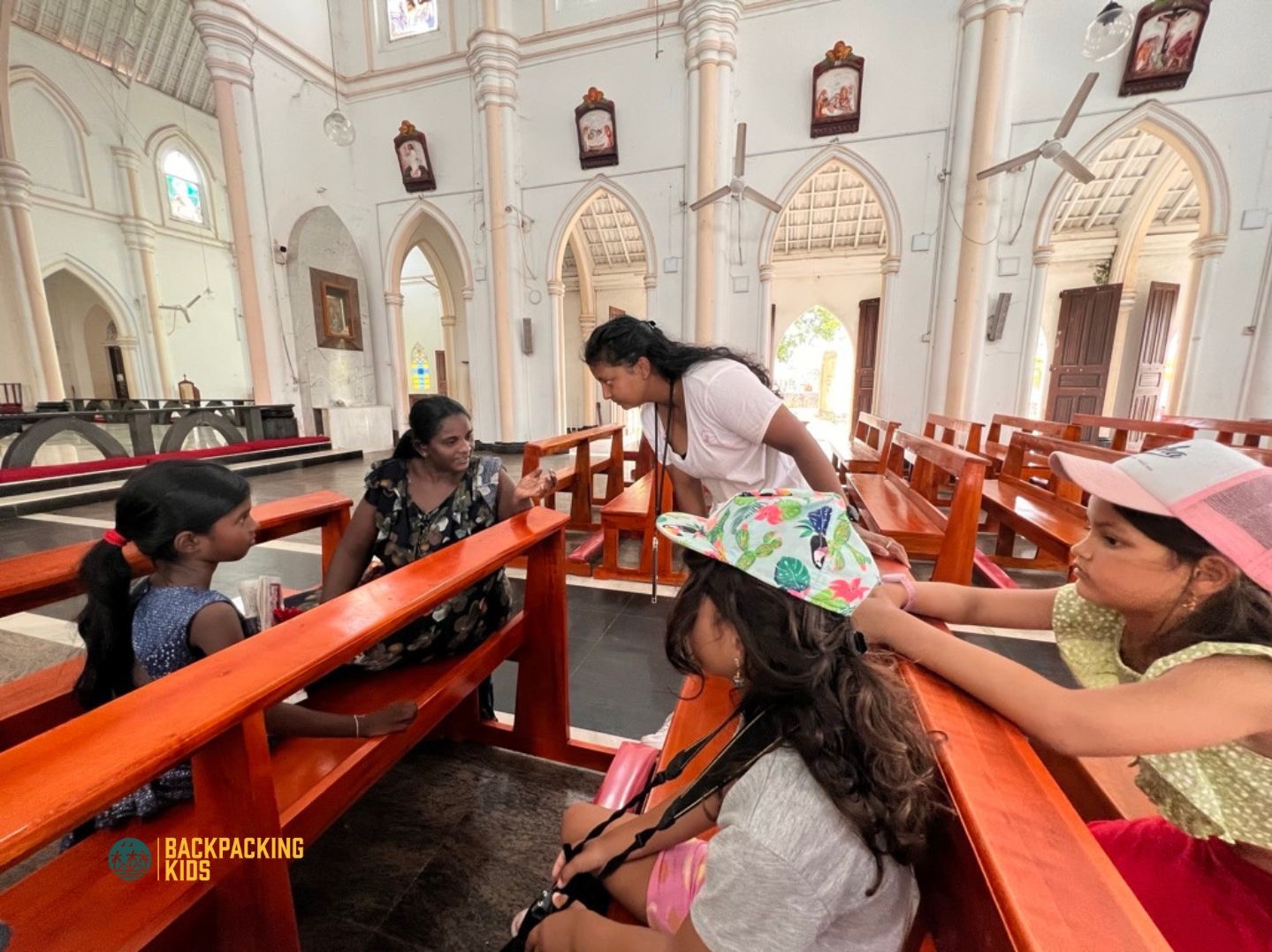
I sat near the front with the children, who wanted to pray together. Jaïra prayed that help would keep coming and hoped she could help others like her mother one day. Shamila was a few rows behind, taking a photograph, when a woman with a child slightly younger than Joëlla began talking to her.
The woman had survived the attack. Her daughter, whose name I have sadly forgotten, was only a few months old then. The attacks had been devastating and had put Sri Lanka’s coexistence between religions under strain. Tourism fell sharply afterwards, followed by the pandemic. These people had endured a great deal.
Of course, we helped the woman with what she needed. It was the least we could do. Visiting the church taught our children something we could never have explained in the same way at home.
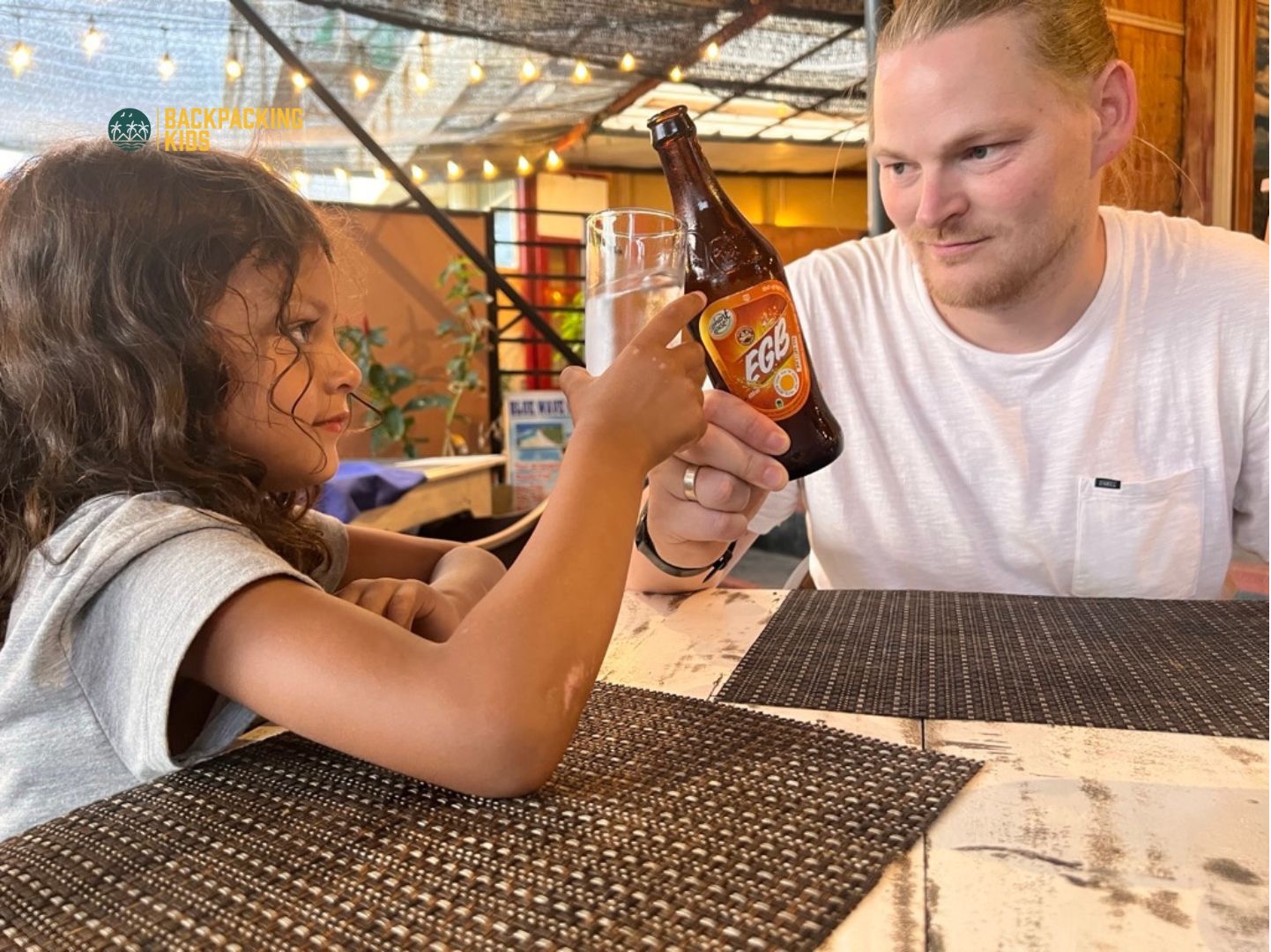
After that emotional visit, we returned to the hotel for a swim. Again, the children had the pool to themselves. Afterwards, we went for a walk. Negombo had a long strip of hotels, golden beaches and a rather rough sea at that time of year. Eating out was inexpensive: the four of us had dinner beside the beach for around €18.
The hotel cost just €32 for four people, including breakfast. On our honeymoon nine years earlier, we had stayed at Goldi Sands, a fantastic hotel, but around six times as expensive at the time of this visit. Honestly, I would happily come back to these people.
 Our full travel storyFrom Negombo to Kitulgala
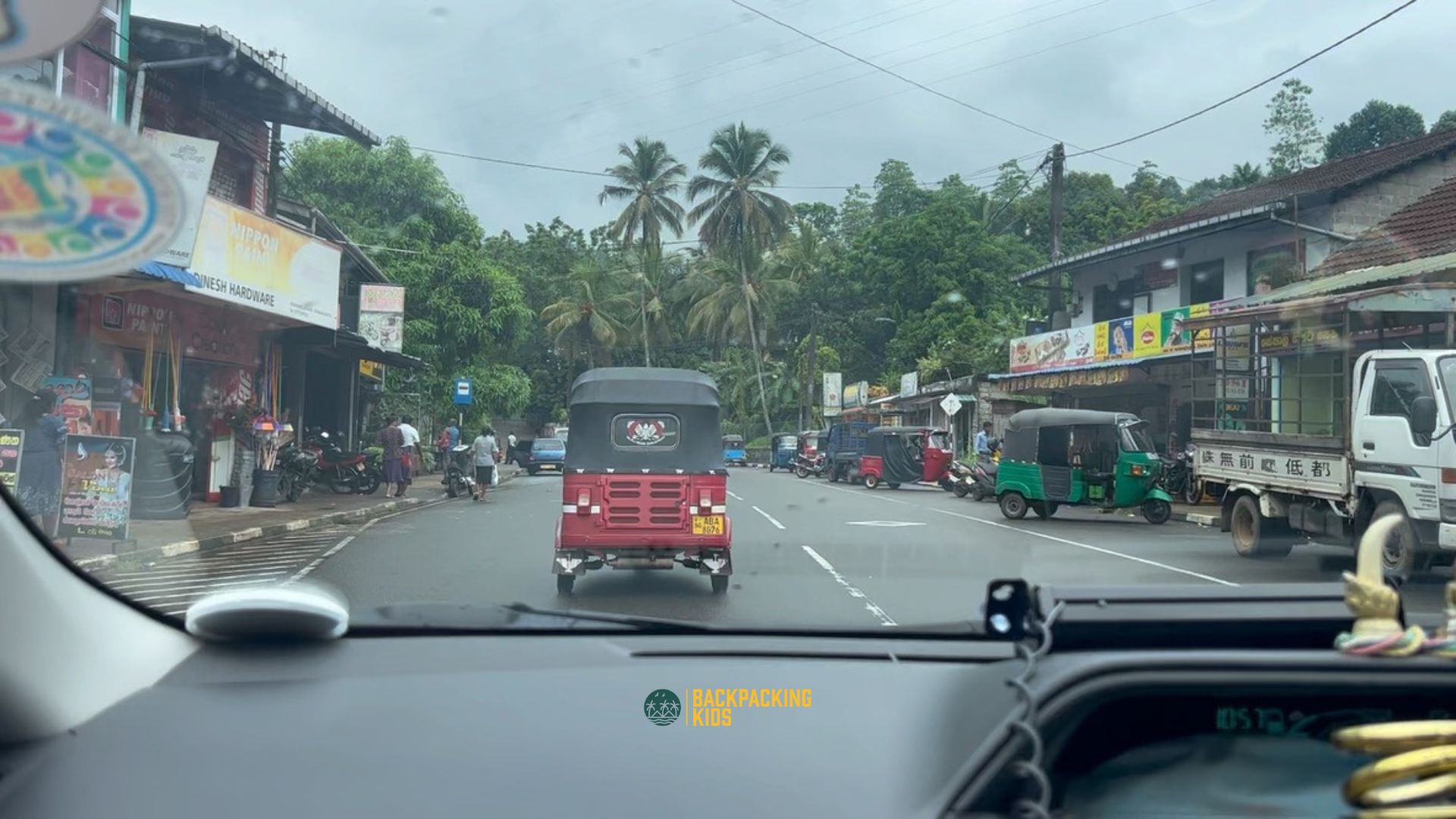
After a good breakfast in Negombo, our driver arrived to take us to Kitulgala. We had arranged the excursion beforehand, and the owner sent a driver as promised. It rained harder as we headed inland. Fortunately, our plan involved water anyway. This was our second rafting trip in Sri Lanka, and the second time it had rained.
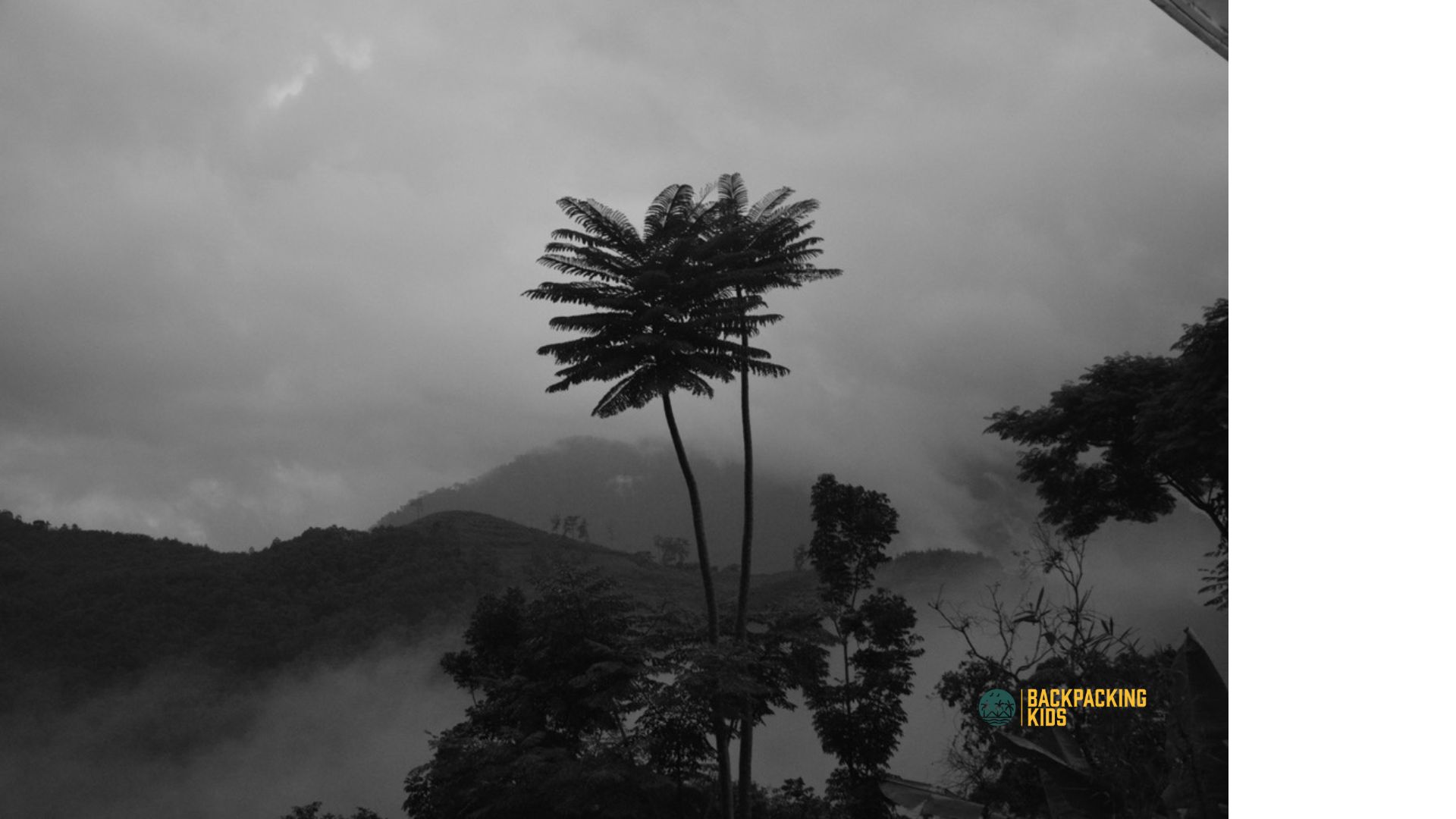
Before going to the activity centre, we wanted to drop our bags at Paradise Eco Garden, our next hotel. The description suggested it was close to the road, requiring only a short detour. That was optimistic! We turned off and drove about three kilometres uphill along a narrow road. The surrounding hills were extensive; reaching it on foot would have been difficult.
At the hotel sign, we turned onto an unpaved track. The hills grew steeper, the track bumpier and the taxi scraped its underside on stones. The driver was clearly unhappy. After another two and a half kilometres, we reached a small hotel spread across several buildings. The view was beautiful. Reception and the restaurant were open-sided, beside a natural pool.
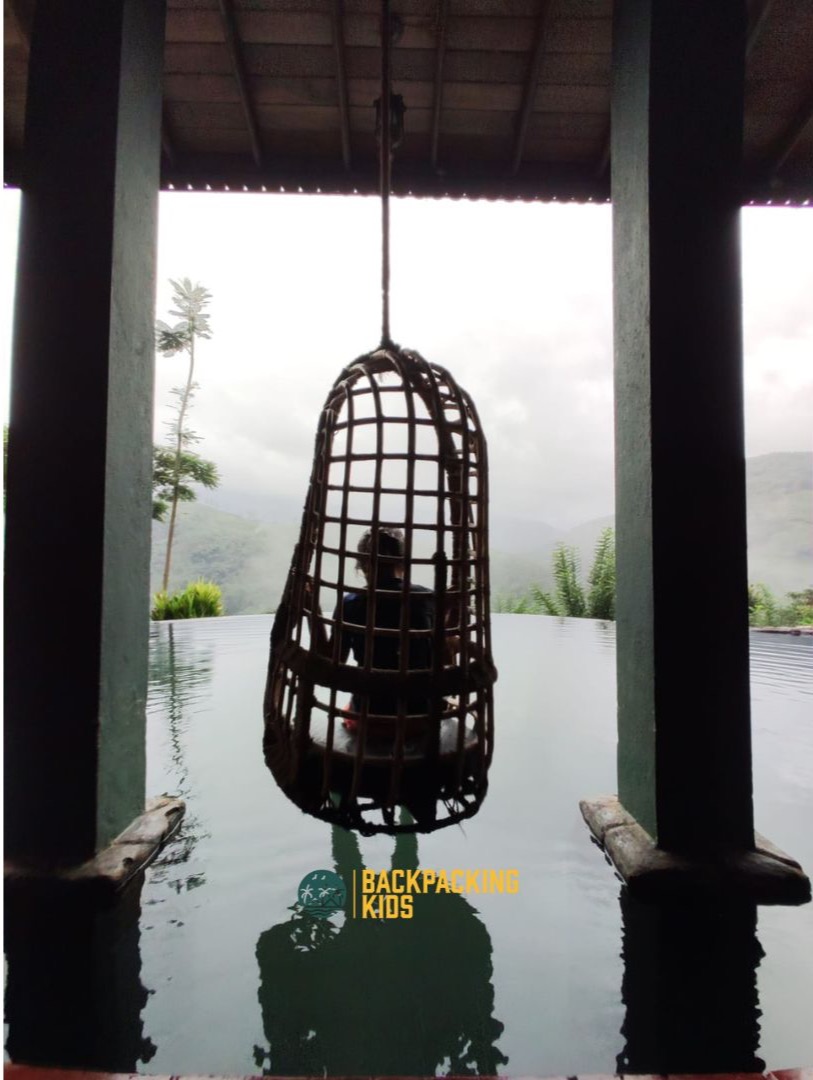
Our room was in a separate building with its own natural pool. Around us were hills, palms, trees and wildlife. The people were very friendly, even when communicating in English was difficult. After dropping our things, we returned to the driver and headed for AdventureLK.
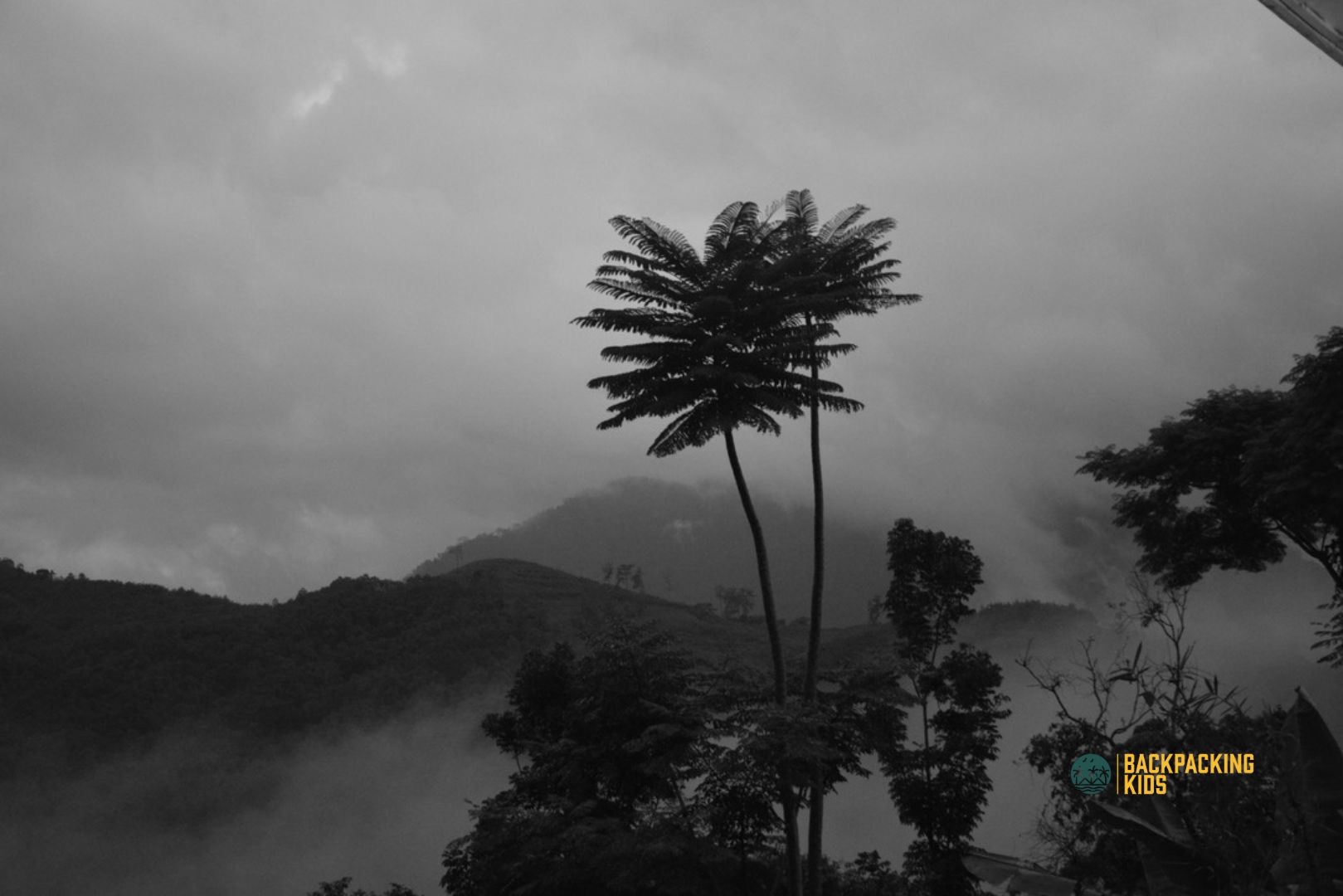
Read more about the activities in our next story!
 Our full travel storyRafting and stream sliding in Kitulgala
In Kitulgala, we went stream sliding and white-water rafting with AdventureLK. This is how our day on the river went.
Stream sliding
AdventureLK took us to natural slides in the river, where water ran over smooth rocks between pools. It was our first activity of the day.
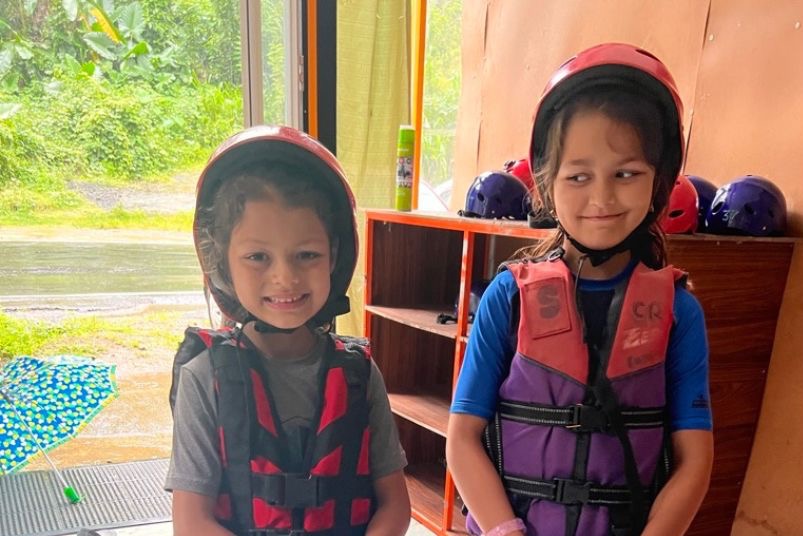
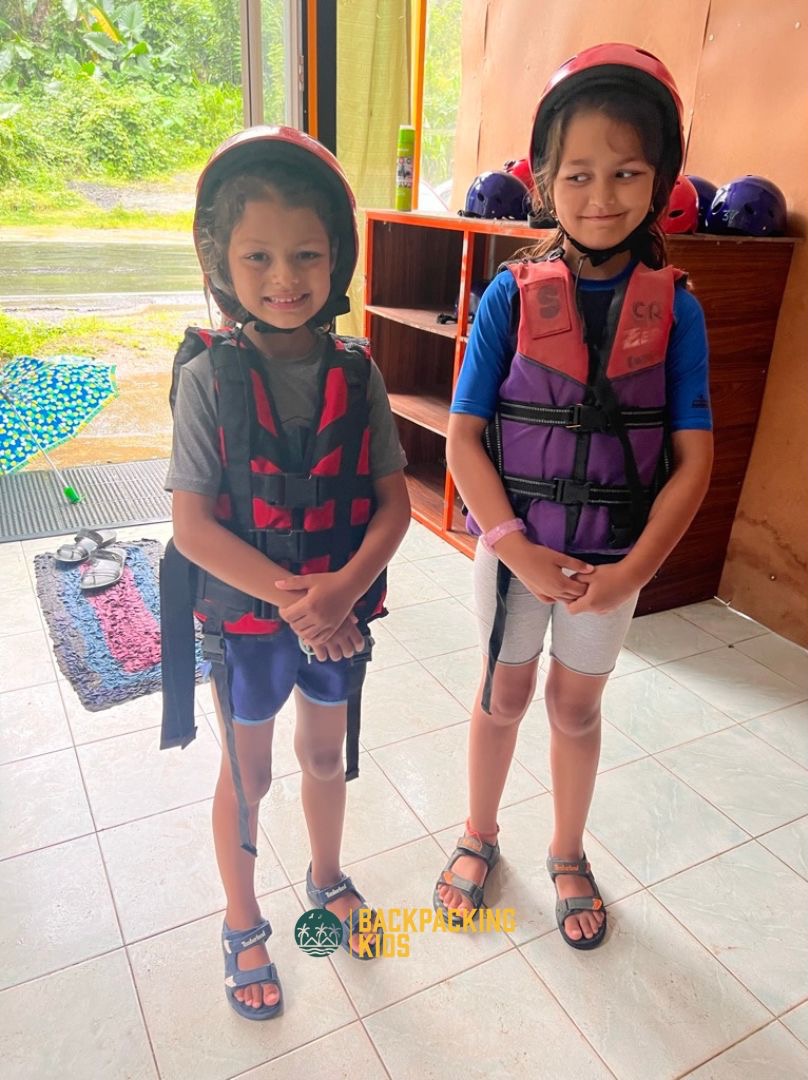
We loved it. First, we walked through shallow water, so flip-flops were not a good idea, then climbed uphill. The sound of rushing water grew louder until we reached the start. Wearing helmets and life jackets, we entered the first pool, enclosed by rocks with small waterfalls between them. Following instructions, we slid through the water and down the falls. Some were more exciting than others. The guides helped us feel comfortable, and where a fall was too much for the children, they took them down a different way. Joëlla was six and nearly had her Dutch B swimming certificate. I admired her energy and lack of fear. Both children loved it.
White-water rafting
After stream sliding, we boarded a raft. The children did not paddle, but that did not make the rapids less exciting. Capsizing was a possibility, making their swimming ability important. Fortunately, we stayed upright and most of the shrieks were happy ones. At the end, the children were allowed to swim in the river for a while.
Safety
Our AdventureLK guides provided equipment and explained what to do before we began. If you plan a similar activity, discuss your children’s ages and swimming ability, the river conditions, supervision and equipment with the provider. Our experience is not a guarantee of conditions on another day.
Our day on the river
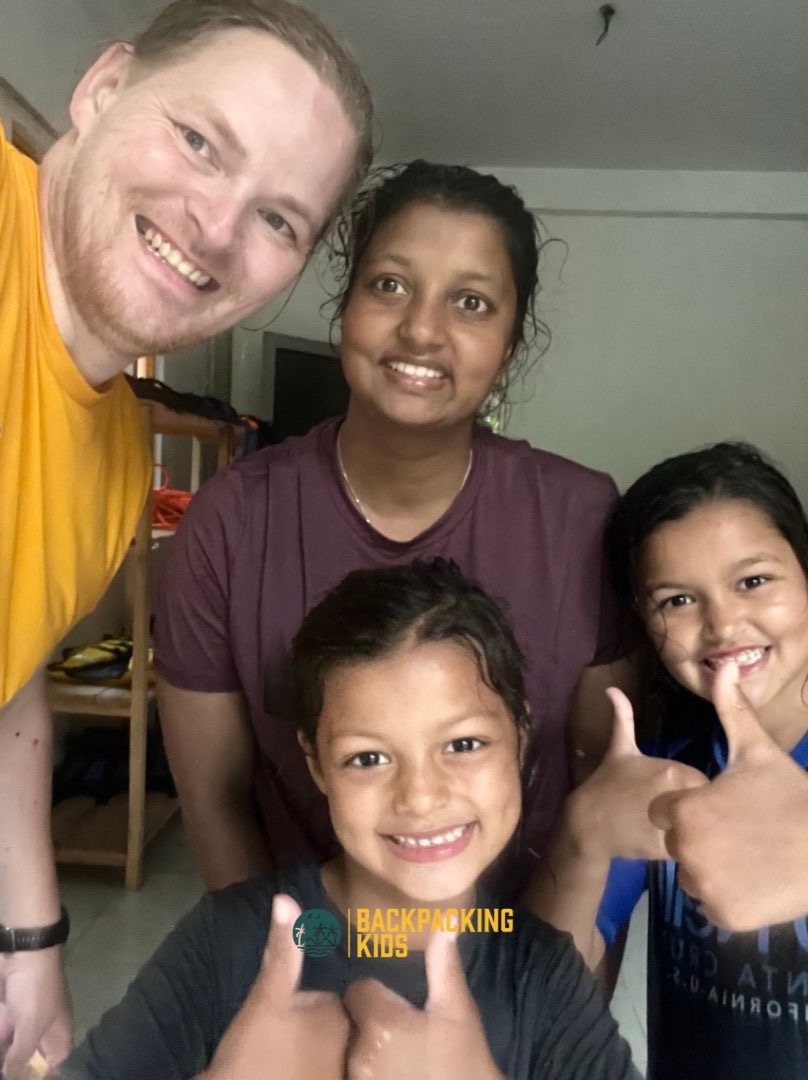
Combining stream sliding and rafting gave us an exciting day in Kitulgala’s green surroundings. The children enjoyed both activities.
After rafting, we were taken back to the start, collected our bags and were driven to our hotel.
Interested in rafting? Visit and book here!
 Our full travel storyKandy with children
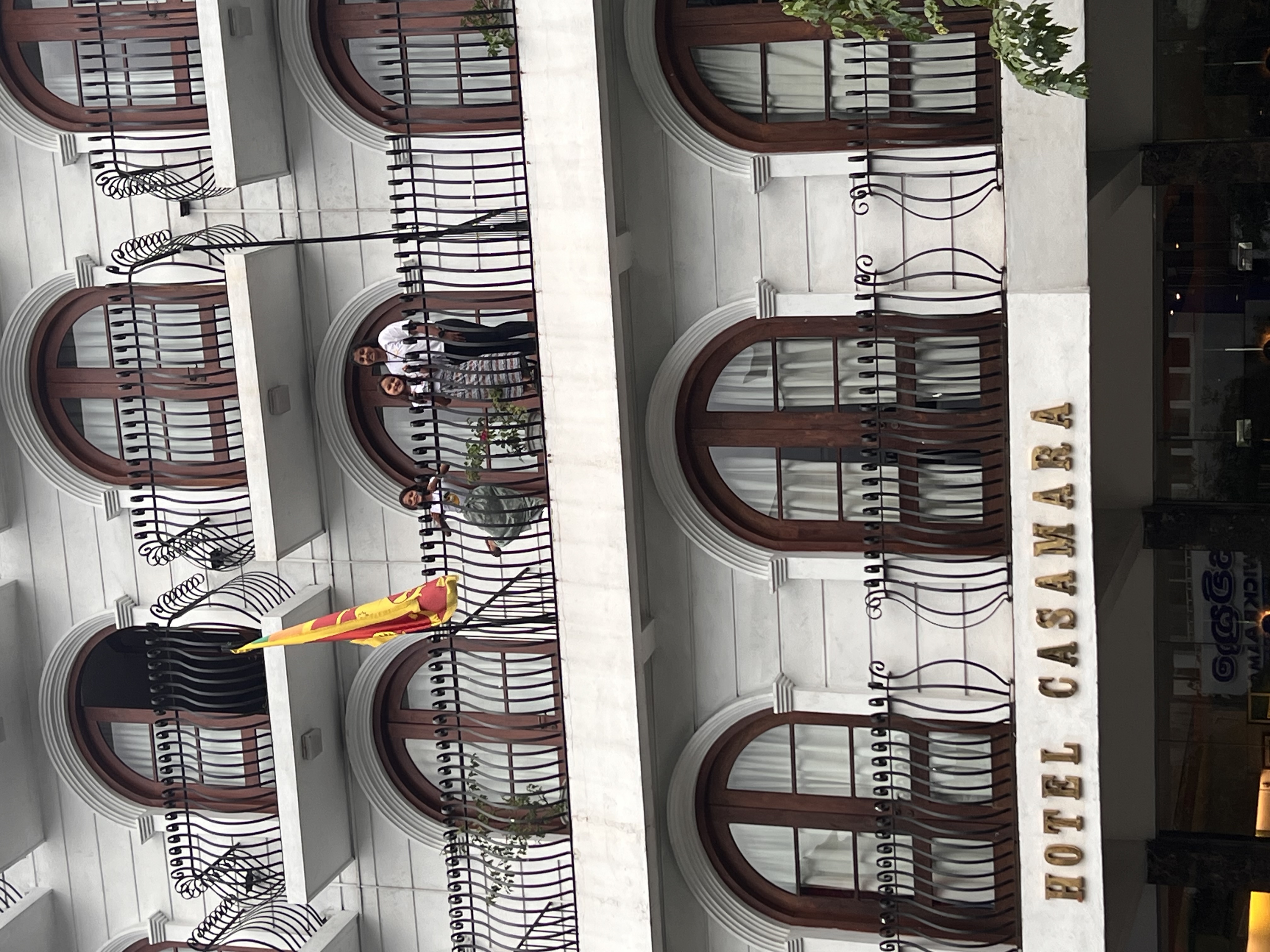
We visited Kandy in July 2023. We stayed at Hotel Casamara, visited the Temple of the Tooth and had dresses made for the girls.
1. Hotel Casamara
Hotel Casamara is in the city centre, on Kotugodella Veediya, within walking distance of the lake and the Temple of the Tooth. The hotel has a swimming pool and a rooftop terrace.
2. The Temple of the Tooth
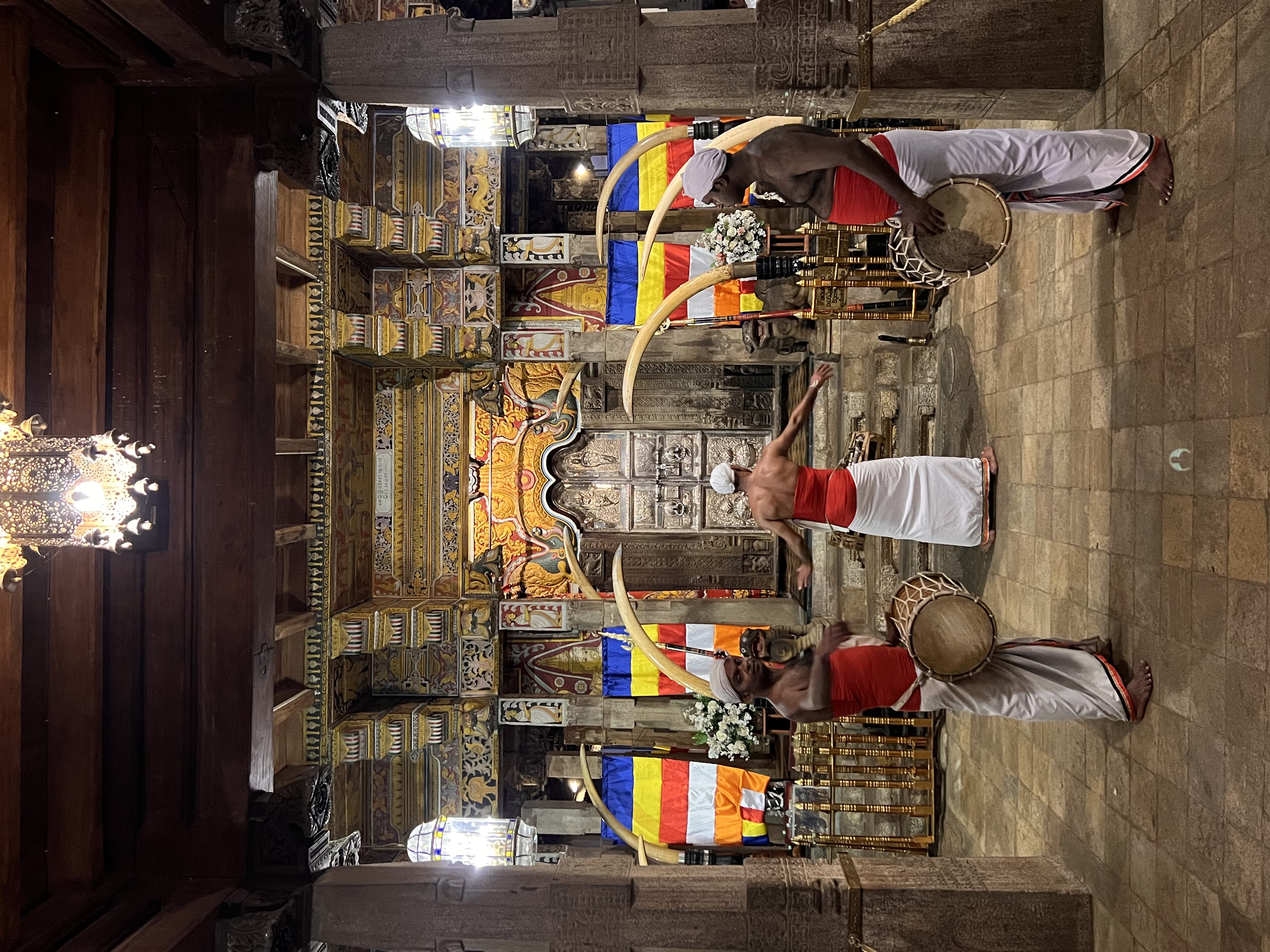
We arrived in Kandy during Esala Full Moon Poya. According to Buddhist tradition, the Temple of the Tooth houses a tooth of the Buddha. The temple complex is beside the old royal palace and is still used for worship and ceremonies.
3. The market
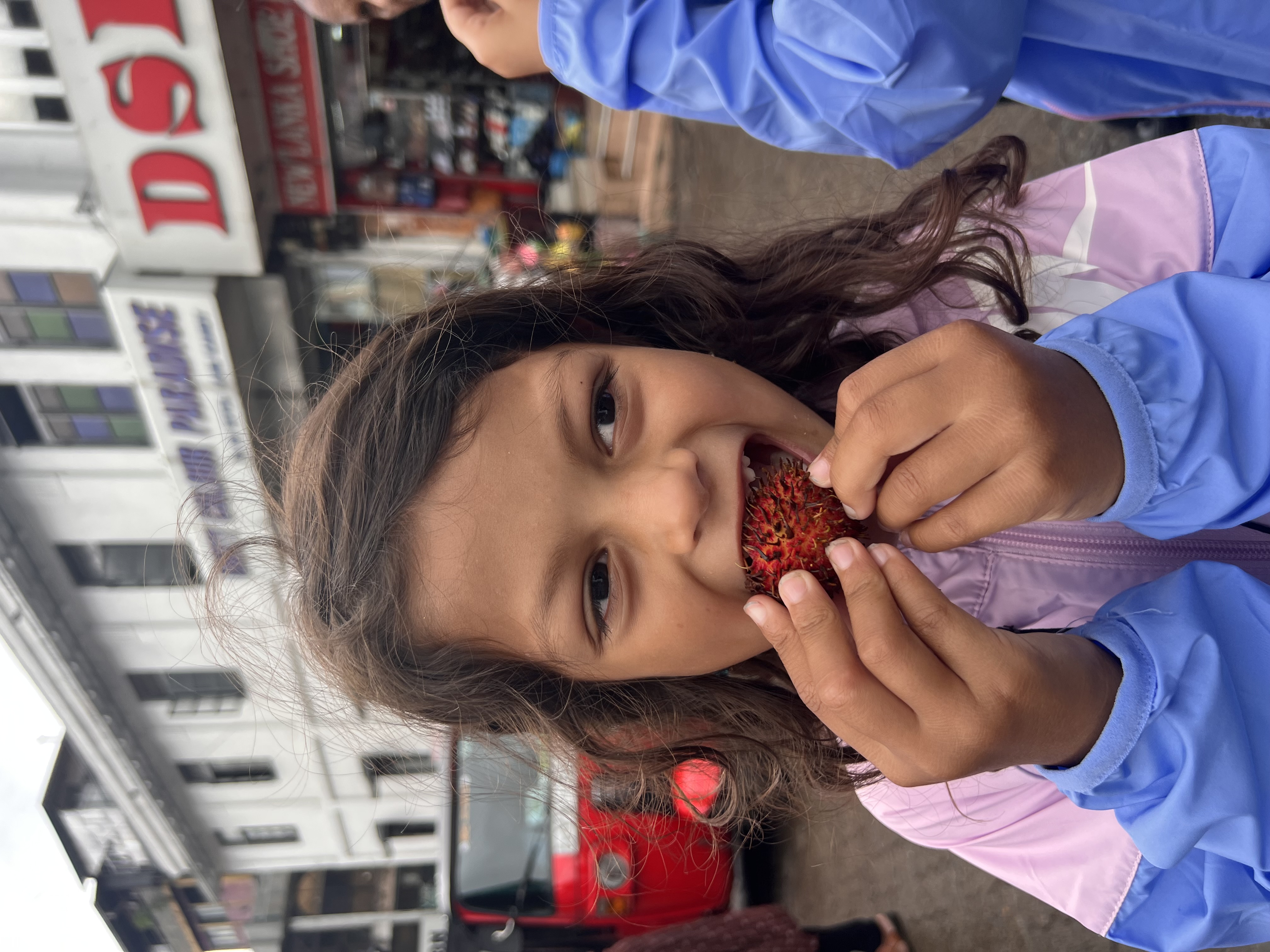
The market stalls sell fruit, spices and other food. You can walk around and see what is being sold. There are places to eat beyond the market too, for example for kottu roti or a fresh coconut.
4. Having dresses made
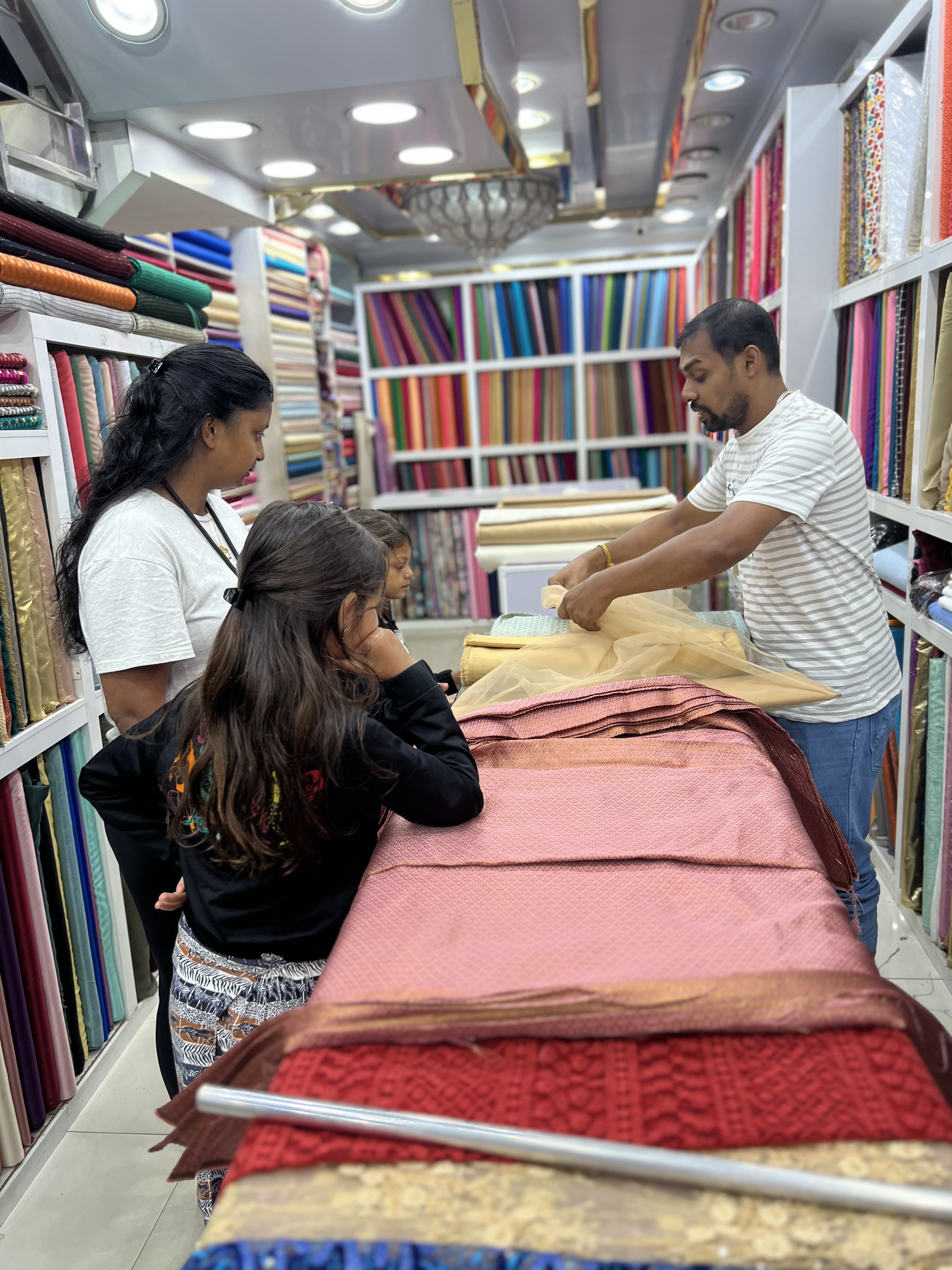
On 4 July we visited a tailor to have Sri Lankan dresses made for the girls. They chose the colours and a design, then collected their lahengas later that day. I did not negotiate the price: the girls were happy and I thought the price was fair.
5. Food in Kandy
Hoppers, curries and sweet coconut treats are among the Sri Lankan foods available in Kandy. At mealtimes, ask which dishes are less spicy if that suits your children better.
6. Elephants near the temple
At the Royal Stables, a man asked whether Mango would like to help. Before he had finished speaking, she had taken off her wrap skirt and stepped into the water. She used a piece of coconut to wash the elephant. The stables are behind the temple, and the elephants take part in religious ceremonies.
The temple complex also includes the Raja museum, about the elephant who carried the ceremonial casket for decades. The Raja museum at the temple ↗
Kandy in our route
Our temple visit, the tailor and washing the elephant appear in our diary for 3 and 4 July 2023. Use the route map to read the individual entries.
 Our full travel storyOn safari in Wilpattu
We began our safari with Visit Wilpattu in Wilpattu National Park. It immediately felt peaceful compared with busier parks such as Yala. There were far fewer jeeps around during our visit.
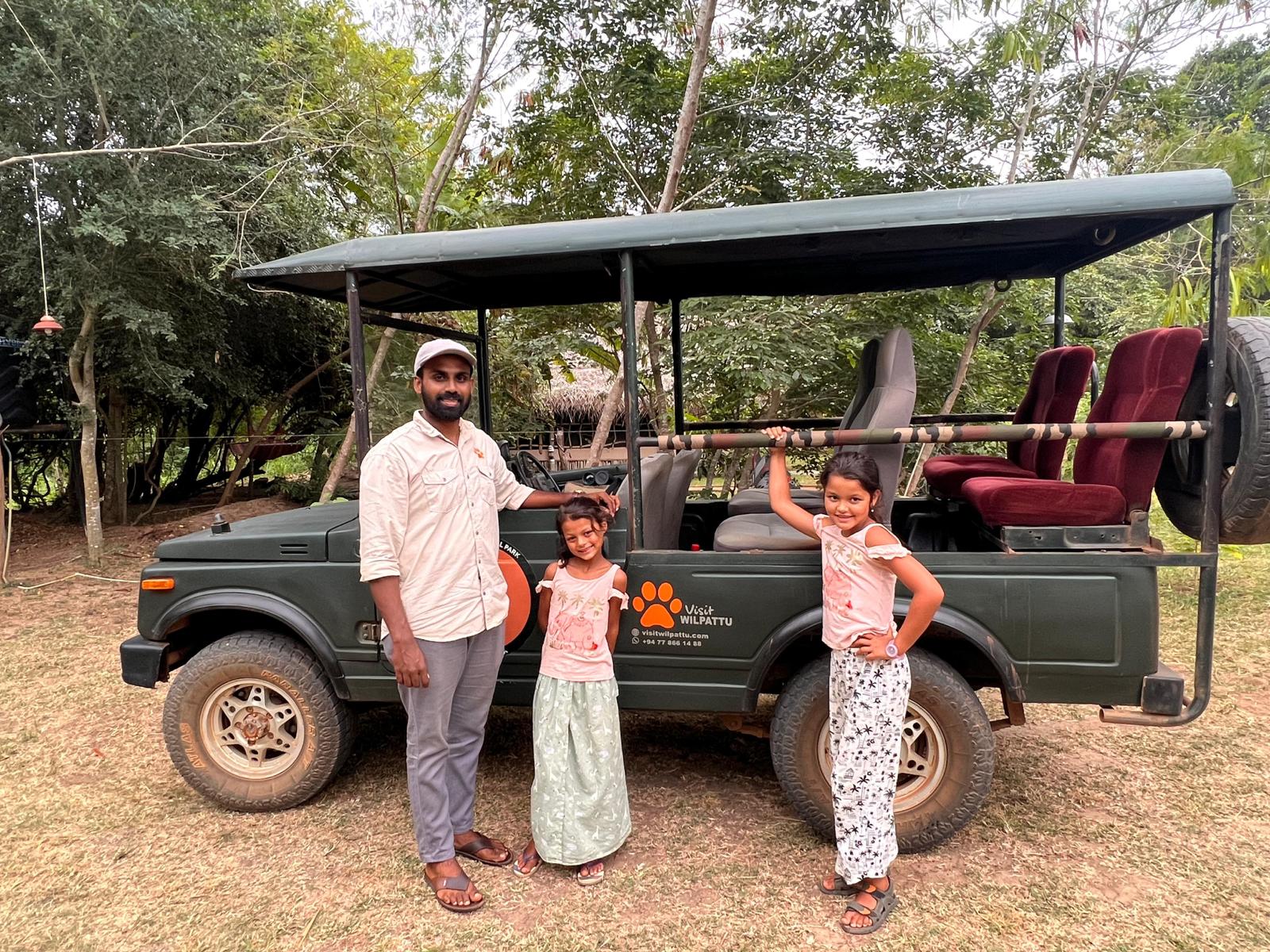
Our guide Bhashi, from visitwilpattu.com, had a particularly good jeep for travelling with children. It was a compact, customised vehicle without a barrier between driver and passengers, making it easy to speak quietly or point out wildlife. The four-passenger jeep was well suited to the park’s tracks.
Bhashi knew the park extremely well. Soon after entering, he spotted deer and explained the different species and how their antlers developed.
Naturally, we hoped to see Sri Lanka’s land-based big five:
Leopards
Sloth bears
Elephants
Buffalo
Crocodiles.
Sri Lanka’s wider big-five list also includes:
Leopards
Sloth bears
Elephants
Blue whales
Sperm whales
Although Wilpattu is known for leopards, seeing one is never certain. A sign at the entrance put it humorously: ‘You probably will not see me, but do not be disappointed. I saw you.’
At around 06.30, Bhashi drove us towards an area where he had seen leopards in previous days. After a challenging fifteen-kilometre drive, we saw a mother and cub on the road. A second cub remained hidden in the bushes.
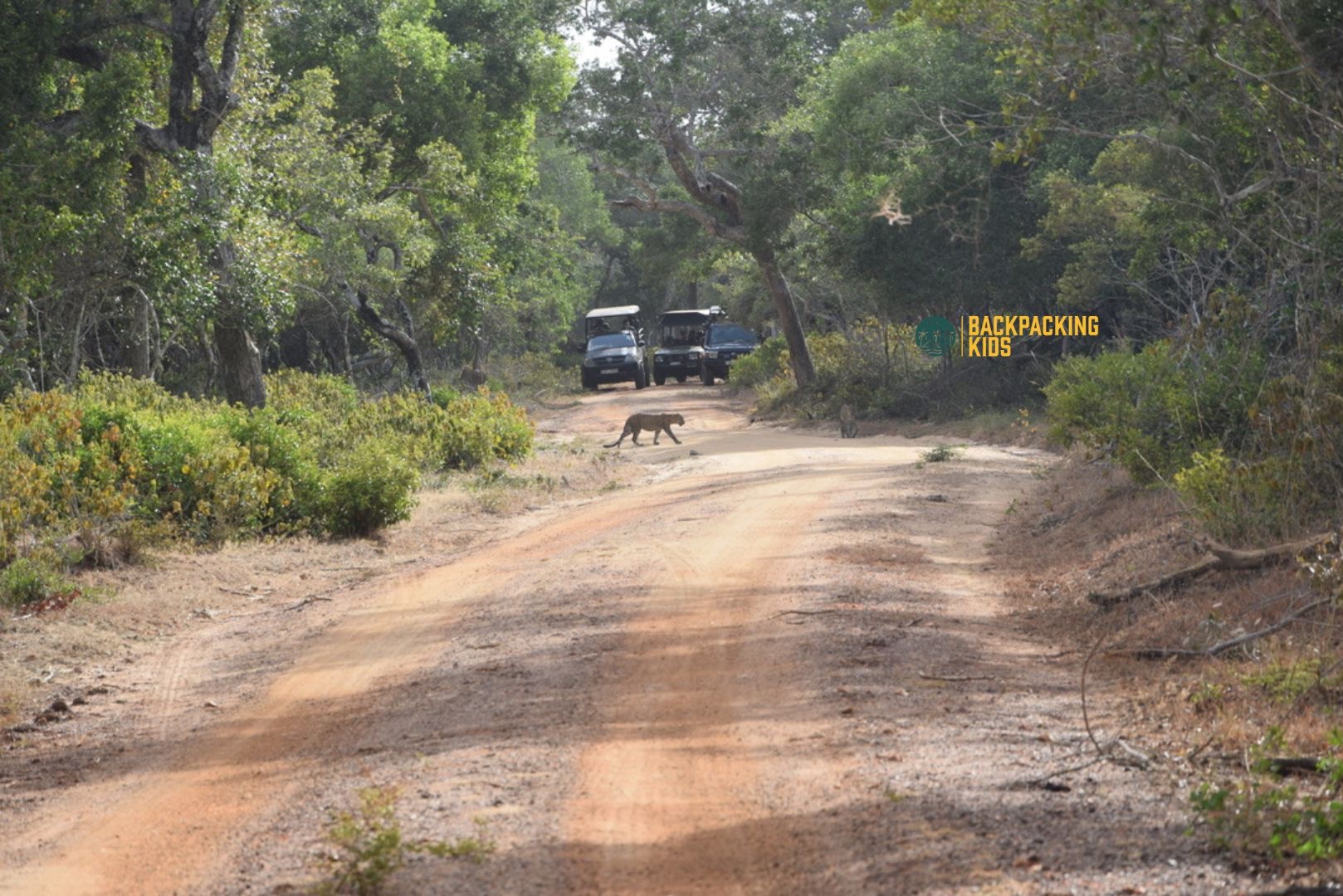
Four other jeeps soon arrived, but kept their distance without chasing or disturbing the leopards. When the animals disappeared into vegetation, Bhashi thought they would cross the road towards a waterhole. He carefully signalled another jeep to stop, leaving around five hundred metres of clear road for them.
We waited twenty minutes without seeing them again, but heard one roar. An impressive moment.
Bhashi then showed us a variety of birds. As this was not our first safari, we particularly appreciated seeing more of the birdlife. Choosing a full day worked well. Bhashi preferred that to rushing through a half-day visit.
In the middle of the park was a rest area with clean toilets. We had breakfast there while Bhashi planned the rest of the day.
We waited over half an hour at another promising spot without seeing a leopard. During the afternoon, though, we saw plenty of birds, buffalo, peacocks, monkeys, lizards and crocodiles. We had lunch at the rest area, where Bhashi warned us to eat inside because of the monkeys.
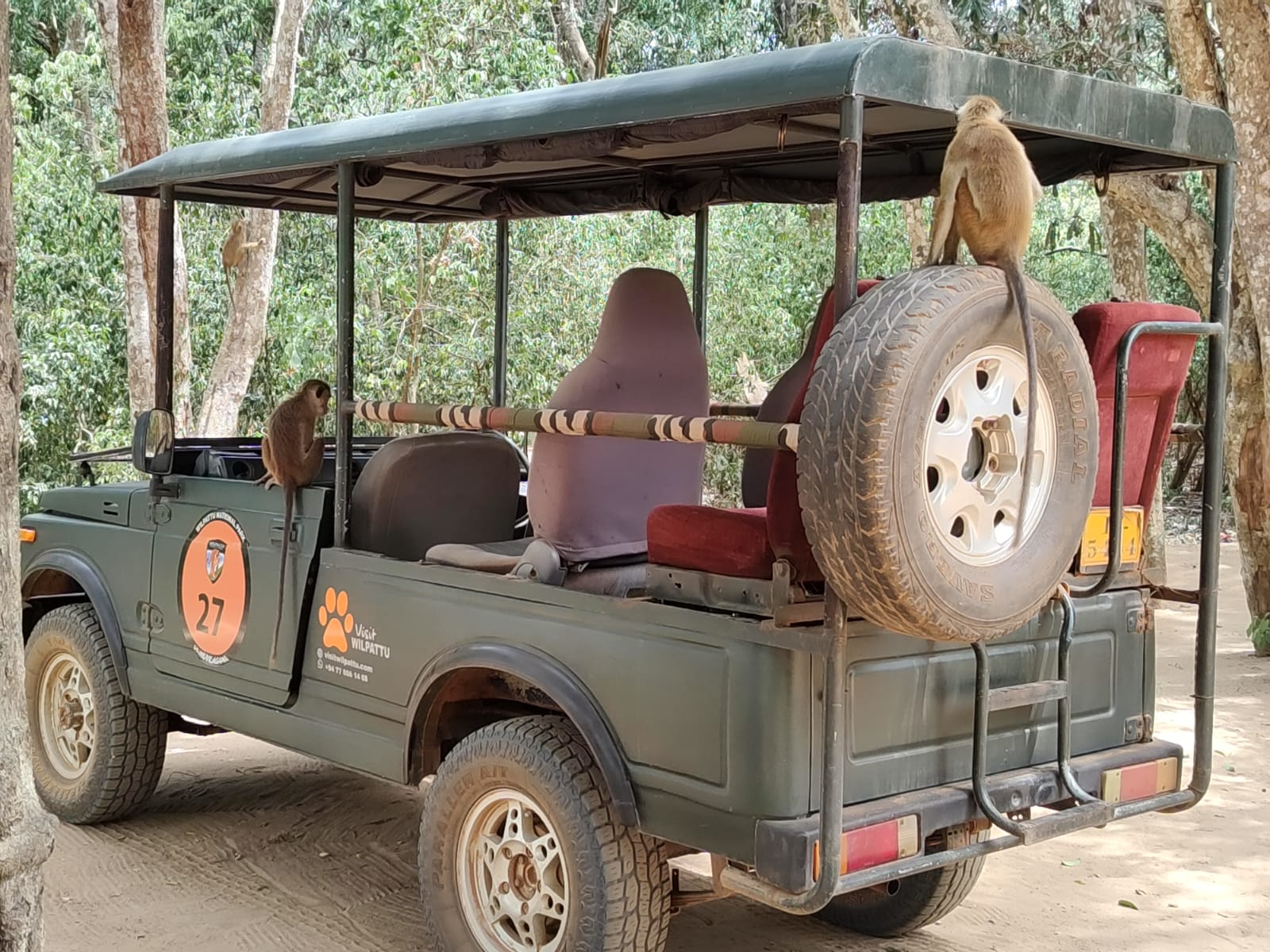
As we enjoyed homemade rice and curry and Bhashi had his meal, other visitors suddenly became excited. Monkeys had climbed into a jeep. They had targeted ours too: one opened a cool box and took a food container. Nearby, another opened a driver’s door from inside as though it did it every day.
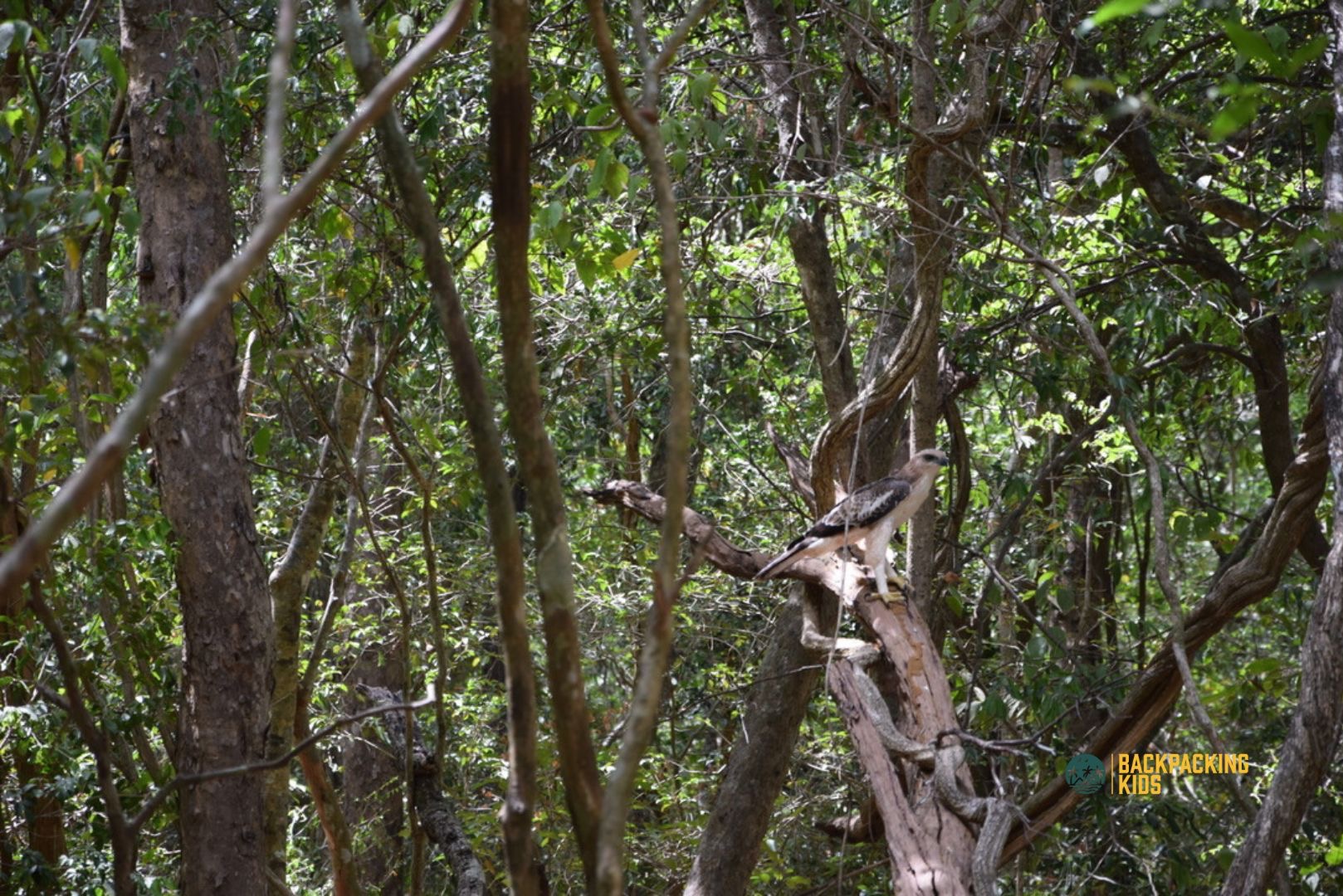
Some visitors I spoke to were disappointed by how few animals they had seen, especially elephants. Bhashi had already warned us that seeing elephants was unlikely, with better chances towards the end of the day.
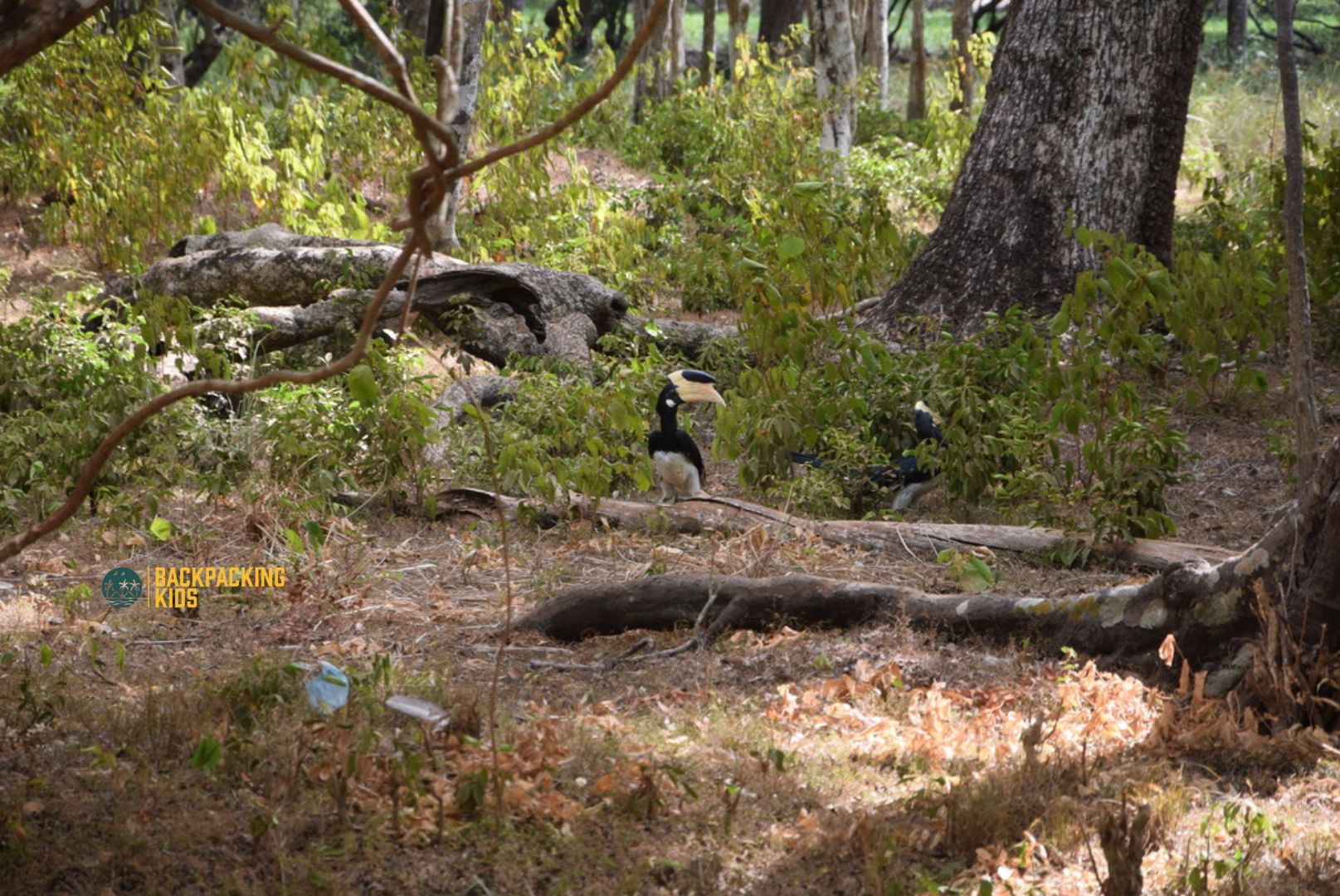
We tried for another leopard in the afternoon. Bhashi advised waiting until after 15.00 to look for bears, as they were usually inactive earlier. Then Shamila spotted a leopard beneath a large tree about two hundred metres away. Through Bhashi’s binoculars, we could see it clearly, although photographing it was difficult. The girls were fascinated too; Jaïra remarked on its beautiful coat.
On the almost forty-minute drive back towards the entrance, two bears crossed our path. We watched their interactions from close by for about twenty minutes. An extraordinary encounter.
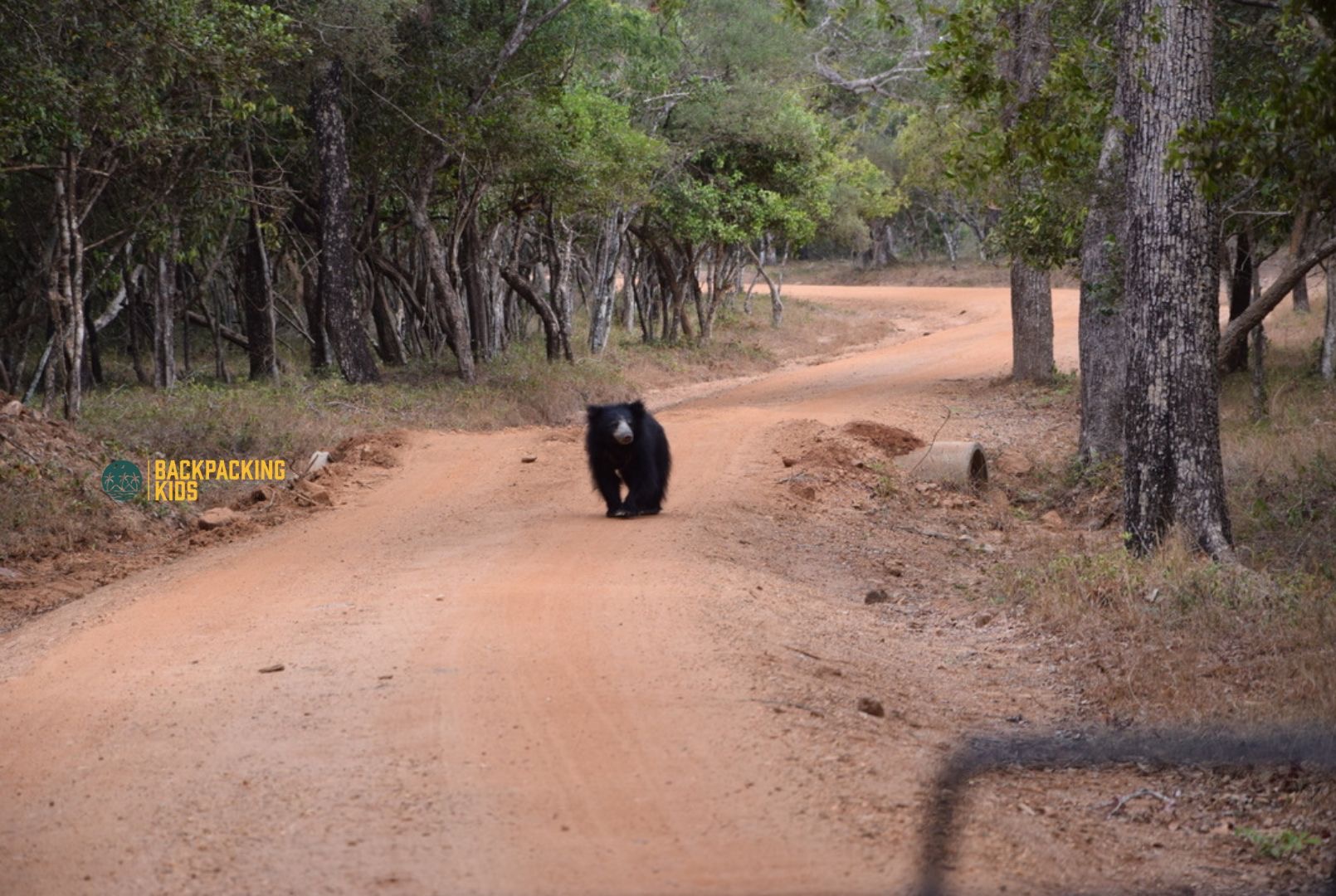
With the bears, we had seen our land-based big five across two parks. We were delighted, and the girls had loved the day. If you plan a safari, think about the animals you hope to see and choose a suitable park.
Do not expect to see everything. For us, a full-day safari was worth the extra cost, and we valued having a guide who gave the animals space.
Contact Bhashi through www.visitwilpattu.com or on WhatsApp at +94778661488.
Bhashi could also arrange accommodation for up to four people around five minutes from the entrance. At the time, he quoted 20,000 rupees for four people, including dinner and breakfast. Ask directly about current options and prices.
Welcome to Arugam Bay on Sri Lanka’s east coast. Beaches, warm water and surf breaks bring travellers here from around the world. This is an introduction to the town and the places around it.
Arugam Bay’s past
Arugam Bay is part of Sri Lanka’s east-coast history, shaped by coastal communities, fishing and connections across the Indian Ocean.
Surfing in Sri Lanka
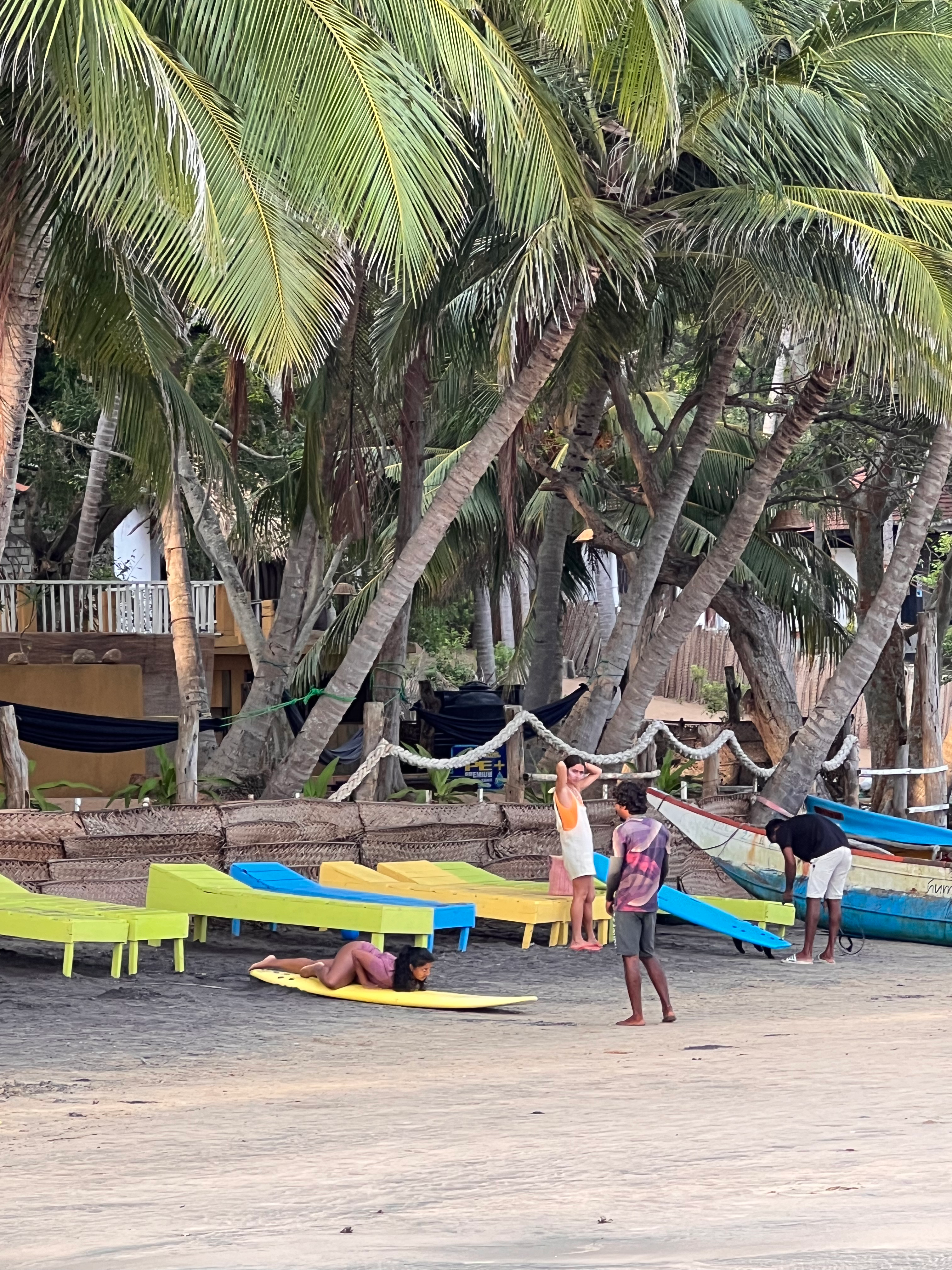
Arugam Bay’s international reputation for surfing developed as travellers discovered the east coast’s waves. Surfers began arriving from around the world, drawn by the breaks and tropical climate.
Arugam Bay today
Arugam Bay is a lively coastal town with both local and international influences. These are some of the things to explore:
1. Surfing: Main Point, Whiskey Point and Elephant Rock are among the area’s well-known breaks. Ask a local instructor which conditions suit your level. Surf schools and board hire are available in town.
2. Beaches: Palm-lined beaches, golden sand and warm water are part of Arugam Bay’s appeal. Pottuvil Point is nearby too. Check local sea conditions before entering the water.
3. Wildlife: The wider region offers access to national parks, including Kumana, known for its birds. Yala is another wildlife destination in southeastern Sri Lanka, with elephants, leopards and many bird species. Sightings are never guaranteed.
4. Local culture: Explore nearby villages, the market in Pottuvil, Sri Lankan food and fishing around the lagoon.
5. Yoga: Arugam Bay has yoga classes, retreats and meditation options for visitors who want to include them in their stay.
Planning some time here
Arugam Bay brings together surfing, beaches and places to explore nearby. Whether you surf or prefer spending time on the coast, allow time for the town and its surroundings.
Green Castle, also known as Castle Palace, was an unusual hotel beside Victoria Reservoir, around twenty-five kilometres from Kandy. Its setting, the building and owner Randika made our stay memorable.
The setting
Green Castle is on the northeastern shore of Victoria Reservoir. The reservoir was created by Victoria Dam on the Mahaweli River as part of the Mahaweli Development Project, serving irrigation and hydroelectric generation.
To reach the hotel, we travelled to Teldeniya in Sri Lanka’s Central Province, among green hills and rice fields. Coming from Kandy, we turned onto a narrow road beside a Buddhist temple. After about a kilometre of winding road, we reached a large stone gateway with its doors open. Another short climb brought us to a hotel that looked like a stone castle.
A warm welcome and an unusual building
Owner Randika, who lived at the hotel, welcomed us. He spoke excellent English and was clearly proud of what he had created.
Downstairs was a central hall with a seating area. The house had been built around a large rock rising through its centre, so a second lounge sat a few steps higher. Windows on all sides gave wonderful views. The back garden ran down towards the reservoir. Randika showed us how far the water reached when it was full.
Upstairs were four bedrooms. The largest was enormous, with a double bed and an extra bed, two steps between its levels and windows all around. A terrace ran around it too. The bathroom had a shower and whirlpool bath with large windows looking out, making an evening bath particularly special. Everything was spotless.
Activities and hospitality
Randika had suggestions for things to do and was happy to help. From the hotel, there were places to swim in natural surroundings and a nearby rock temple to walk to. Green Castle made a useful base for exploring the area.
Teldeniya itself was small, with a couple of supermarkets and a bus station. The hotel was well away from the tourist crowds. For snacks from the supermarket, we had a walk of around two kilometres, beginning with a steep uphill stretch.
Meals at Green Castle
Randika ran the kitchen himself. He asked early in the morning what we wanted to eat and sent a menu before arrival, giving him time to buy the ingredients. The food was excellent. The prices initially seemed high, but the portions and flavours made it worthwhile.
Breakfast was excellent too, with fresh fruit, bread and homemade waffles. The children loved it.
Planning some time here
We loved our stay at Green Castle, including its secluded location. Randika and his assistant Wima looked after us well. We would recommend it to travellers looking for somewhere quieter, away from the usual tourist areas. At the time, we booked through Booking.com.
Book Green Castle here: Booking.com
 Our full travel storyPasikuda
We stayed in Pasikuda on Sri Lanka’s east coast in July 2023, at Hotel Breeze Pasikudah. After the coast we continued to Polonnaruwa and Kaudulla. The area had been through the civil war, the tsunami and, more recently, the coronavirus pandemic.
The civil war
Sri Lanka’s civil war lasted more than 25 years and affected the east of the island. People were displaced, buildings and roads were damaged and tourism declined. After the war, residents had to rebuild their lives and businesses.
The 2004 tsunami
The tsunami struck Sri Lanka’s east coast on 26 December 2004. Homes and tourism facilities around Pasikuda were destroyed and lives were lost. Recovery took years.
Hotels along the coast
After the war, the Sri Lankan government invested in tourism around Pasikuda. Infrastructure was improved and hotels and resorts were built along the beach. These were substantial investments in an area that had received few visitors for a long time.
The coronavirus pandemic
Travel restrictions during the pandemic brought another drop in visitors. Hotels, restaurants, drivers and others working in tourism lost income. After the war and tsunami, this was another difficult period for the area.
The beach and surrounding area
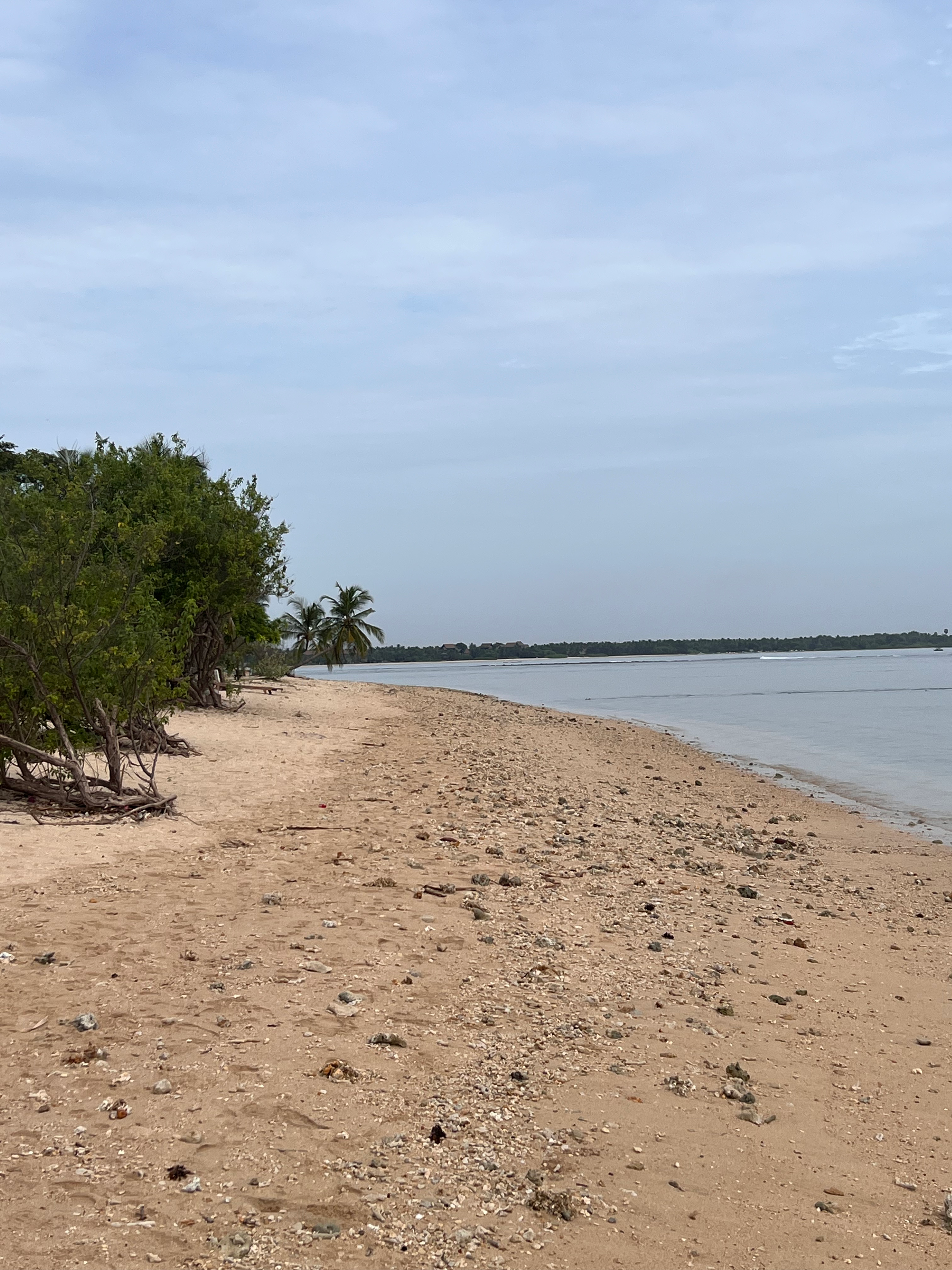
Pasikuda lies on a bay on the east coast. The beach and sea draw many visitors. Temples and historic sites can be found beyond the coastal towns. We included Pasikuda among the other stops on our journey through Sri Lanka.
Our stay in July 2023
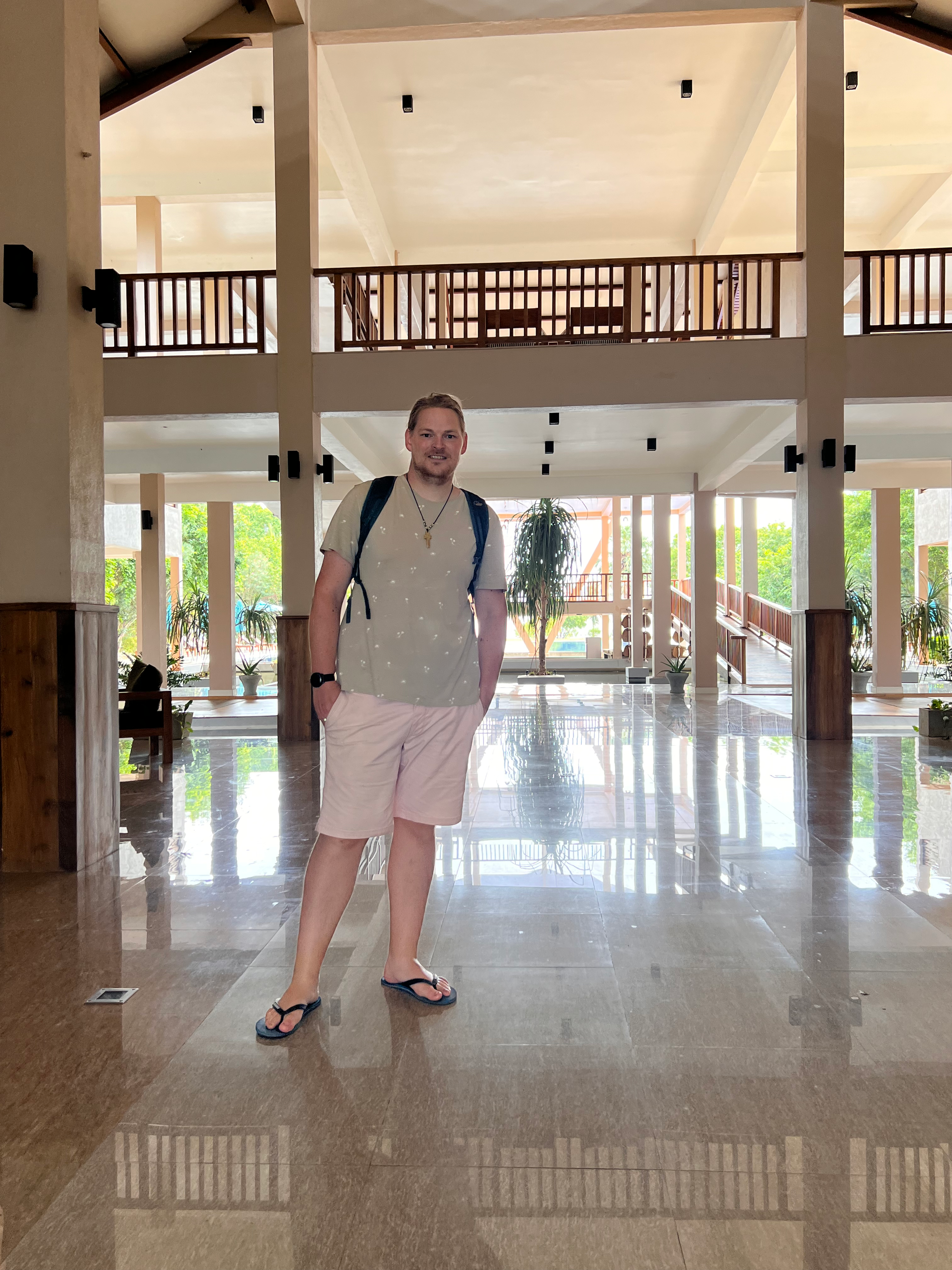
Hotel Breeze Pasikudah appears in our travel diary on 11 July. The photographs on this page are from our stay. We headed inland again for the next part of our journey.
The history of this coast involves more than hotels and beaches. Residents lived through the war, the tsunami and the pandemic. Tourism provides work and income, but that income can also disappear suddenly.
A stay on the coast can be combined with other parts of Sri Lanka. These are a few practical points when planning a stop here.
1. The beach and sea
Ask locally about conditions before swimming, snorkelling or diving. The weather and sea can determine what is possible that day.
2. Food and the surrounding area
There are local places to eat and businesses beyond the hotels. Allow for travel time when planning visits to temples and historic places in the region. They are not all right beside the beach.
3. Hotel facilities
Pools, spas, yoga and other facilities vary between properties. Check with the hotel itself if a particular facility is the reason you are booking.
4. Beyond Pasikuda
After Pasikuda, we visited Polonnaruwa and then went on safari in Kaudulla. These are separate stops in our route, each needing its own travel time and planning.
5. Local businesses
Staying, eating and going on trips with people from the area provides income for local businesses. Ask who operates an activity and what the price includes.
Continuing through Sri Lanka
Polonnaruwa appears in our diary on 13 July and Kaudulla on 14 July. Use the route map to continue from Pasikuda to those visits and the rest of our journey.
 Our full travel storyHire a tuk-tuk or hire a tuk-tuk driver?
In our Colombo story, we explained why we did not hire a tuk-tuk to drive ourselves around Sri Lanka. It is a popular way to travel, and Instagram is full of enthusiastic backpackers showing theirs.
But who benefits? These are the advantages we often hear:
Maximum freedom
Low cost
A unique experience
First, how much extra freedom does driving yourself really give you compared with hiring a local driver? Want to stop somewhere? Discuss it with the driver. They can also show you places you might otherwise miss.
Second, it is not necessarily cheaper. Prices vary, and collection and return arrangements can add costs.
Third, the unique experience. Of course, driving a tuk-tuk for the first time is unusual, but plenty of other travellers do it too. Who can show you a place better than someone living there? We also find it more relaxing to be driven for two hundred kilometres at around forty kilometres an hour in temperatures above thirty degrees.
Using a tuk-tuk as a taxi can support the local economy in several ways. For us, that matters when deciding between a driver and hiring a vehicle from a rental company.
A tuk-tuk taxi provides paid work directly for a local driver, helping support the driver and their family.
Some drivers belong to cooperatives or local taxi businesses, with local fees, licences and other costs. That can help keep more spending in the local economy.
Drivers can also introduce travellers to nearby sights, restaurants and shops, generating income for other businesses.
Travelling with a local driver gives us a chance to talk and learn about everyday life and traditions. We value that contact.
For us, tuk-tuk taxis offer several advantages: work for drivers, spending with local businesses and meeting people who live there. It is one way to contribute during a trip.
If you need a tuk-tuk on your next trip, consider hiring a local driver.
Another option is PickMe, Sri Lanka’s equivalent of Uber. We found it reliable and reasonably priced during the trip described in our original account.
 Our full travel storyTravelling to Sri Lanka
On our first morning in Colombo, birds sang, palms moved in the breeze and sunshine filtered through the curtains. The smell of a fresh Sri Lankan breakfast was already in the corridor. It could have been the caption of an Instagram photograph of my daughters waking up.
The reality was a little different. All that was true, but add a noisy air conditioner set to Iceland. Still, a good morning. Before taking you out in Colombo, let us go back to the previous evening.
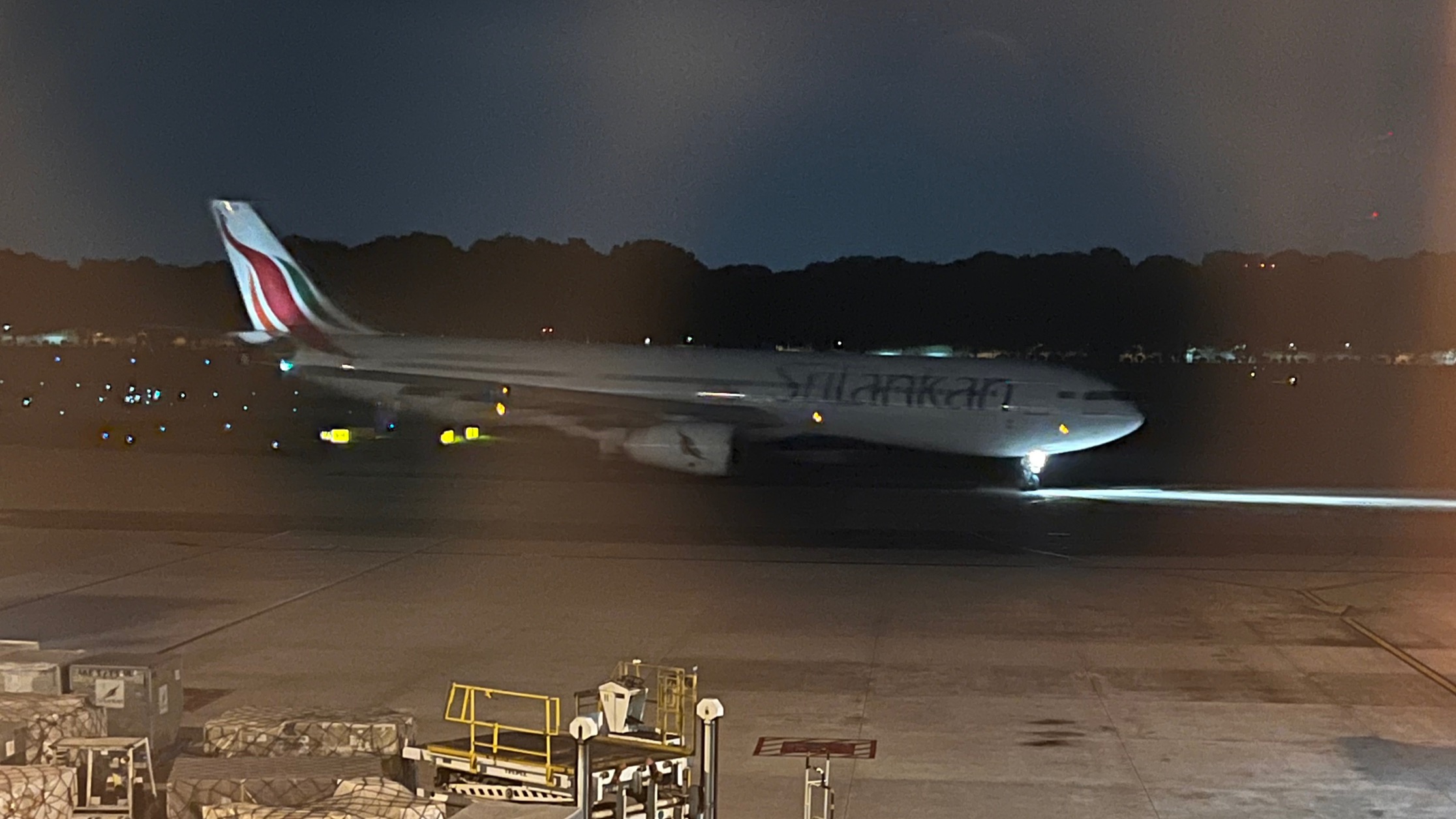
From Singapore, we flew with SriLankan Airlines to our final destination. Choosing the airline was straightforward: think globally, act locally. It might not make much difference, but we liked the idea. We also found the SriLankan crew much friendlier than KLM’s. The aircraft were not necessarily brand new, but perfectly fine. Unfortunately, we were delayed by over an hour in Singapore.
Arriving in Sri Lanka is always special for our family. For one of us, it feels like coming home; another may need to adjust. The heat after twenty hours of travelling, combined with Colombo airport’s organised chaos, was intense. Especially with a four-hour flight delayed by an hour and a half.
First came immigration: long queues moving painfully slowly. People kept being sent back and returning later. I saw others filling in forms. ‘Do not worry, we arranged our visas beforehand,’ Shamila said hopefully. I was not convinced and went to look at the forms. There was another arrival form to complete, though nobody had pointed it out. We filled ours in while queuing and passed through the desk in seconds. Then on to the bags, all of which had arrived this time.
Last stop: our airport pickup. We had arranged a driver to take us to the hotel, but he was waiting outside rather than inside. That meant heading into the heat and finding him among everyone looking for a taxi. Fortunately, drivers seem to have a knack for spotting you. All was well.
It was nearly 23.30 when we got into the van. Colombo seemed asleep, dark and with few people outside. However far we drove, the centre still seemed distant. The hotel was difficult to find until a call to the owner helped. When we turned into its side street, all the shutters were down. Then a light came on, and a helpful man came out to get us inside.
Shamila asked whether he needed one passport or all of them to check us in. ‘Tomorrow, madam. Sleep first. No problem.’ Upstairs, he opened our rooms, named Avocado and Pear. Very hot, but clean. Until we opened the bathroom door and found a cockroach. We knew it could happen; I had only seen one on all my Sri Lanka trips, unlike in Florida hotels. The owner arrived barefoot with a towel to remove it. Not the best late-night start. The children thought it disgusting and refused to use the toilet, though that did not last long once they realised there was no alternative.
We soon fell asleep, thinking about exploring Colombo the next day.
 Our full travel storyRosie the dog
Travel also brings us other people’s stories. This was one we heard in Pasikuda.
Pasikuda was quiet, but one of the loveliest places on this trip so far. As I put on my running shoes for a sunset run along the sandy tracks beside the sea, Shamila began talking to the restaurant manager.
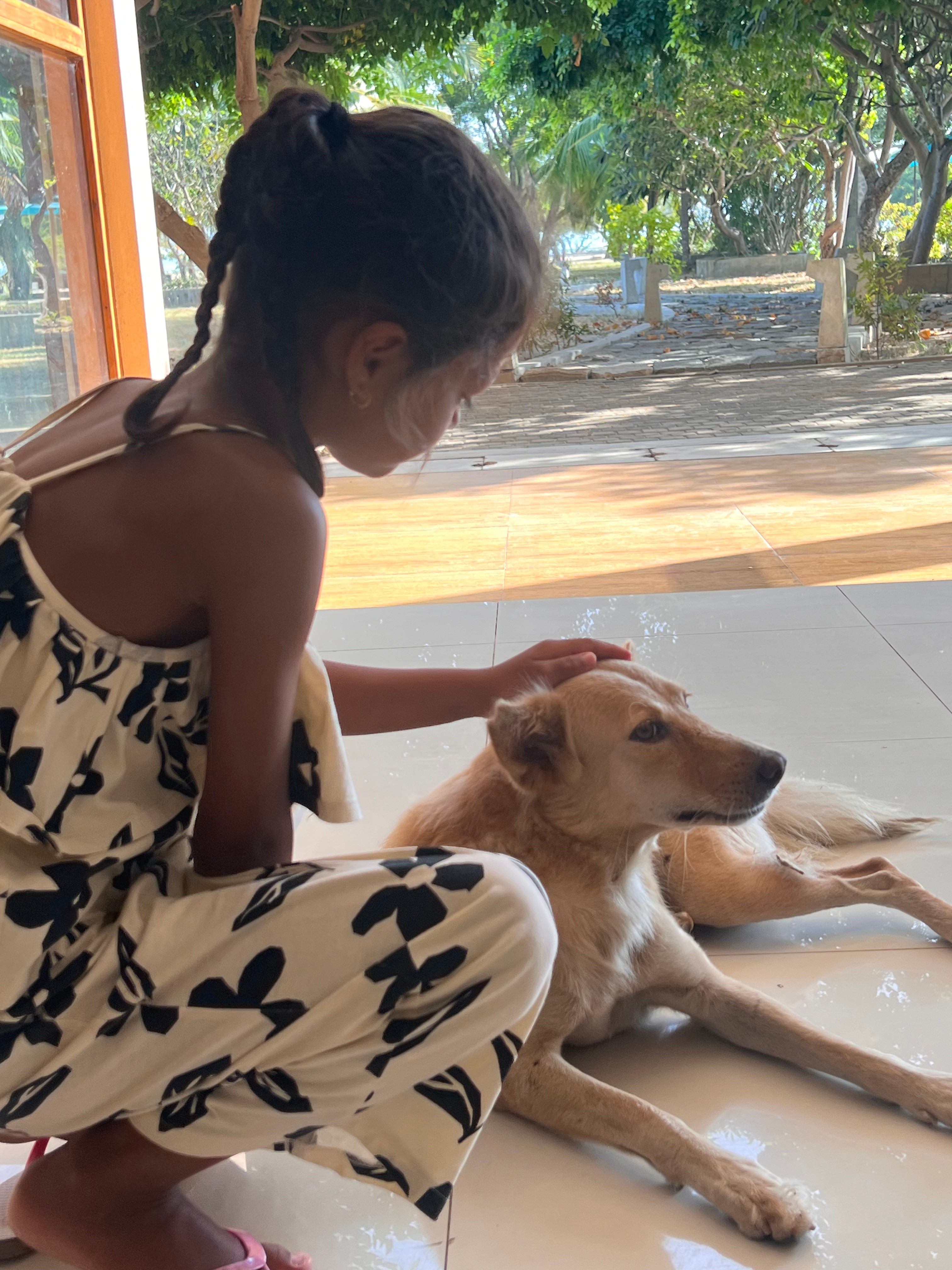
He told her about the cheerful golden dog around the hotel. ‘That is Rosie, my dog.’ About a year earlier, he had been standing by the gate on the phone when a stray dog kept barking at him. He tried to shoo it away, but it continued and pulled at his trouser leg. When he looked down, a cobra was beside him, ready to strike. He believed the dog had saved his life. Since then, she had lived at the hotel and been cared for there.
That part of the story ended happily, but he had suffered terribly. After losing everything in the civil war, he went to Paris for work. He spent nearly ten years living and working there before being refused permanent residency and returning home. He then lost one daughter to brain cancer at seventeen and another to a snakebite at fifteen.
Now, a dog had saved him from a snake. An extraordinary story.
At breakfast the next morning, I told him Shamila had shared his story. I asked about cobras in the area. He said there were many, linking them to land that had become overgrown after the tsunami.
He thought I was mad to have gone running there. I was genuinely shocked and thought back uneasily to the previous evening’s run.
Arugam Bay · Surf spots
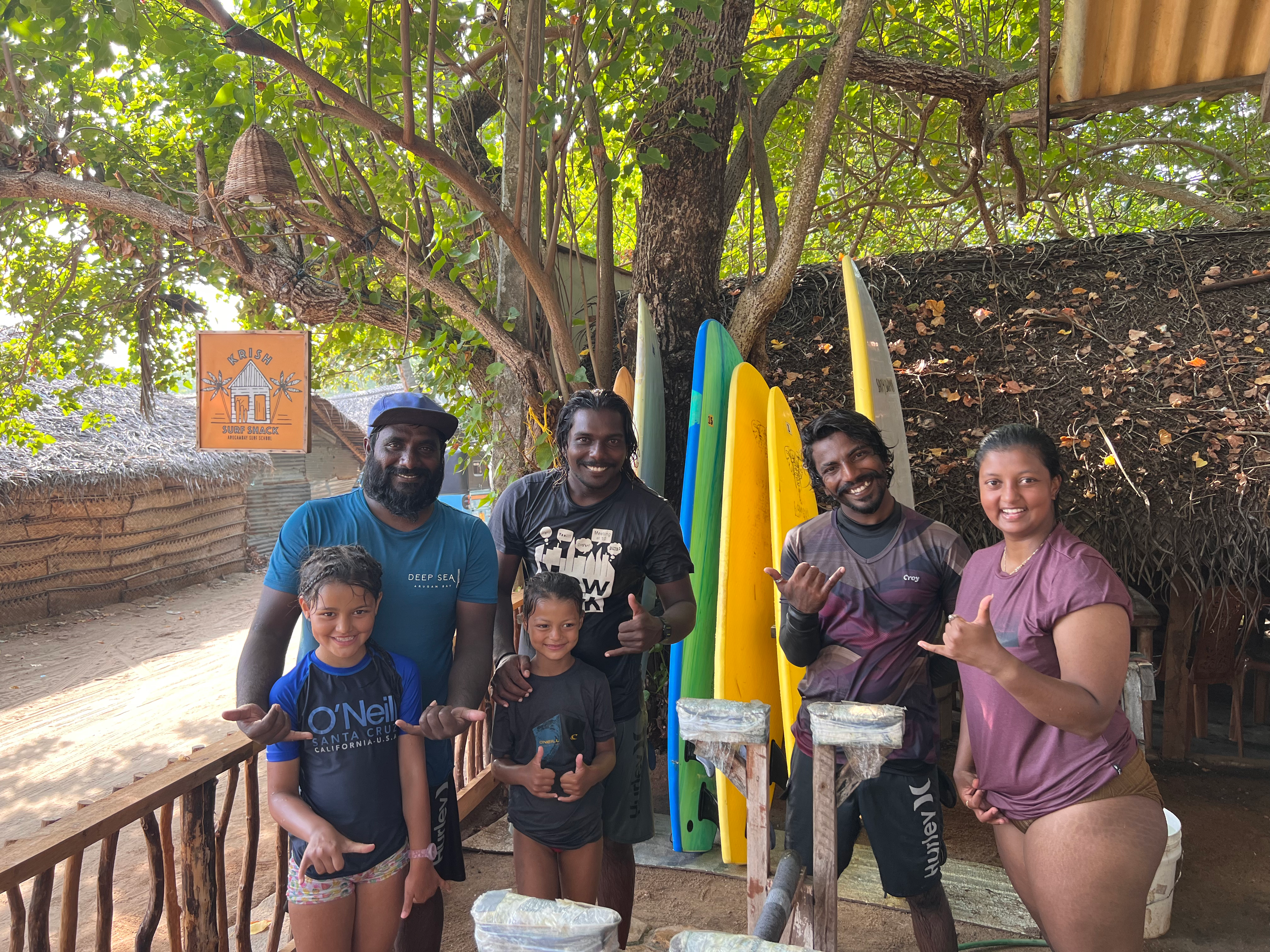
Our friend Krish has a surf school on the east coast. His is the first place in our surfing archive.
Meet Krish and explore our surf spots →Our own experience · 2023 trip
These stays feature in our trip and the book Niet gevonden, wel geraakt. The experiences describe our stay at the time.
Colombo
A small first stop in a quiet residential neighbourhood. Our driver needed a little time to find the entrance.
Search on Booking.com →Negombo
Simple and friendly, with a courtyard garden and pool where the children jumped in as soon as we arrived.
View on Booking.com →Kandy
We returned for its central location near the lake and Temple of the Tooth. The location mattered more to us than luxury.
View on Booking.com →Polonnaruwa
A familiar place where we returned after an earlier trip. The children headed straight for the pool on arrival.
View on Booking.com →Trincomalee
A small place near Dutch Bay. The entrance was hidden in a narrow side street and difficult to find.
View on Booking.com →Jaffna
Our first night in Jaffna, in a building incorporating traditional regional architecture.
Search on Booking.com →Jaffna
A peaceful place with greenery and rooms with verandas. We immediately noticed the outdoor space for the children.
View on Booking.com →Bentota
A comfortable resort. On our trip, we crossed the river by boat to reach it.
Search on Booking.com →Galle
A small place inside Galle Fort’s walls. In the evening, we could walk straight out into the fort.
View on Booking.com →Unawatuna
A larger hotel on a hill at the end of the bay. Our rooms overlooked the sea.
Search on Booking.com →Udawalawe
A quiet base beside an unpaved track. We drove past the entrance at first.
View on Booking.com →Weerawila
We booked two nights to rest and do some washing. Everything was well maintained, though we found the atmosphere less personal than in smaller places.
View on Booking.com →Ella
A raised room with a wooden veranda and hammock. Our driver stayed elsewhere.
View on Booking.com →Nuwara Eliya
Our base for Horton Plains, overlooking the town.
View on Booking.com →Sigiriya
Simple cabins among the greenery, with an open-sided restaurant and pool.
View on Booking.com →Colombo
We stayed here in the Dutch Hospital neighbourhood at the end of our trip.
View on Booking.com →Kitulgala
A small place overlooking the hills. The last climb was steep and bumpy.
View on Booking.com →Mannar
Our room was spacious and fresh. There was no room for our driver, so we arranged somewhere for him locally.
Search on Booking.com →Anuradhapura
We stayed here during our visit to Anuradhapura.
Search on Booking.com →More stays from our own bookings
These six places also feature among our own stays in Sri Lanka. The dates and amounts below come from our bookings at the time.
Colombo · one night · two rooms
25–26 April ·€83 for our booking
We stayed at Dutch Heritage Colombo on Hospital Street. Our booking covered two rooms for one night.
Hikkaduwa · one night
26–27 April ·€38 for our booking
In Hikkaduwa, we stayed at Villa Red Lobster. This amount relates to our one-night booking.
Galle · one night
27–28 April ·€95 for our booking
We spent one night at Secret Garden Galle Fort. Check current room options and conditions before making a new booking.
Hiriketiya · two nights
28–30 April ·€373 for our booking
We stayed at Ceylon Canopy in Hiriketiya. Our booking covered two nights.
Ella · one night
30 April–1 May ·€118 for our booking
We spent one night at Fern Hill Cabins in Ella. The amount is the total of our own booking.
Colombo · one night · two rooms
9–10 May ·€113 for our booking
Cinnamon Lakeside in Colombo is another place where we stayed. We booked two rooms for one night.
These are historical totals for the whole stay described, including both rooms where specified. Current prices and availability may differ.
Preparing for your trip
Leave room for delays and sleep on your first day. Our arrival story describes how the travelling day went with the children.
Read about our arrival →Choose the places you most want to see. Our city account includes temples and historic sites we visited ourselves.
See our stops in Colombo →A familiar face · Leo Travellers
The people we meet matter to us when travelling. Pradeep is our friend in Sri Lanka. If you are looking for a private driver for your route, you can discuss your plans with him through his business, Leo Travellers.
An airport transfer, a day out or a route with several stops: talk directly to Pradeep about what would suit your trip.
Growing worldwise with kids
What does it mean to return with your daughters to the country where their mother was born? Niet gevonden, wel geraakt follows that journey, exploring origins, adoption and belonging.
Read more about the book (Dutch) →Polarsteps
Travel diary
Travel diary
Travelled by us