
🇲🇶 Martinique
Martinique
An electric shoebox on wheels, a library full of books and a view across Fort-de-France. Our time on Martinique.
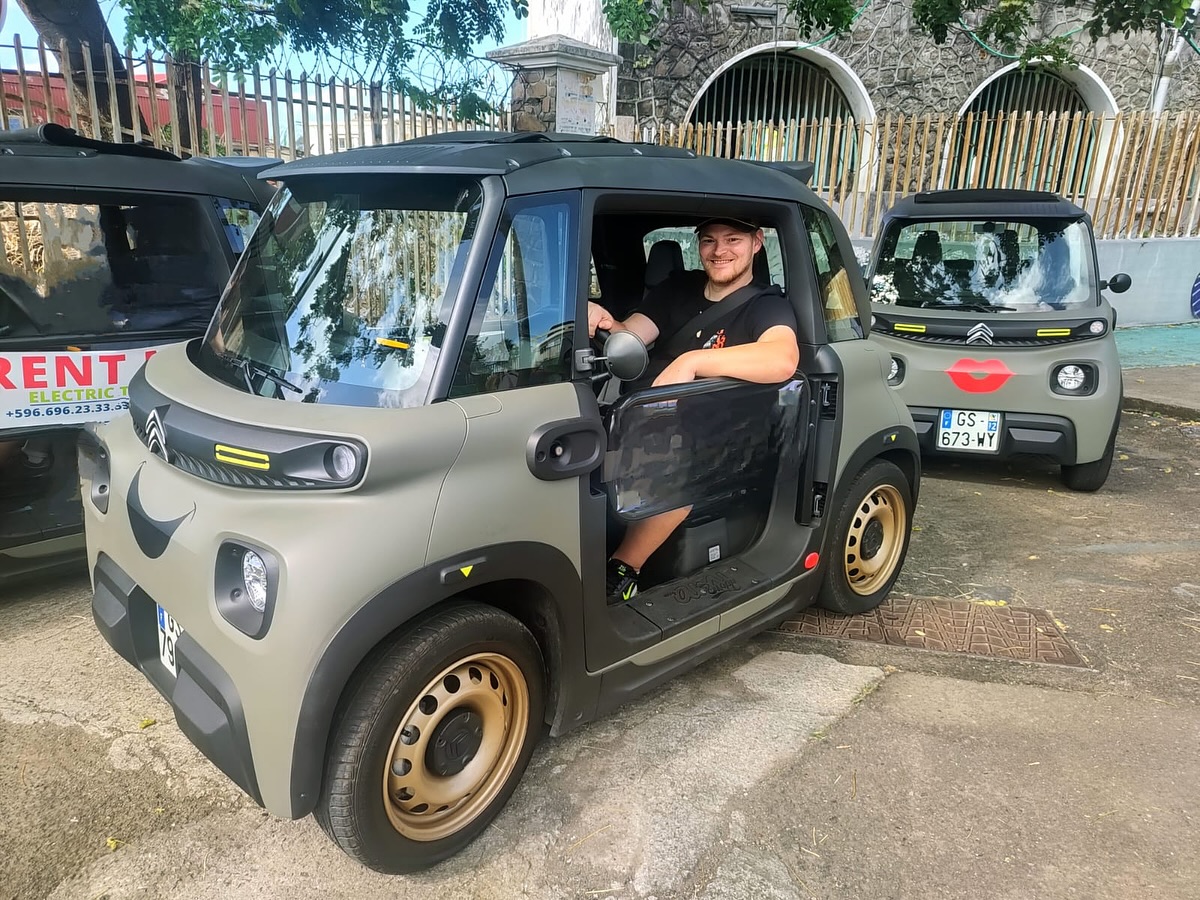
Our electric shoebox
On Martinique, we hired a Citroën Ami. An electric shoebox on wheels. A maximum of 45 kilometres per hour, no air conditioning, no radio and hardly any luggage space. And yet we loved it.
We drove through narrow streets and found it easy to park the little thing. In the photograph, I am behind the wheel with the door open. Another Ami is parked beside it. Simply getting in and driving around was part of the fun.
The standard Ami has two seats, so it is an option for two people travelling light. Ask the rental company which roads you can use and how charging works. We particularly enjoyed its tiny size.
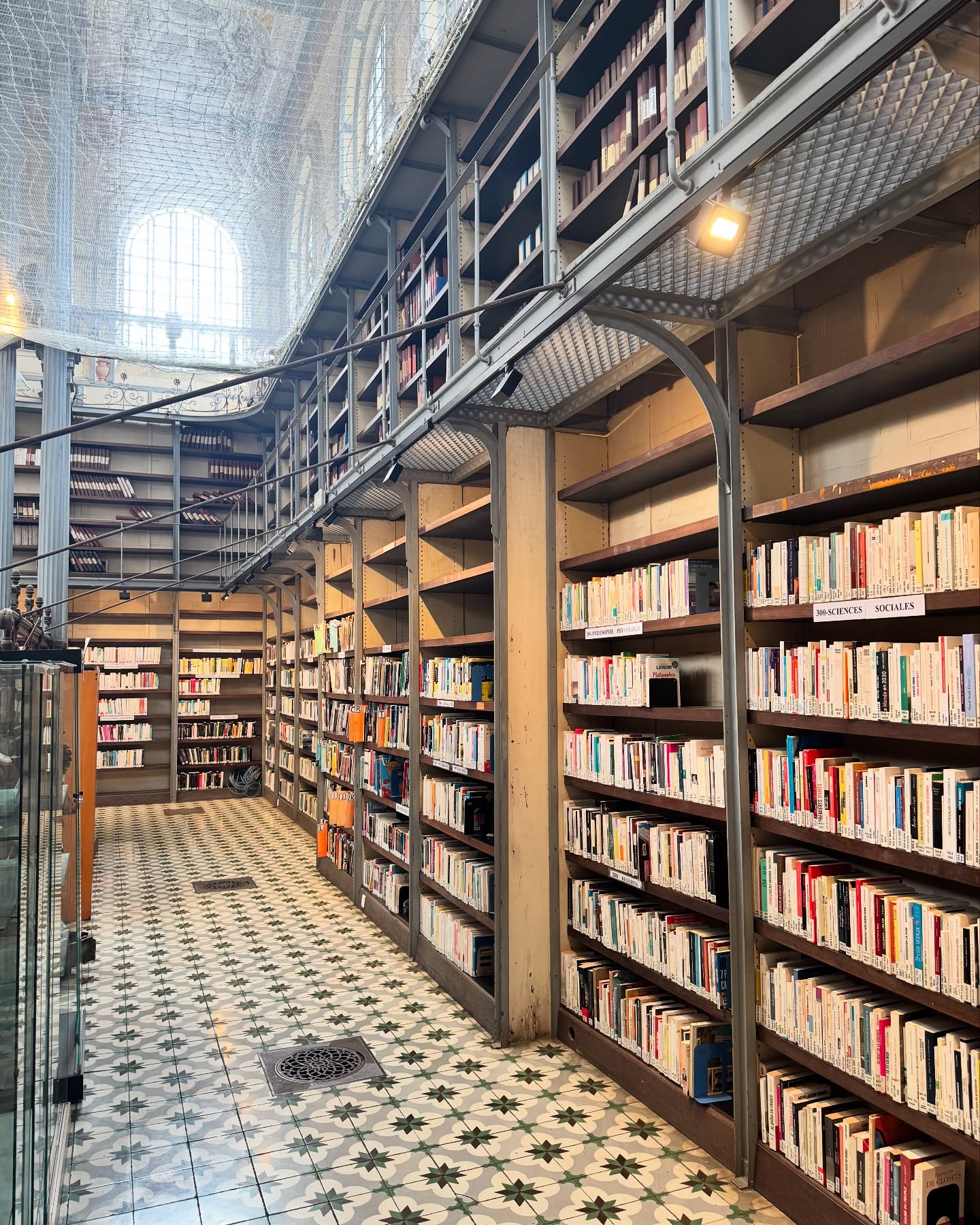
Inside the Bibliothèque Schœlcher
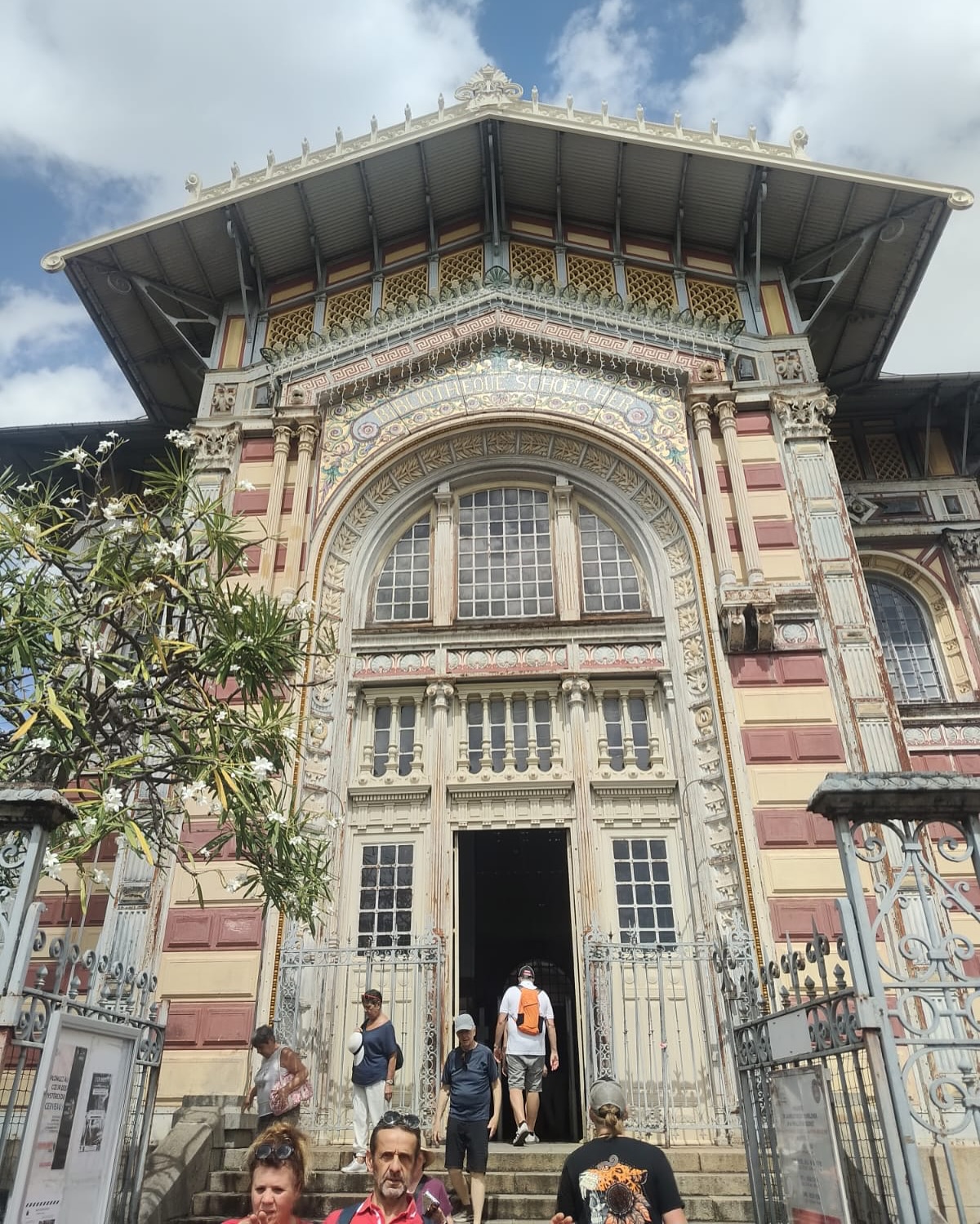
The Bibliothèque Schœlcher was a pleasant stop while exploring Fort-de-France. Out of the sun for a while and among the books. It was quiet when we visited and we did not pay an entrance fee.
Inside, tall bookshelves have a gallery above them. Patterned tiles cover the floor. Outside, the façade is much more elaborate, with pink and yellow panels, arches and plenty of decoration. We took photographs both inside and outside.
Architect Henri Picq designed the building. It was first made in France, then shipped to Martinique in sections and assembled here. The library stands on Rue de la Liberté, close to La Savane, making it easy to combine with a walk around the centre.
The metal cathedral
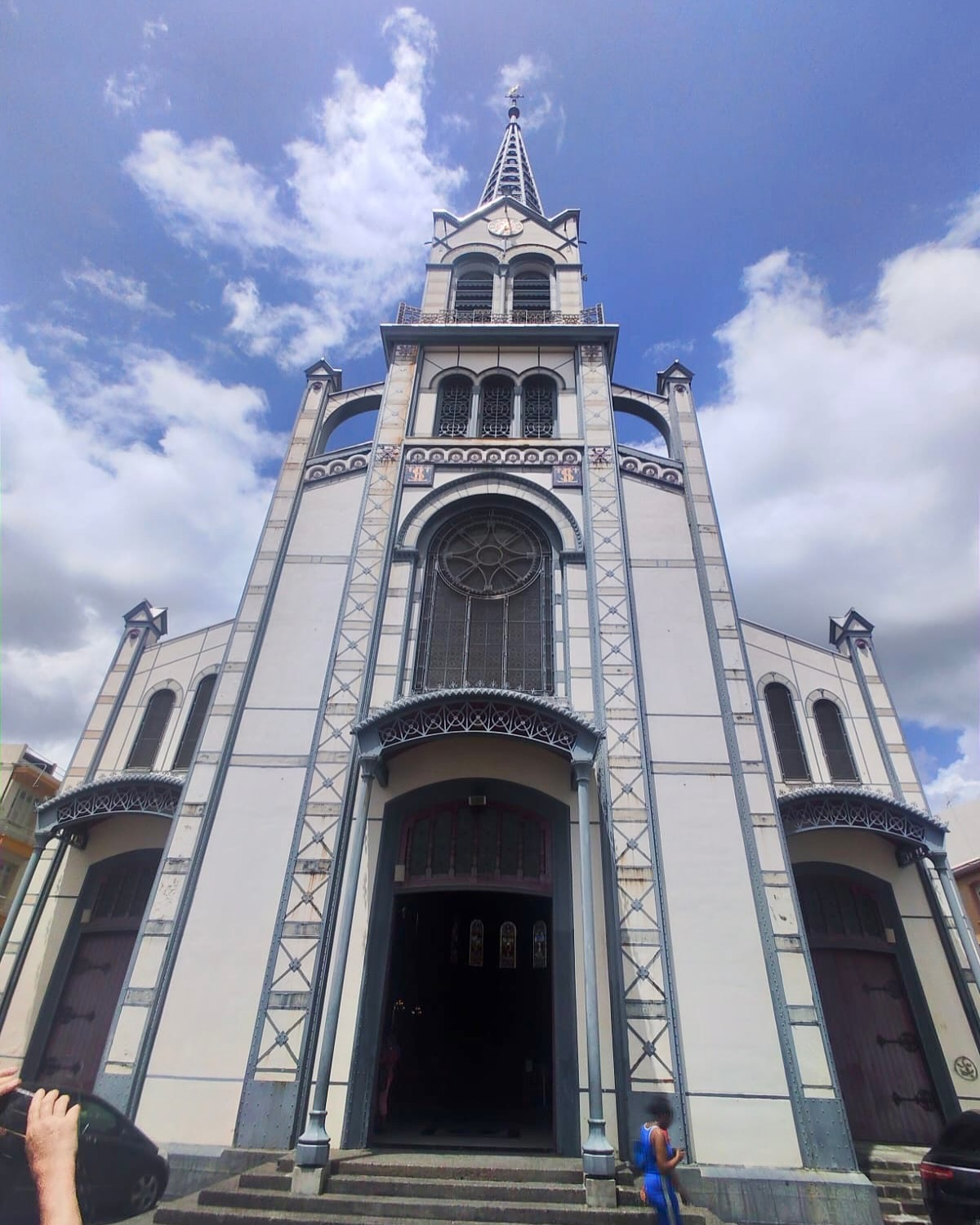
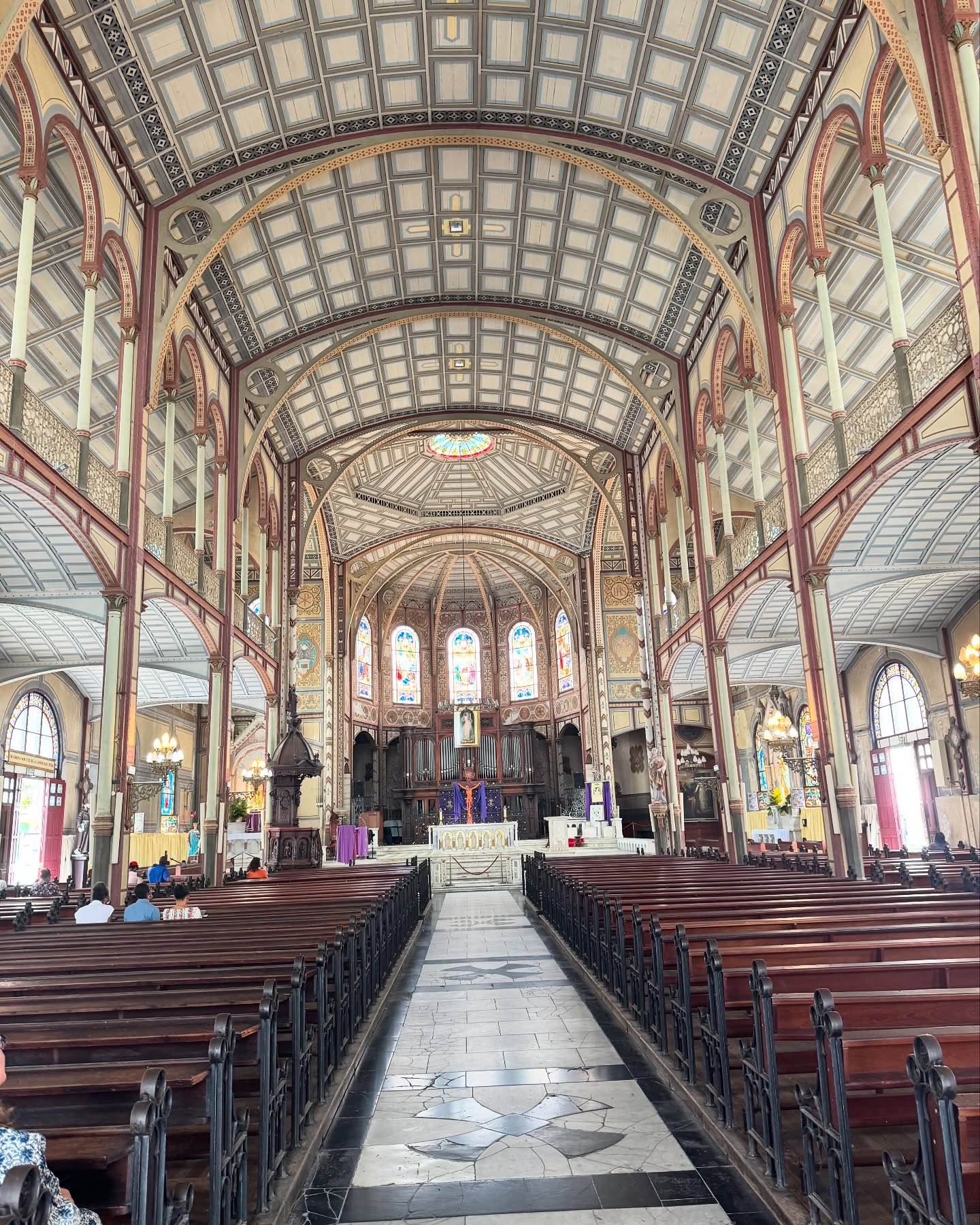
At the Cathédrale Saint-Louis, take a moment to look up. Outside, you can already see the tall tower and large windows. Inside, the pattern of the structure continues across the ceiling above long rows of wooden pews.
We went inside too. The height, windows and visible metal structure make this an unusual church. Our interior photograph shows how the columns and arches divide the space.
The present cathedral opened in 1895. Henri Picq designed this building too. Its metal frame was intended to withstand earthquakes and cyclones better than the earlier buildings on the site. The cathedral stands in central Fort-de-France, beside Place Monseigneur Roméro.
Up a hill for the view
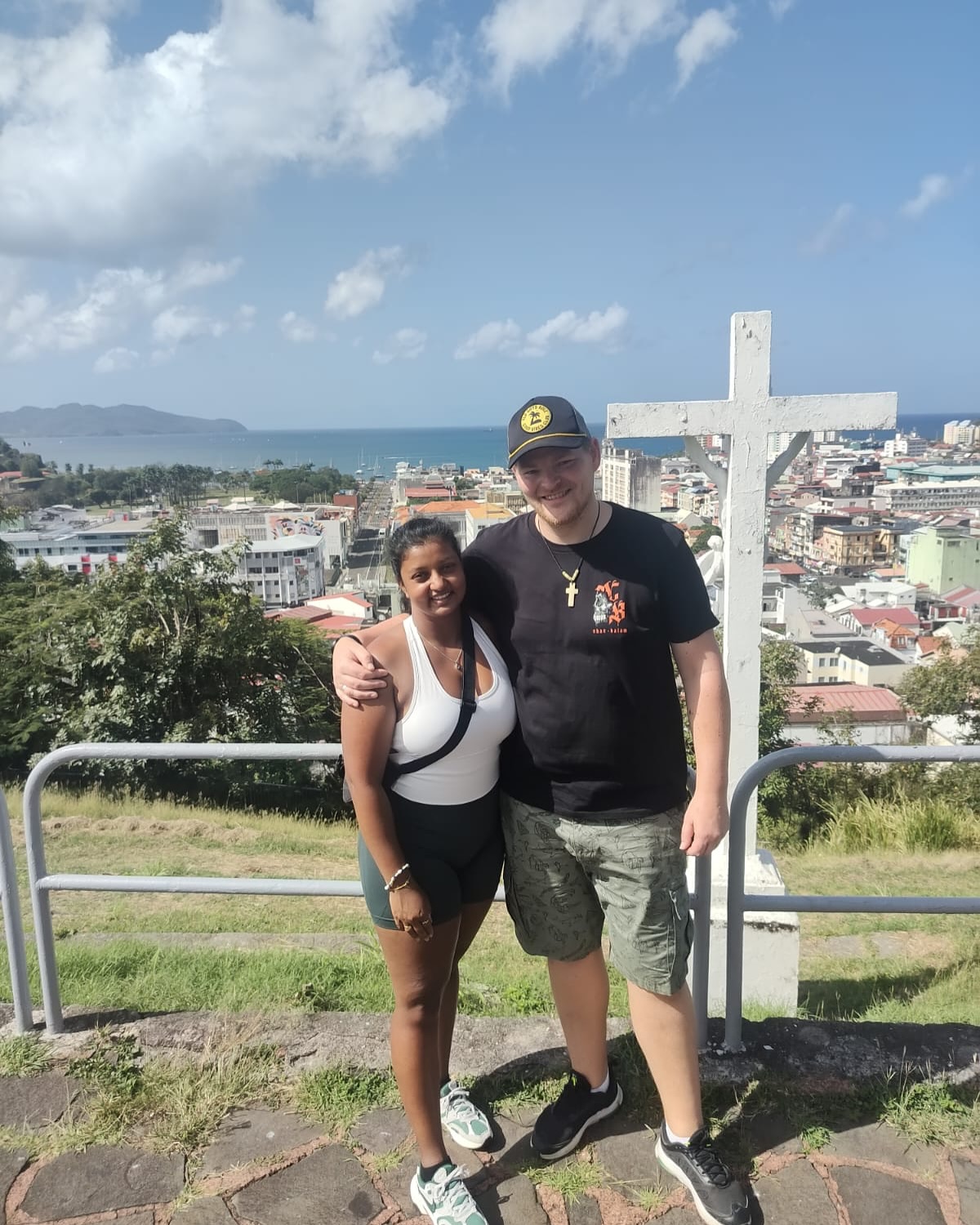
We walked up a hill without a particular plan. At the top, we looked across Fort-de-France, with the sea behind the buildings. No crowds and no ticket to buy. Just the two of us, standing there and looking.
We had our photograph taken beside a large white cross. The city stretched below us, all the way to the water. It was worth the climb. One tip from our post at the time still stands: bring water. Plenty of water.
The view above Fort-de-France ↗
Fort Saint-Louis
We also came across Fort Saint-Louis. The seventeenth-century fort looks out over the bay of Fort-de-France and its harbour.
Our post from Fort Saint-Louis ↗ · Information about visiting the fort ↗
Houses on the hillside
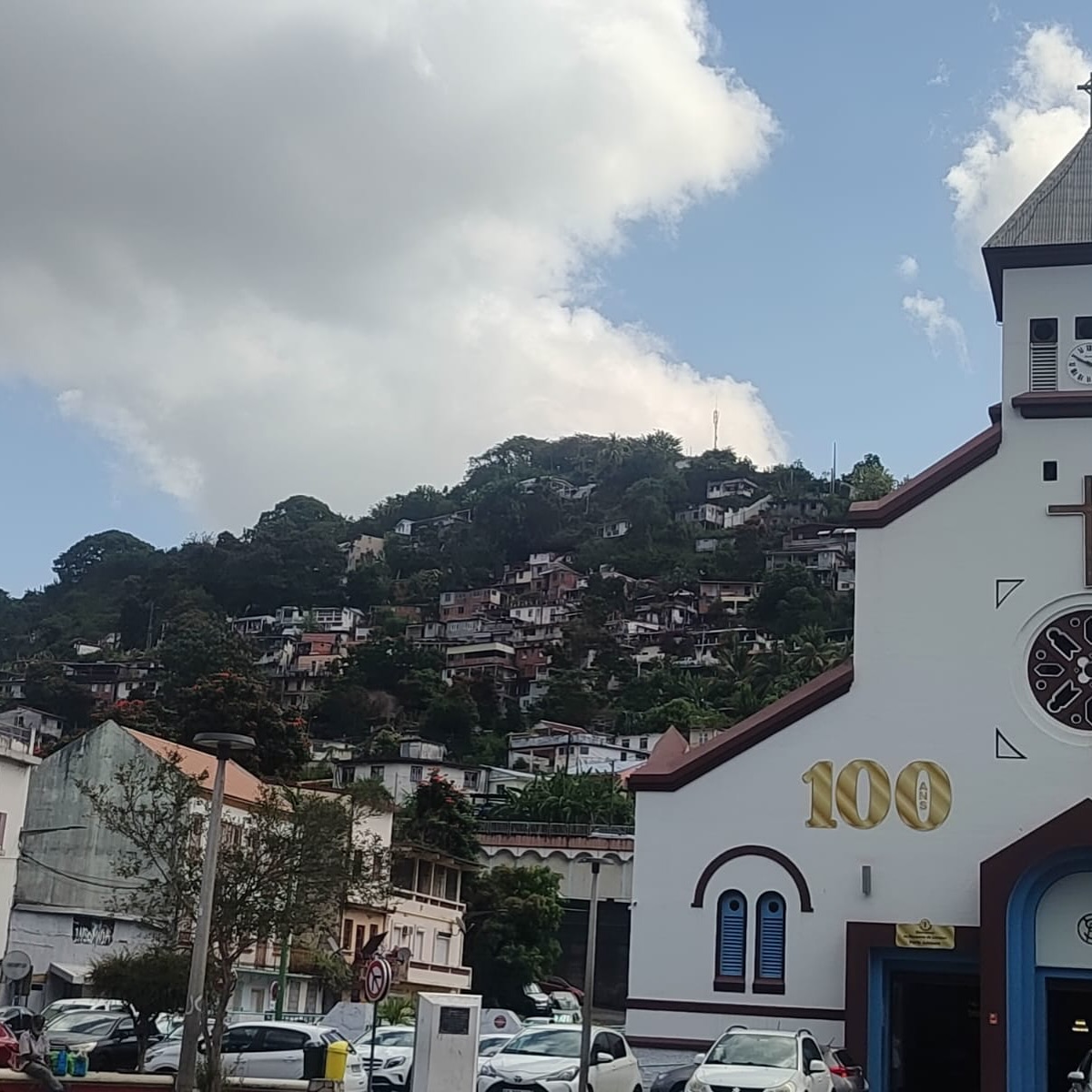
From the streets, we could see houses climbing the hillside. Different colours, roofs at different heights and greenery in between. In our photograph, a white church stands in the foreground, with the built-up slope behind it.
We enjoyed seeing this part of the city too. Fort-de-France has a compact centre that is easy to explore on foot, but walking uphill shows you how the neighbourhoods continue over the slopes. Allow enough time and take drinking water.
A parade by the water
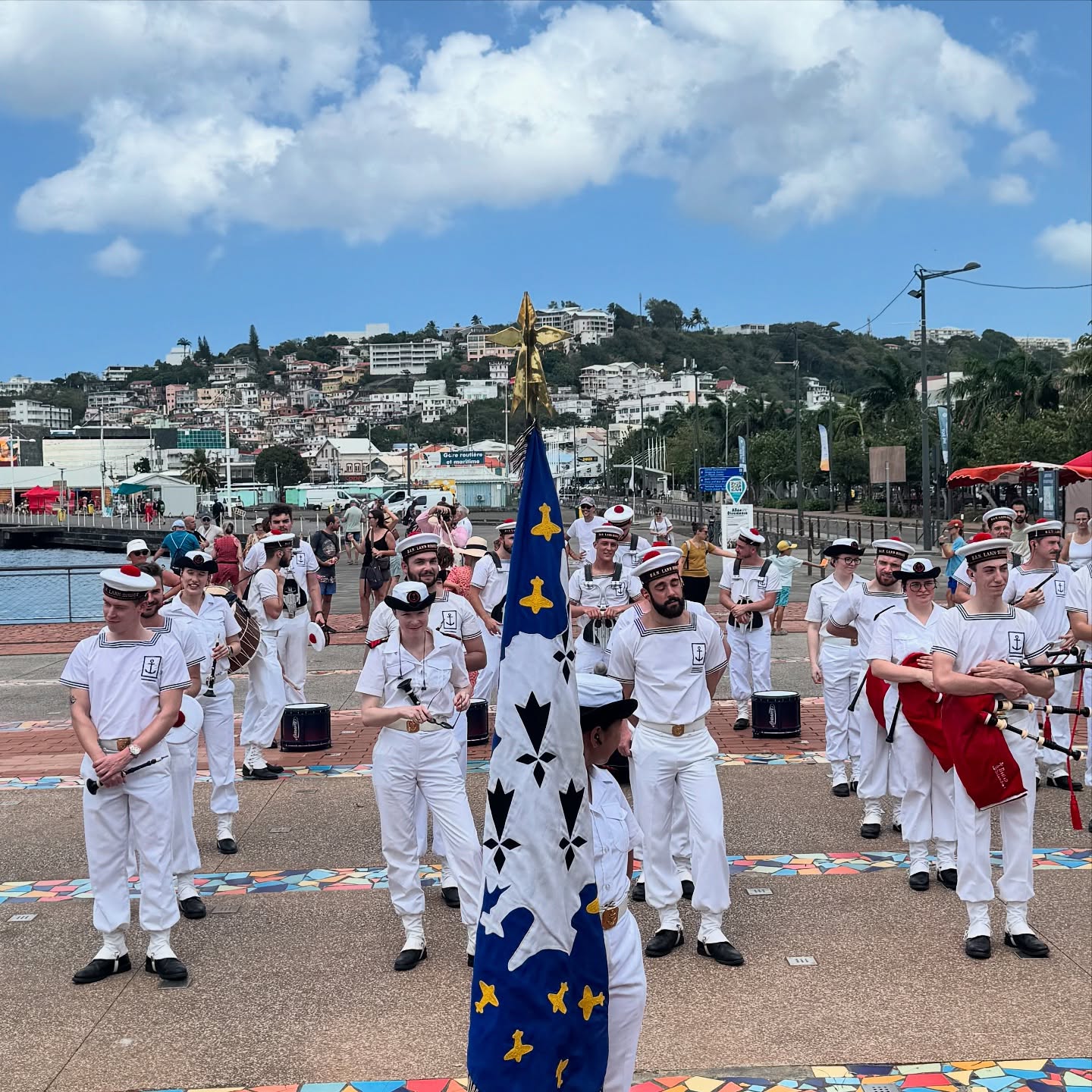
By the water in Fort-de-France, we came across a parade. Men dressed in white, instruments in their hands and a large flag at the front. Behind them were the harbour and houses on the hillside.
We stopped to watch and took a photograph. The musicians’ hats read Bagad de Lann-Bihoué. This Breton musical ensemble is part of the French Navy and plays bagpipes, bombardes and percussion.
Our places on the map
The pins show the places approximately, not our exact route or the photographer’s position.