
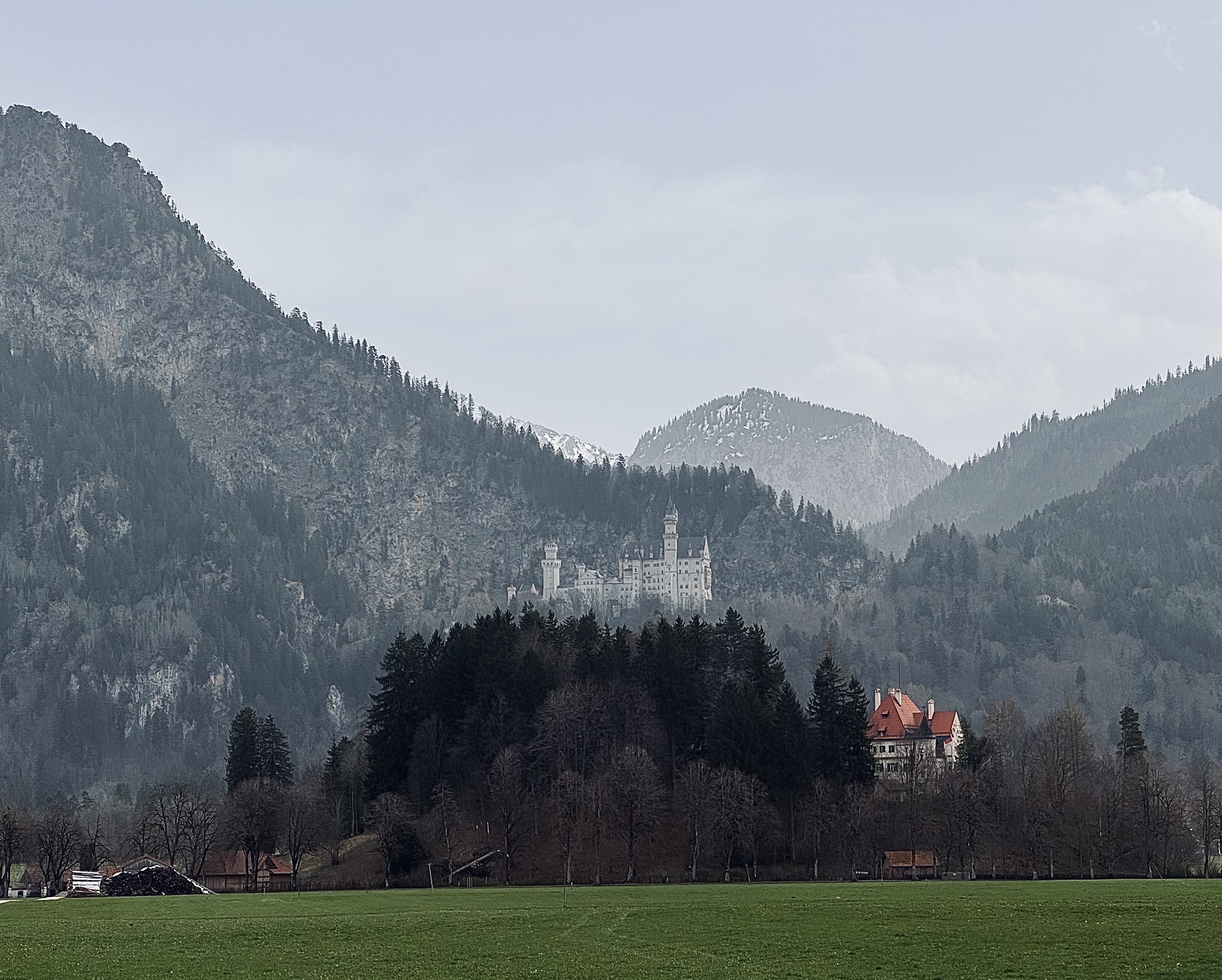
Germany road trip, day 3: castles and exploring Munich
After a quiet night at Alpenhotel Ammerwald, where we enjoyed
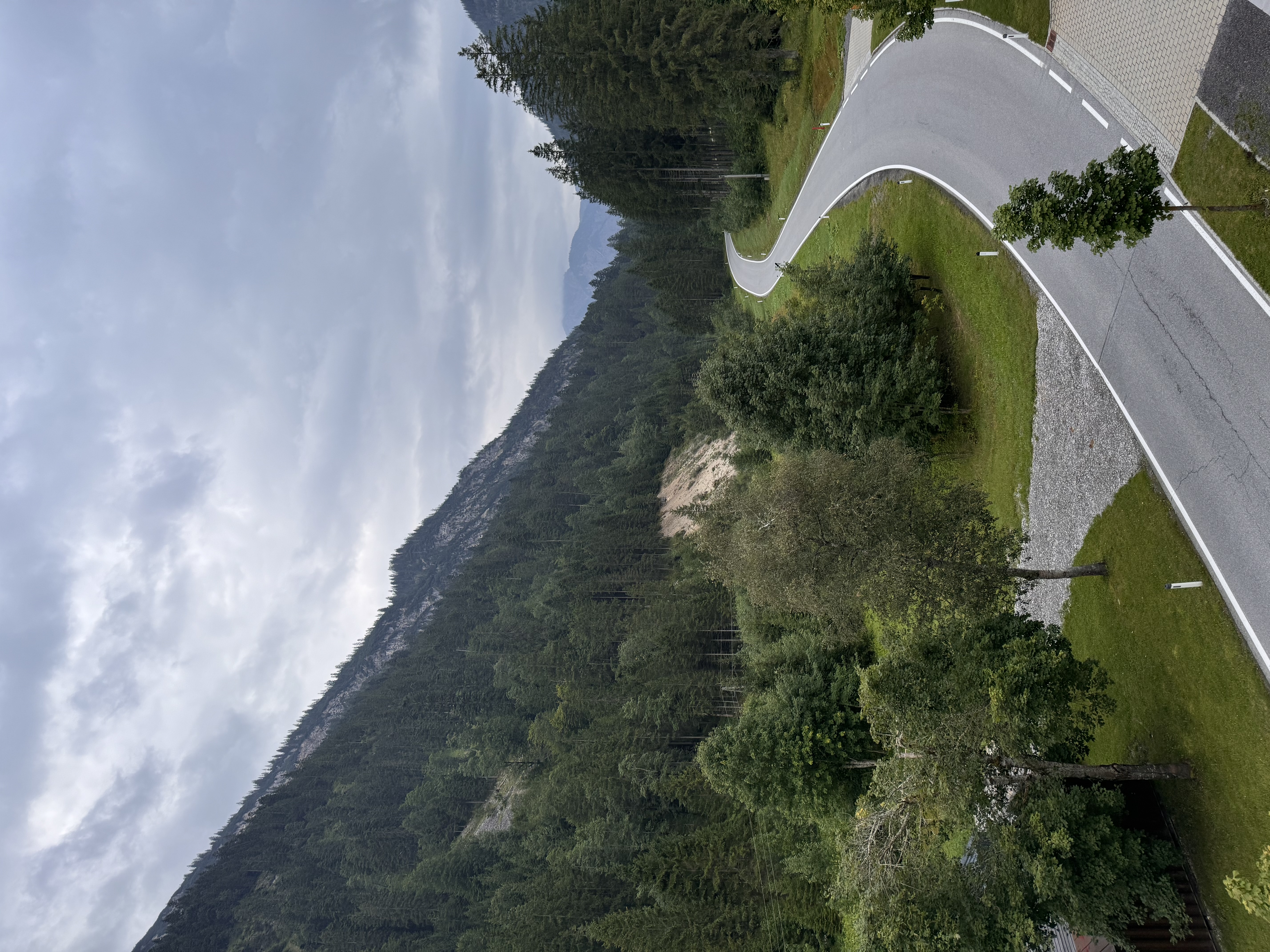
the generous breakfast, pool and modern gym, we were up early for another day on the road. The Alpenhotel was in a beautiful, quiet setting. Breakfast was excellent, with fresh rolls, local specialities and plenty of choice.
Our first destination was Neuschwanstein Castle, one of the world’s best-known castles. We left early for our 09.05 guided tour in German. Reaching the castle meant a walk of over an hour, quite a challenge for my father, who was almost seventy. I respected his determination and energy. A horse-drawn carriage was available too, but we chose to walk and enjoy the surroundings.
Stop 1: Neuschwanstein Castle, approximately 80 km, around one hour
Neuschwanstein Castle was around eighty kilometres and an hour’s drive from the Alpenhotel. Built for King Ludwig II of Bavaria, the castle is famous for its romantic appearance. Construction began in 1869 as Ludwig’s private retreat, inspired by medieval castles and Richard Wagner’s operas. It was never fully completed: Ludwig died in 1886 before the work was finished. It has since become one of Germany’s best-known visitor attractions.
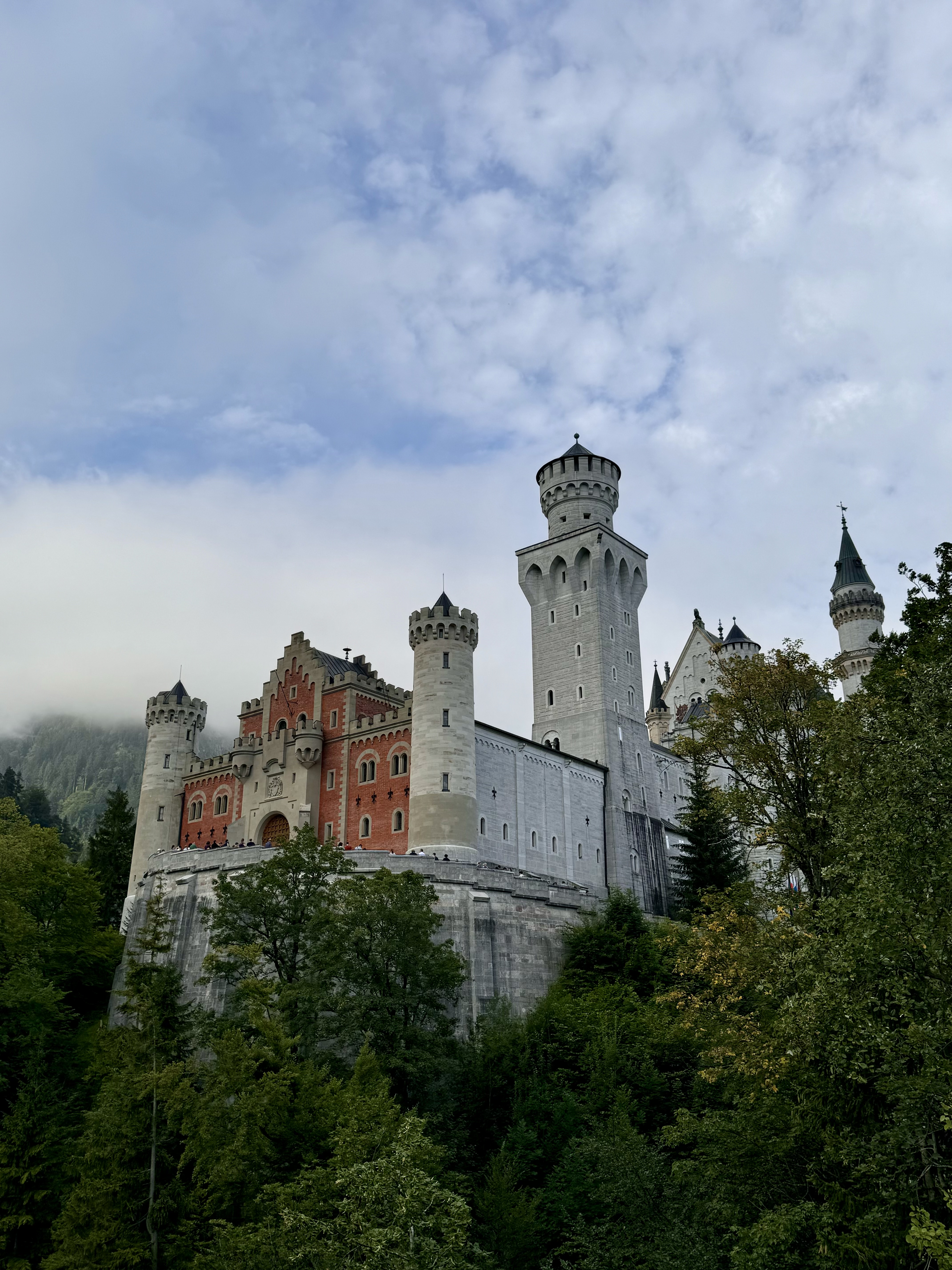
Neuschwanstein combines elaborate historic architecture with rooms that were never completed. The throne room was among its most impressive spaces, with a vaulted ceiling and colourful paintings of religious and mythological scenes. Its design reflected Ludwig’s fascination with religion, history and the arts.
Other completed rooms, including the grand hall, were striking too. The hall
had an ornate ceiling and richly decorated walls. The king’s bedroom, with its intricate artworks and elaborate bed, reflected Ludwig II’s personal tastes.
Ludwig II, sometimes called the Dream King, was fascinated by art and culture and deeply admired Richard Wagner’s music and drama. Born in 1845, he ruled Bavaria from 1864 until his mysterious death in 1886. He often withdrew from public life and devoted his energies to his imaginative castles. Historical and legendary figures inspired him, and he imagined himself as a romantic hero. On 13 June 1886, he was found dead in Lake Starnberg near Berg Castle, along with his doctor. The circumstances of their deaths remain the subject of debate.
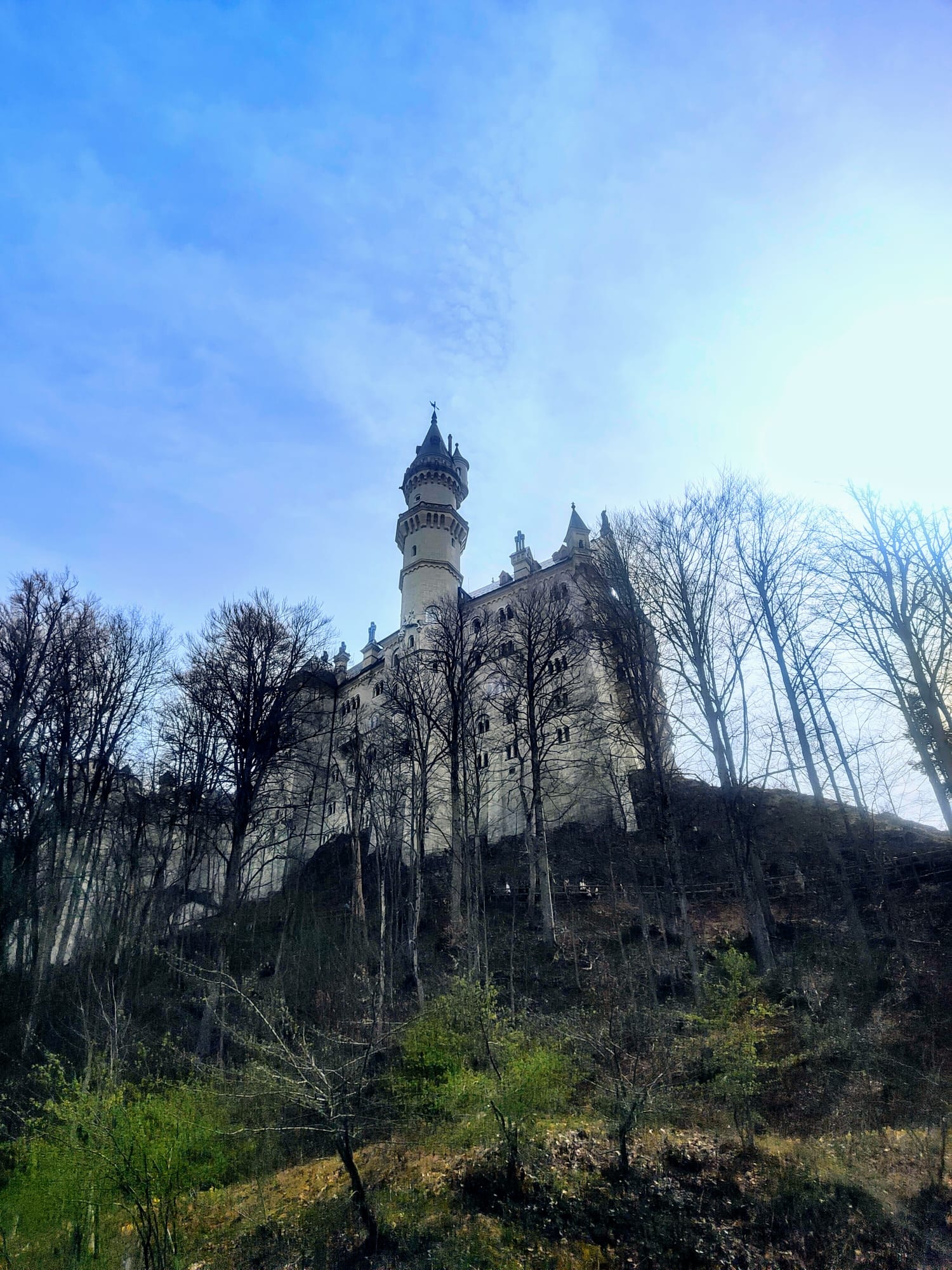
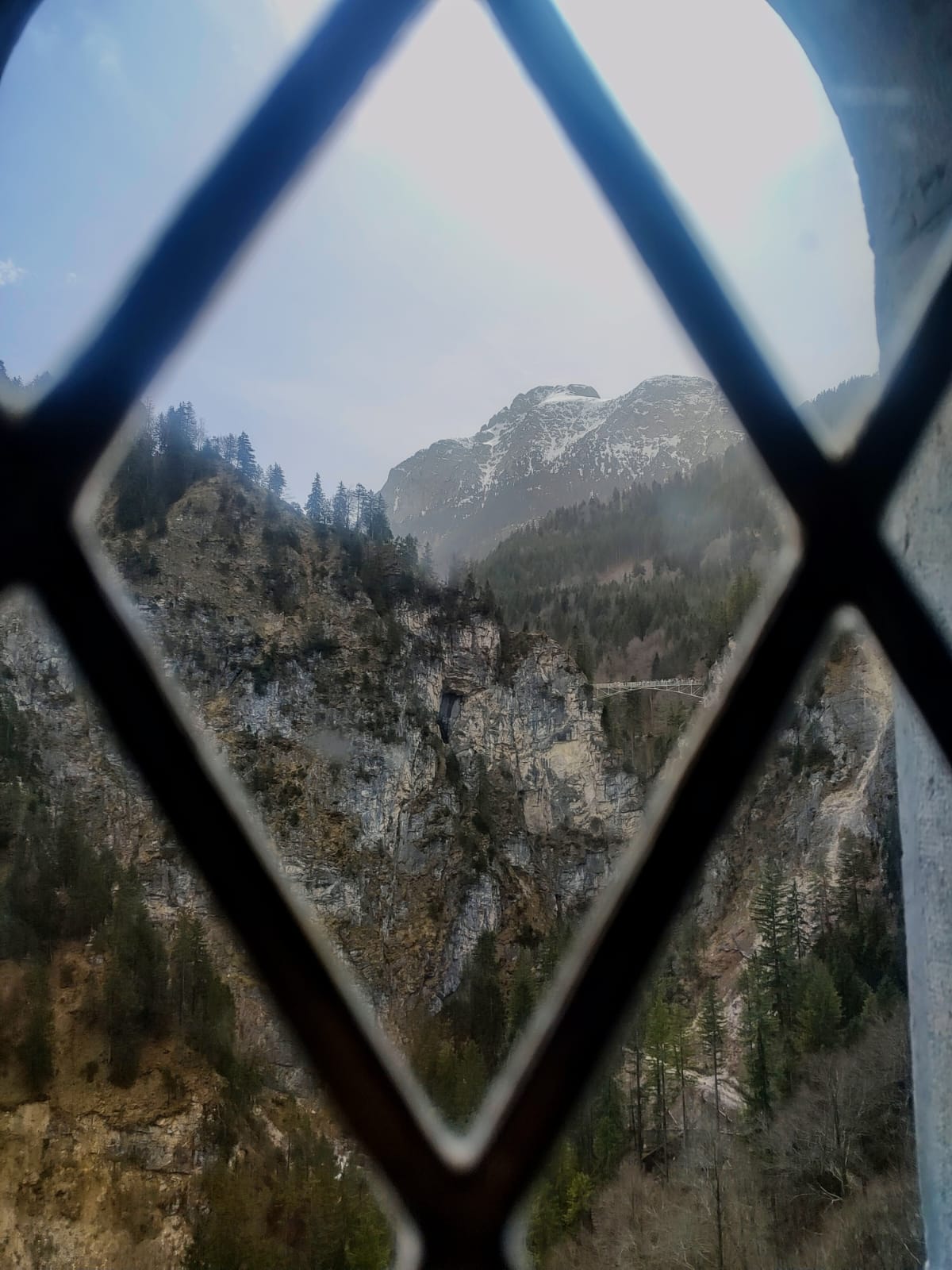
Neuschwanstein’s hillside setting overlooks mountains and lakes. Its romantic appearance and history have made it one of the most photographed castles in the world.
Website: Neuschwanstein Castle
Admission price: €15 for adults, €13 for students and €7 for children aged 6–18. The guided tour was included.
Stop 2: Munich, approximately 120 km, around an hour and a half
After an hour and a half’s drive, we reached Munich and found on-street charging for the car. We began exploring with a walk to Marienplatz, in the heart of the city.
Marienplatz
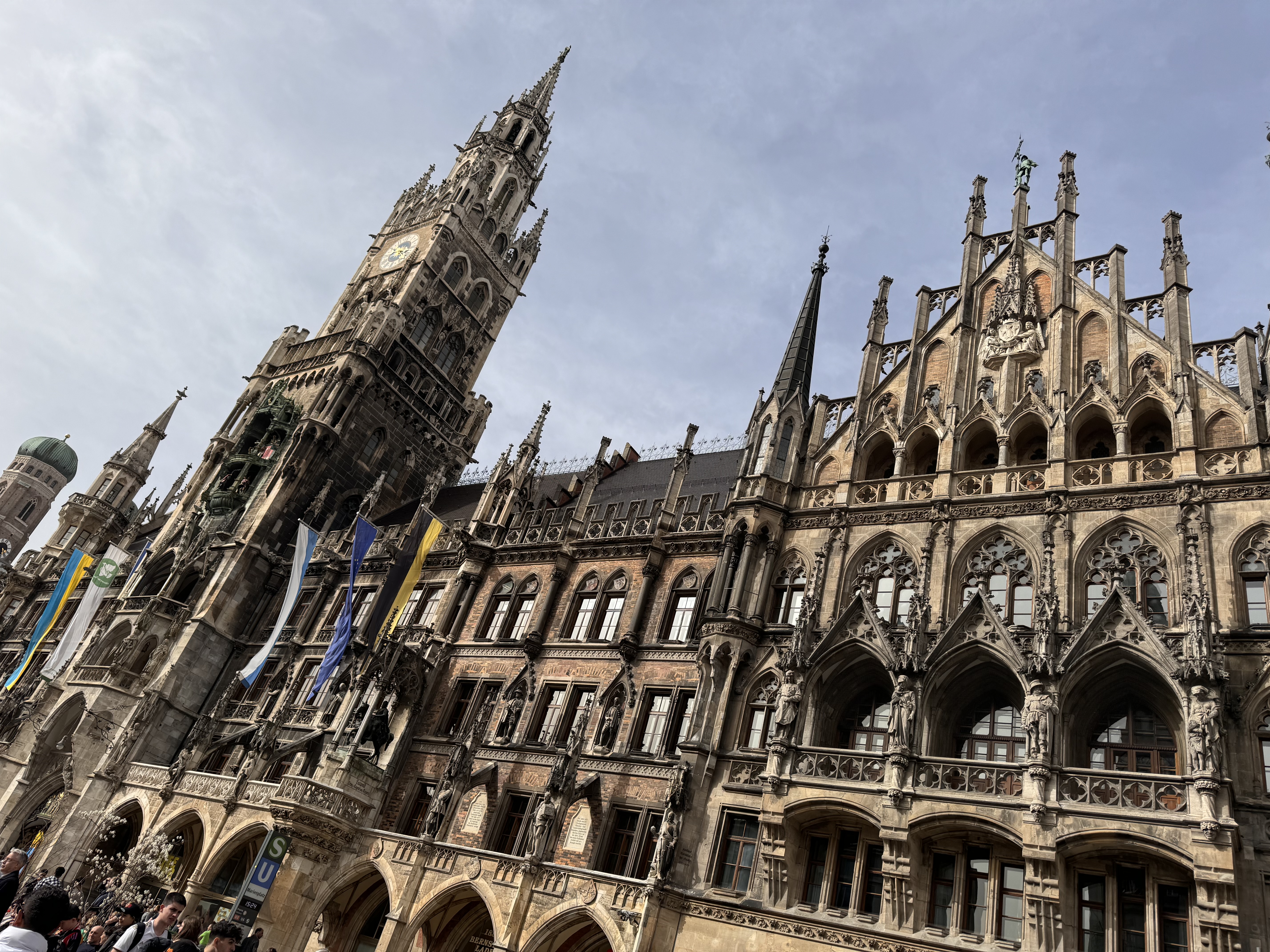
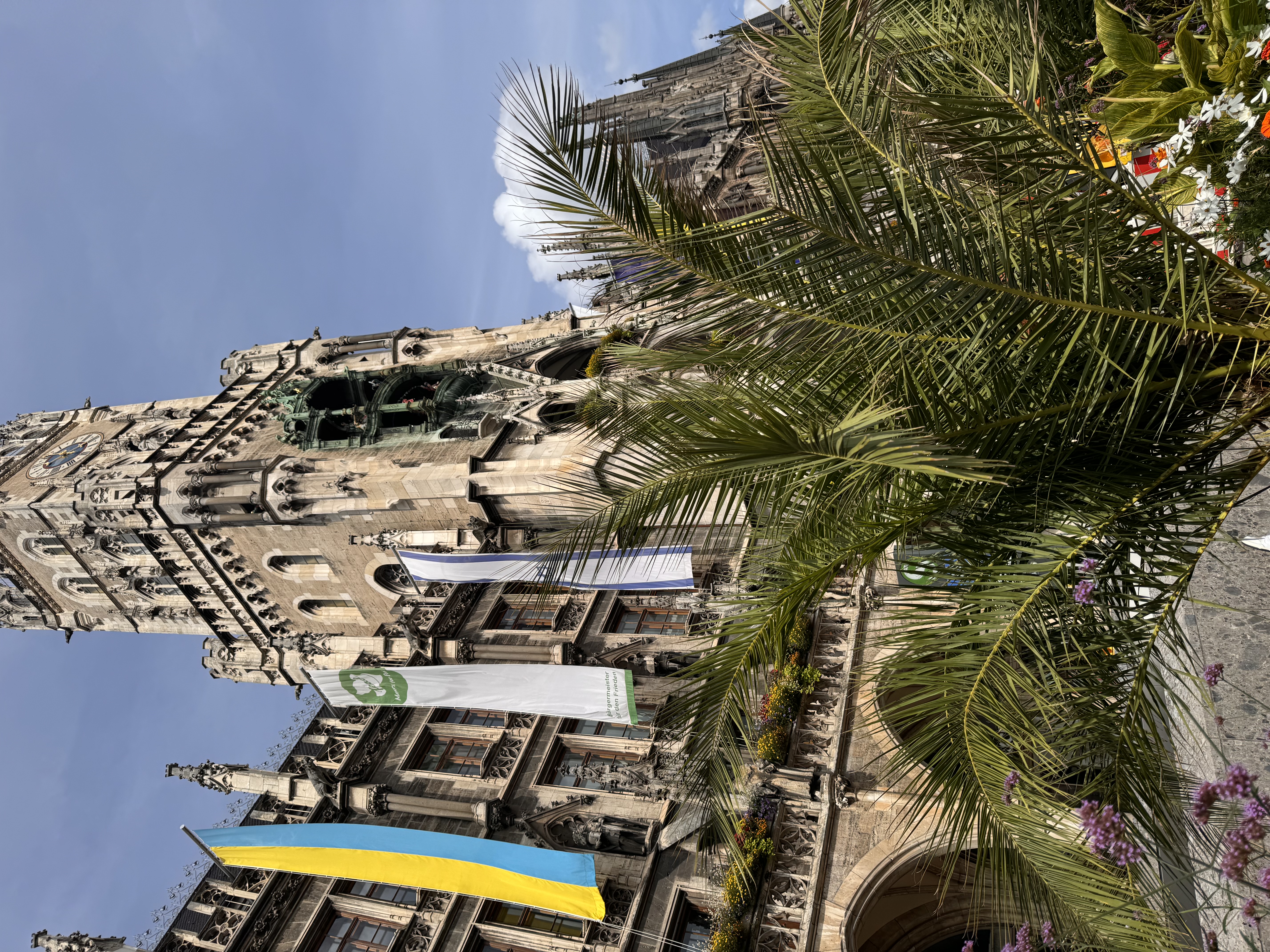
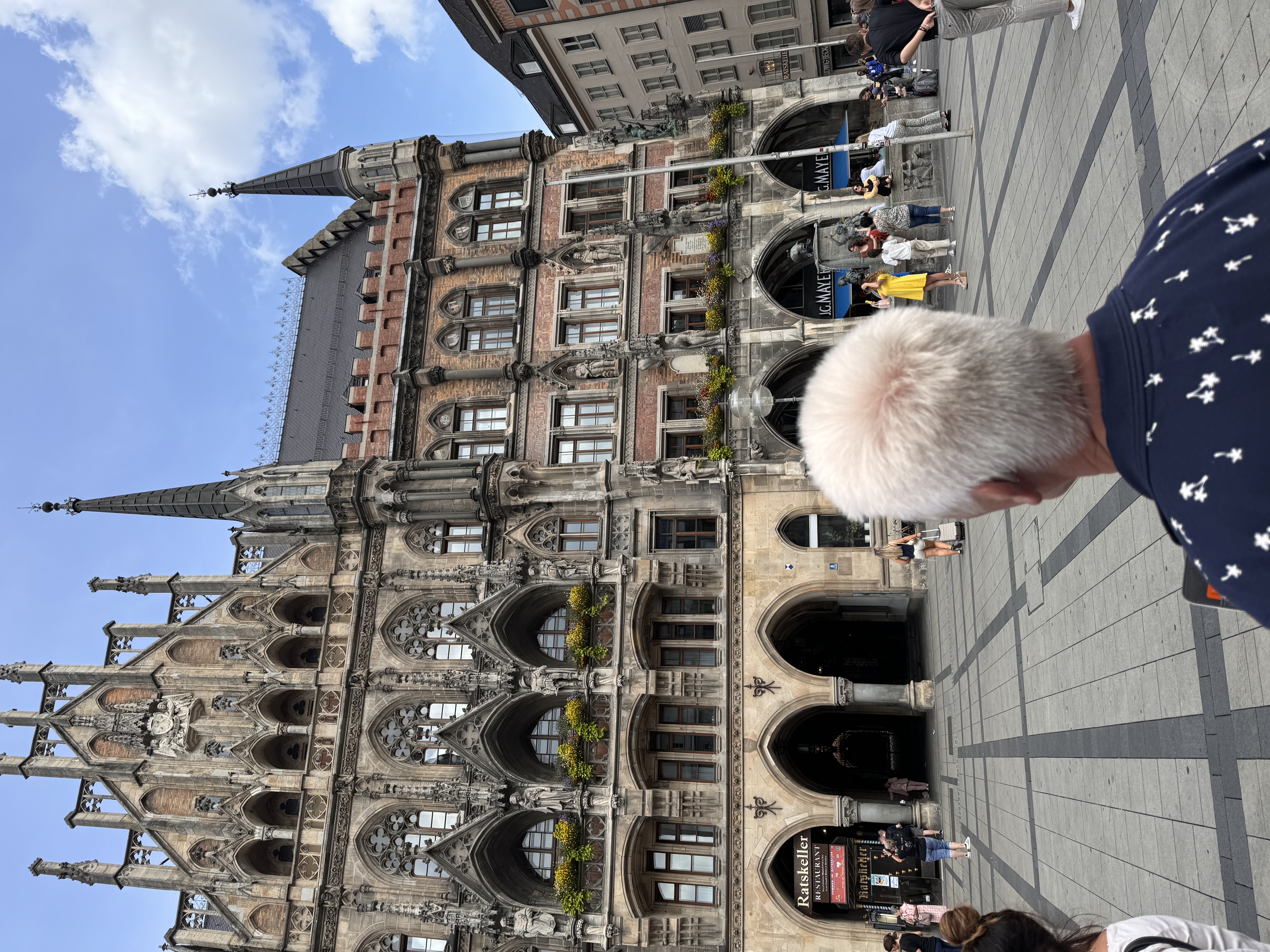
Marienplatz is Munich’s central square. It takes its name from the Mariensäule, the column topped by a statue of the Virgin Mary. The Gothic Revival New Town Hall dominates the square, with its famous Glockenspiel clock depicting historical scenes and figures. Around the square were cafés and shops, where we could stop and enjoy the atmosphere.
Frauenkirche
The Frauenkirche, or Cathedral of Our Lady, is one of
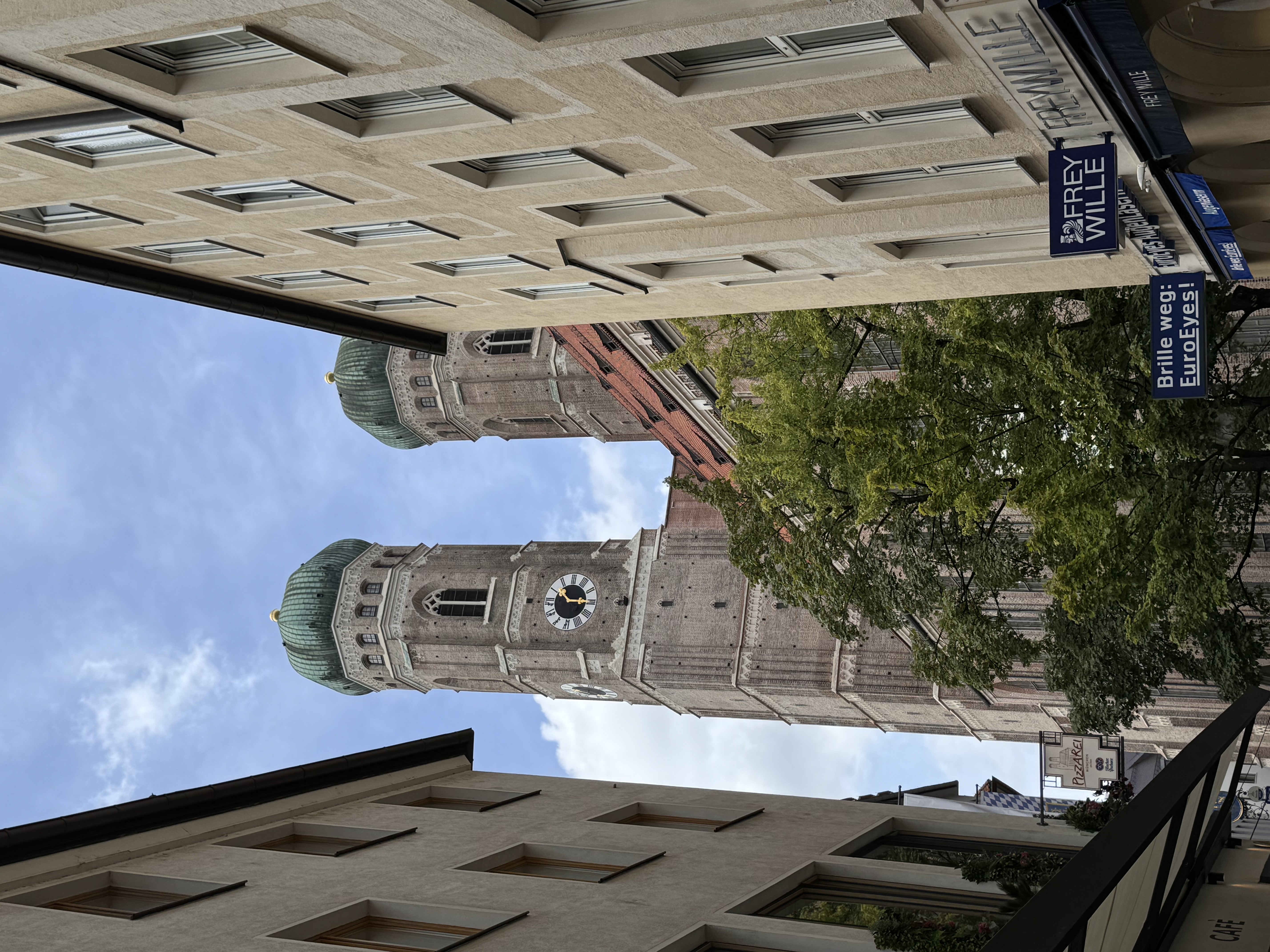
Munich’s best-known landmarks. Its two large towers with green domes are a familiar part of the skyline. Construction began in 1468 and was completed in 1488. Inside were broad, relatively plain spaces and stained-glass windows, along with the memorial to the Bavarian ruler LudwigIV.
St Peter’s Church, or Peterskirche
Near Marienplatz, Munich’s oldest church has a tower overlooking the city and an elaborate Baroque interior.
Website: Peterskirche
St Michael’s Church, or Michaelskirche
This large Renaissance church has an impressive interior and historic tombs.
Website: Michaelskirche
Heilig-Geist-Kirche
The Heilig-Geist-Kirche is a historic church near the market. Its interior has elaborate frescoes and an impressive altar. We appreciated the quiet inside after the busy streets.
Website: Heilig-Geist-Kirche
Theatinerkirche St Kajetan
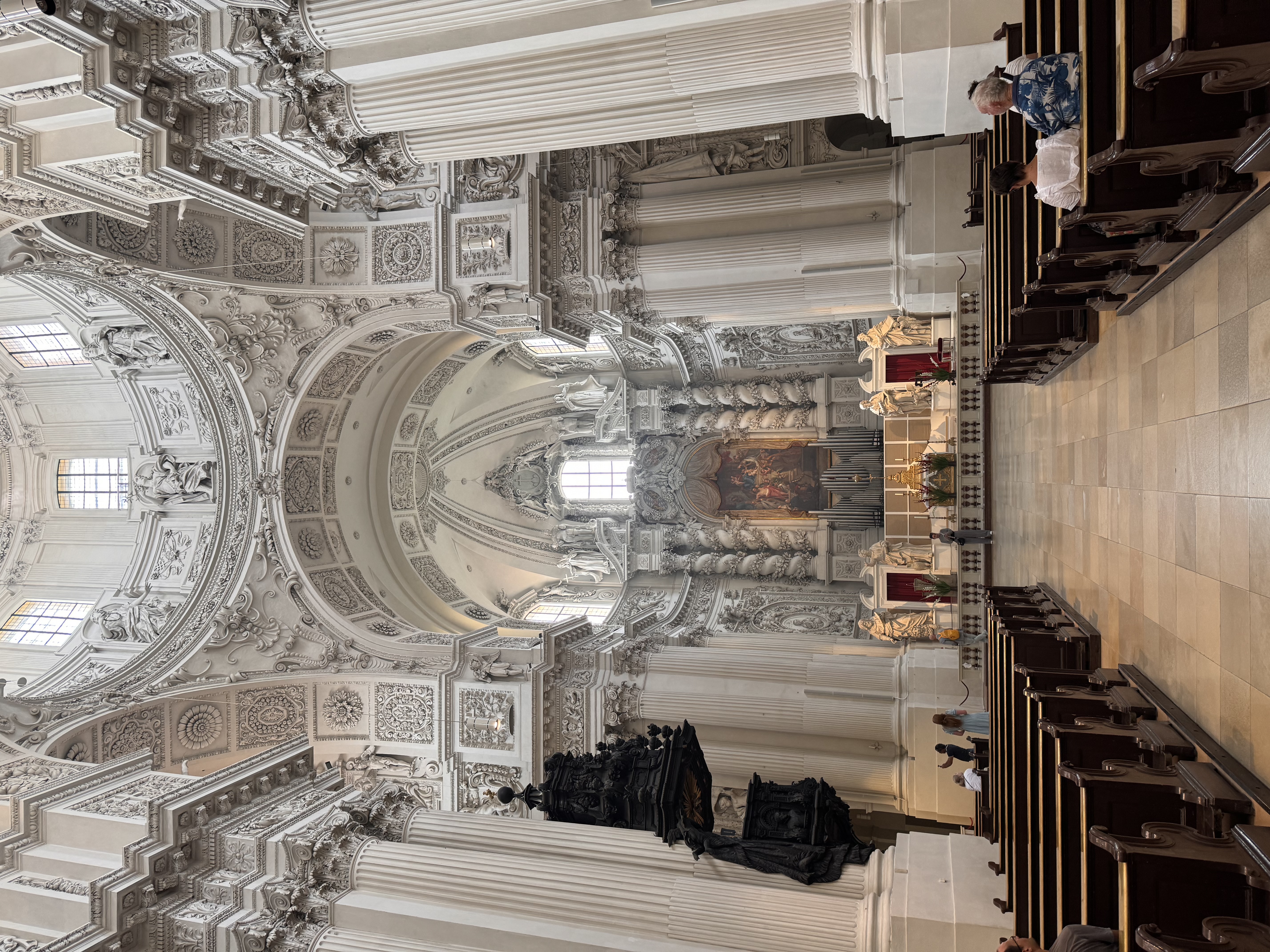
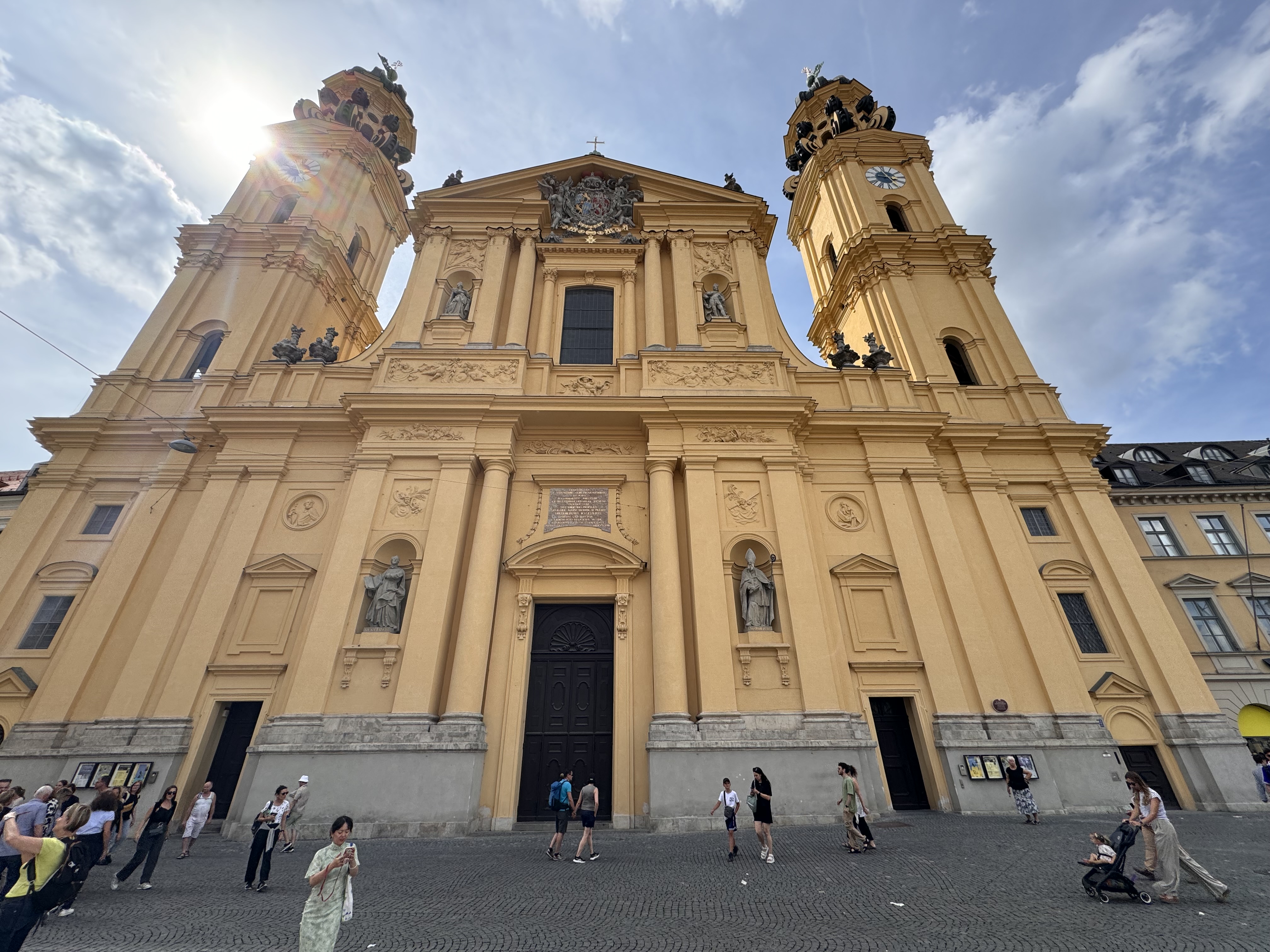
The Theatinerkirche is a Baroque church commissioned in the seventeenth century and designed initially by the Italian architect Agostino Barelli. Beyond its yellow façade is an ornate white interior with elaborate stuccowork.
Website: Theatinerkirche
History and wartime bombing
Munich was founded in the twelfth century and developed into an important centre for art and culture. Bombing in the Second World War damaged much of the city and destroyed many historic buildings. Extensive reconstruction and restoration brought many of its landmarks back.
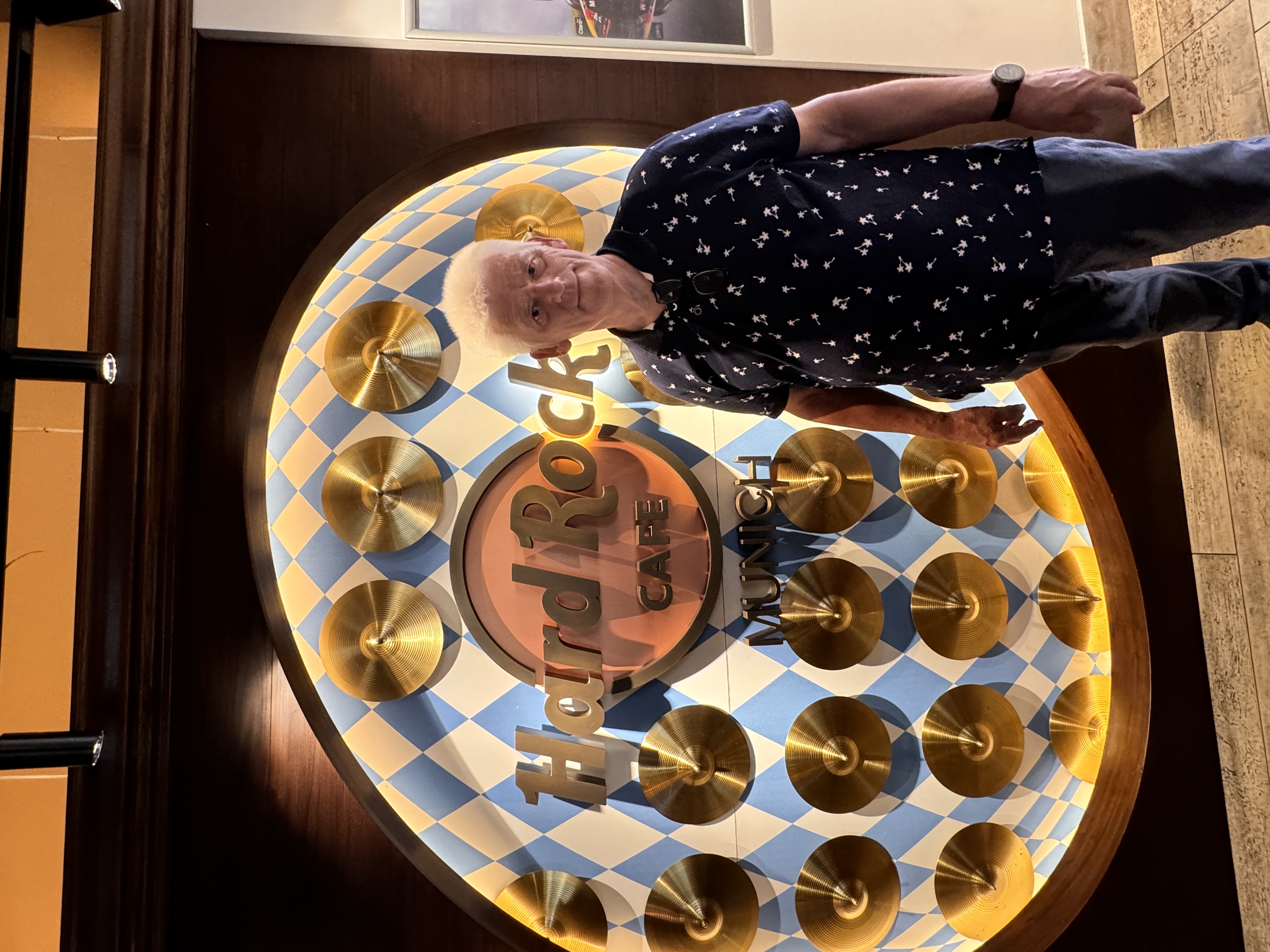
After exploring the city and having a good meal at the Hard Rock Café, we returned to our H2 Hotel Munich. It gave us a comfortable, modern base for our time in Munich. After a busy day, we were ready to relax and rest.
Things to do in Munich
1. Marienplatz: Explore the centre of Munich, watch the Glockenspiel and enjoy the square.
Website: Marienplatz
English Garden: Walk through the large city park, visit the Chinese Tower and stop for a drink in a beer garden.
Website: English Garden
Nymphenburg Palace: Explore the Baroque palace and its extensive gardens.
Website: Nymphenburg Palace
Deutsches Museum: Explore the technical museum and its extensive collection.
Website: Deutsches Museum
BMW Museum: Find out about the history and development of BMW.
Website: BMW Museum
Viktualienmarkt: Visit the busy market for fresh produce and local specialities.
Website: Viktualienmarkt
StPeter’s Church, or Peterskirche: Climb the tower for a view over the city.
Website: Peterskirche
StMichael’s Church, or Michaelskirche: Explore the Renaissance church.
Website: Michaelskirche
Heilig-Geist-Kirche: See the church’s Baroque decoration and enjoy its quiet atmosphere.
Website: Heilig-Geist-Kirche
Theatinerkirche St Kajetan: Admire the white stuccowork of this Baroque church.
Website: Theatinerkirche
We were looking forward to another day exploring this city!