
We went to London at the last minute. It was sunny and around thirty degrees. We also walked through Chinatown. Our Chinatown photo ↗
We suddenly had a few days off. On Tuesday, we decided to leave for London on Friday and return on Sunday. The four of us, keeping the costs down this time.
Before we left, I told the girls we were going to a country with red and white in its flag. Jaïra wanted to find out for herself what there was to do in London. She was eight and sat down at the MacBook. Her list included a toy shop, buildings, churches, a park and the Changing of the Guard. She was also looking forward to Sri Lankan food.
For two adults and two children, taking our own electric car soon turned out to be the cheapest option by far. So we charged the car and set off.
With our own car, we could stop along the way and choose a hotel outside the centre. In London, we wanted to walk a lot and visit a few free museums.
I am a fan of British culture and the atmosphere in London. The girls had their own ideas. We combined those with the places we wanted to see.
Why take the car?
Last-minute flights and train tickets were too expensive for our family. At the time, return flights would have cost us €600 to €1,000. That meant booking on Tuesday, leaving on Friday and returning on Sunday.
We chose our electric car and the ferry from Calais.
The pros and cons of taking the car:
Pros:
The ferry from Calais to Dover cost us €105 for the car and four
people, including the return journey.
Calais is 309 km from Rotterdam, so it is a manageable drive.
The drive from Dover to London takes around two hours.
You can choose a hotel outside London, which is often cheaper.
Cons:
London has low-emission zones, including the LEZ and ULEZ, to reduce air pollution. Vehicles that do not meet the relevant standards may incur a daily charge.
Before you leave, check with Transport for London which zones, registration requirements and charges apply to your car. Check this for electric cars and vehicles registered abroad too. Check your vehicle and the current TfL rules ↗
You have to drive on the left. We found it manageable, but you need to feel comfortable doing it.
The crossing
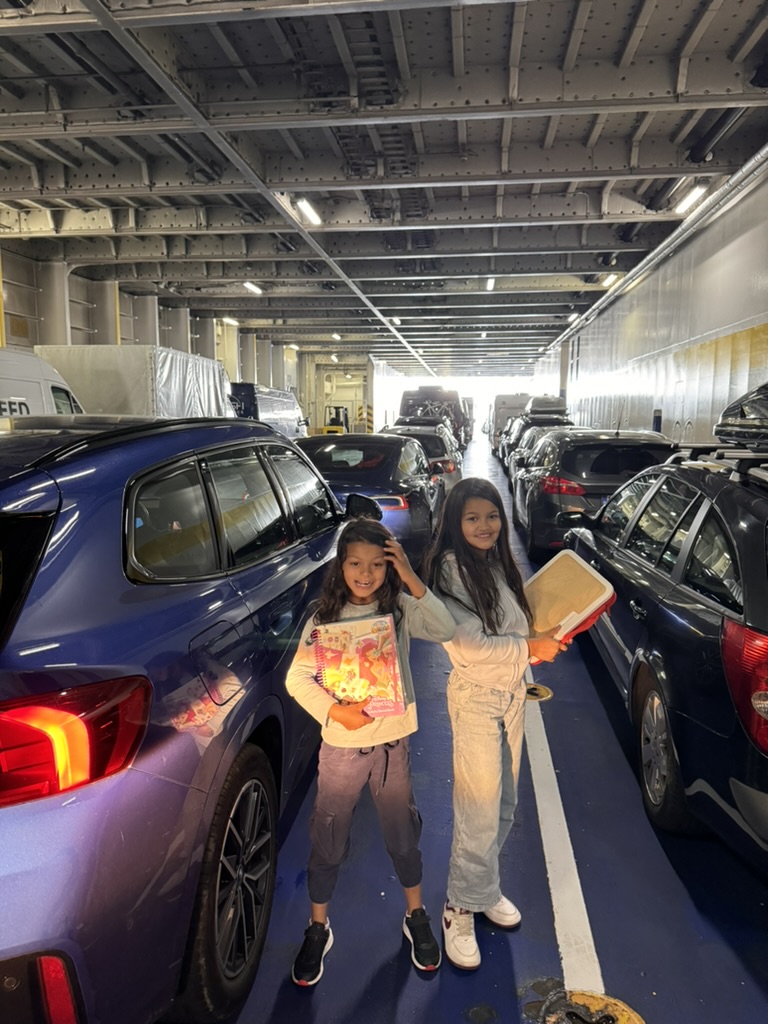
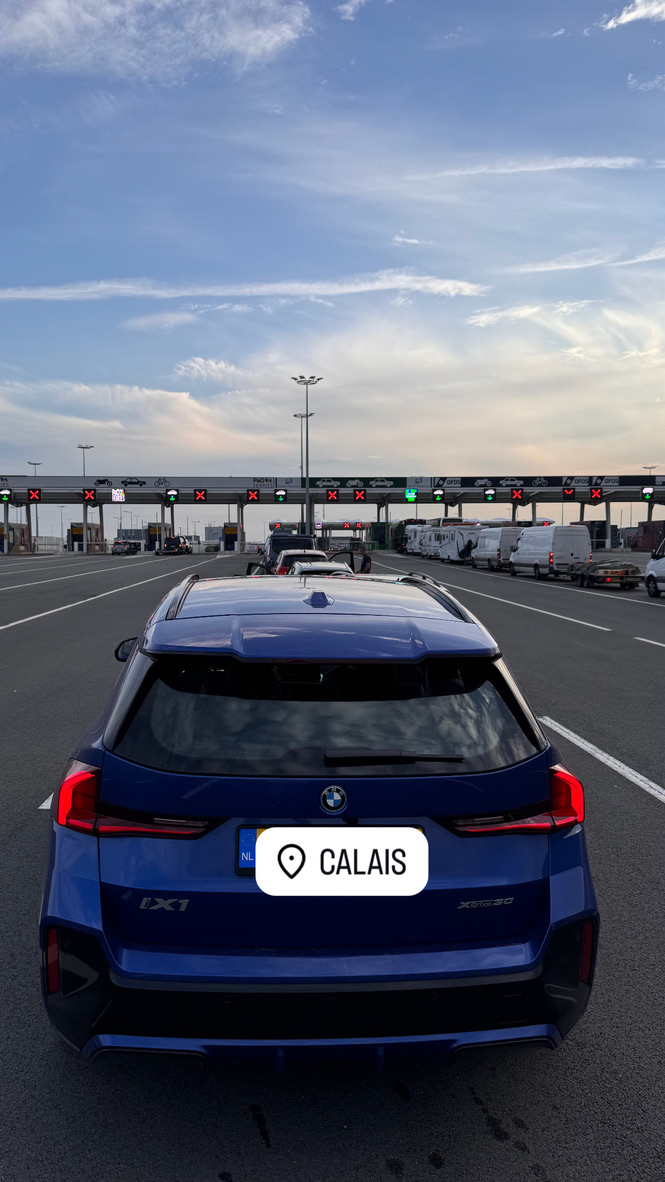
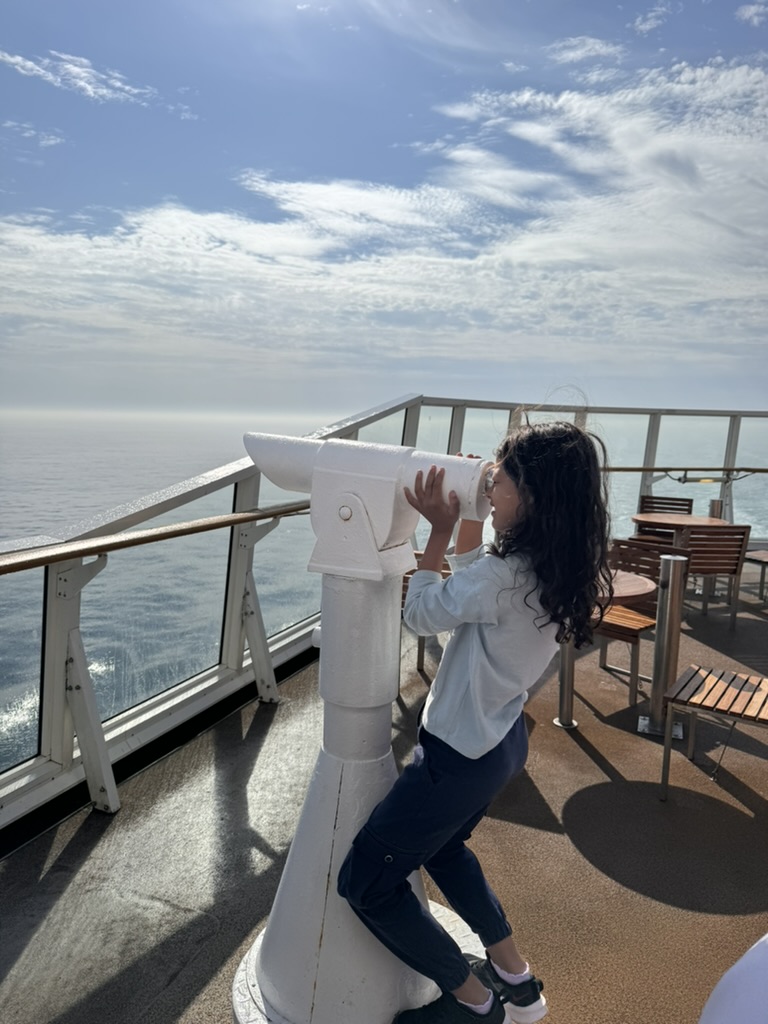
Several companies operate the crossing, including DFDS, P&O and Irish Ferries. We booked with Irish Ferries and caught the 09.30 sailing. We were told to arrive at least an hour early and boarded quite soon afterwards. First came the booking check, then border checks and an allocated queue. When the ship arrived, we drove on and parked. There was enough to do during the roughly ninety-minute crossing. It was straightforward rather than luxurious.
Getting off was just as straightforward. A friendly border officer asked what we were coming to do and let us into England. Then came driving on the left. We found it easier than expected in our own car. Earlier that year, we had hired a manual car in Scotland with the steering wheel on the right, which took more getting used to. It also helped that our car could display the speed in miles as well as kilometres.
The roads and charging network were different from what we were used to in the Netherlands. Cross with a full battery and plan your charging stops. During our visit, the chargers at Q-Park Victoria were not yet in use. Traffic moved well until we reached the centre, where twelve kilometres could take half an hour.
Choosing a hotel
We chose a hotel outside London to keep costs down, ending up in Harlow, around thirty miles north. Traffic made the first day less convenient, so we parked centrally. A hotel south of London might have avoided some of that driving. We stayed at Holiday Inn Express Harlow, with free parking and public transport connections. For four people, two nights with breakfast and parking cost us €248 in total.
Our first 24 hours in London
On the first day, we parked at Q-Park Victoria near Parliament. Unfortunately, its EV chargers were not yet in use. From the car park, it was less than ten minutes on foot to St. James’s Park. These were our stops:
Stop 1 | St James’s Park
From Q-Park Victoria, we walked to St. James’s Park. The park is between Buckingham Palace and Trafalgar Square, so it fitted well into our walk.
There are lawns, water, little bridges and views of Buckingham Palace. A good first stop before heading further into the city.
Cost: free
Stop 2 | Piccadilly Circus
At Piccadilly Circus, we found ourselves among the huge illuminated signs, shops and theatres. From there, we walked towards Regent Street.
Cost: free
Stop 3 | Hamleys
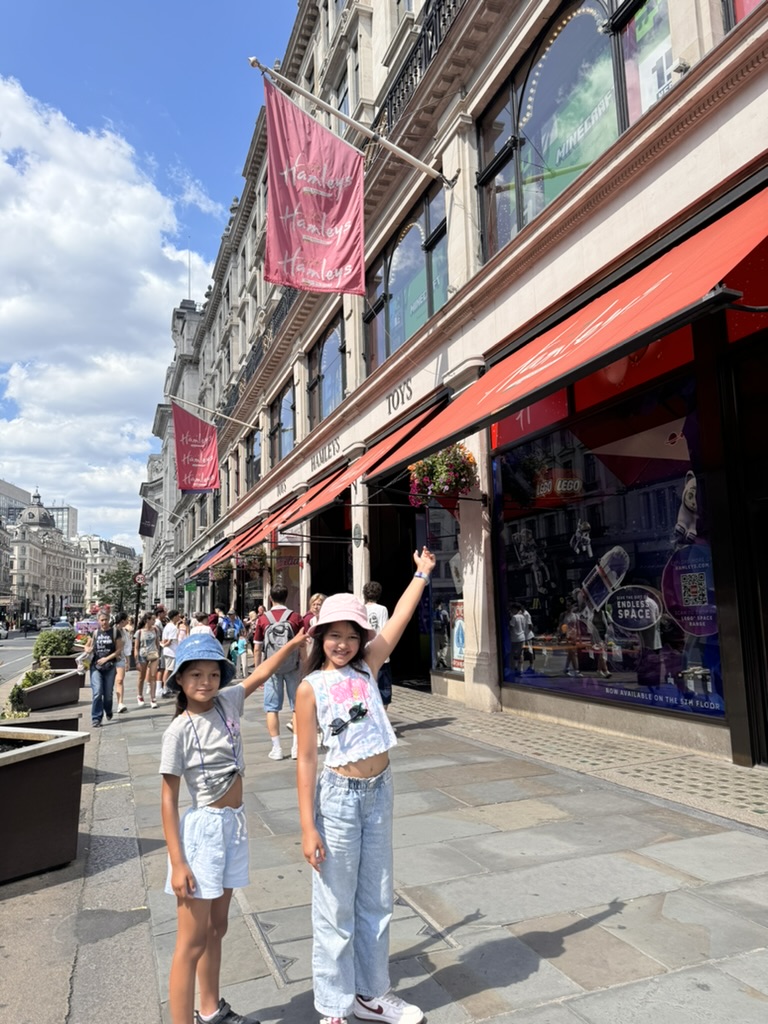
Our third stop was Hamleys, especially for the children.
Hamleys was a stop for the girls. Seven floors of toys on Regent Street, with demonstrations and staff showing all sorts of things.
We had a look around too. After Hamleys, we carried on towards Soho and the British Museum.
Cost: free
Stop 4 | Soho
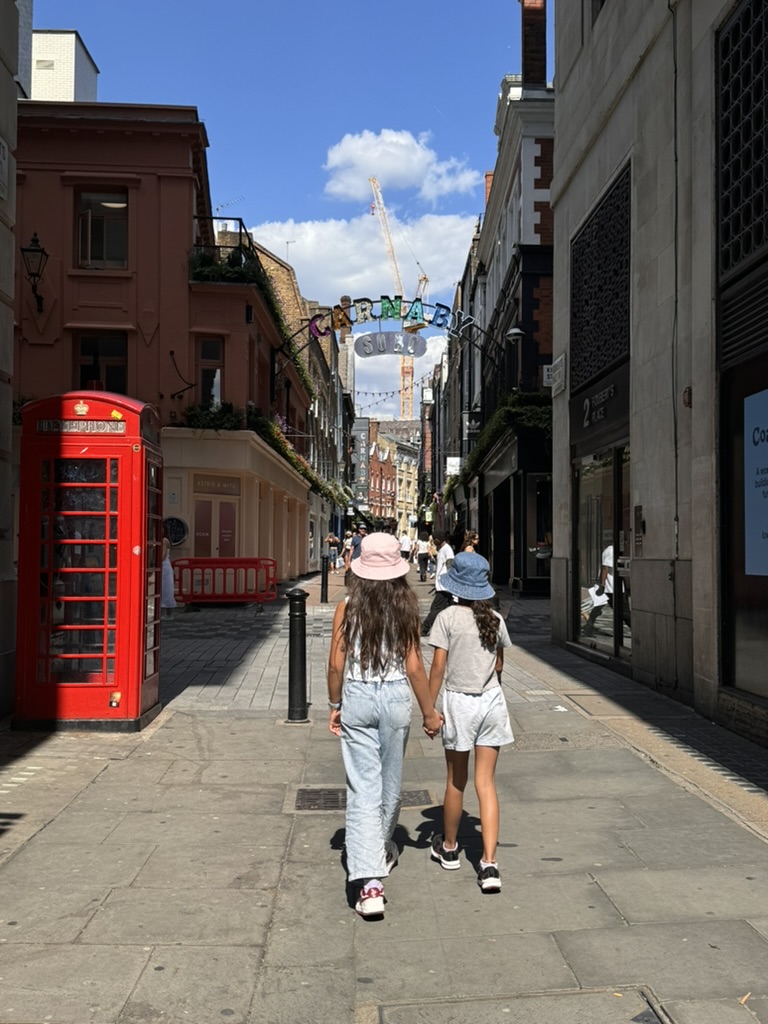
From Hamleys, we walked through Soho towards the British Museum, passing shops, cafés and restaurants. Carnaby Street was on our walk too. We went at the girls’ pace and stopped wherever something caught our attention.
A restaurant suggestion: Hoppers Soho
Cost: free
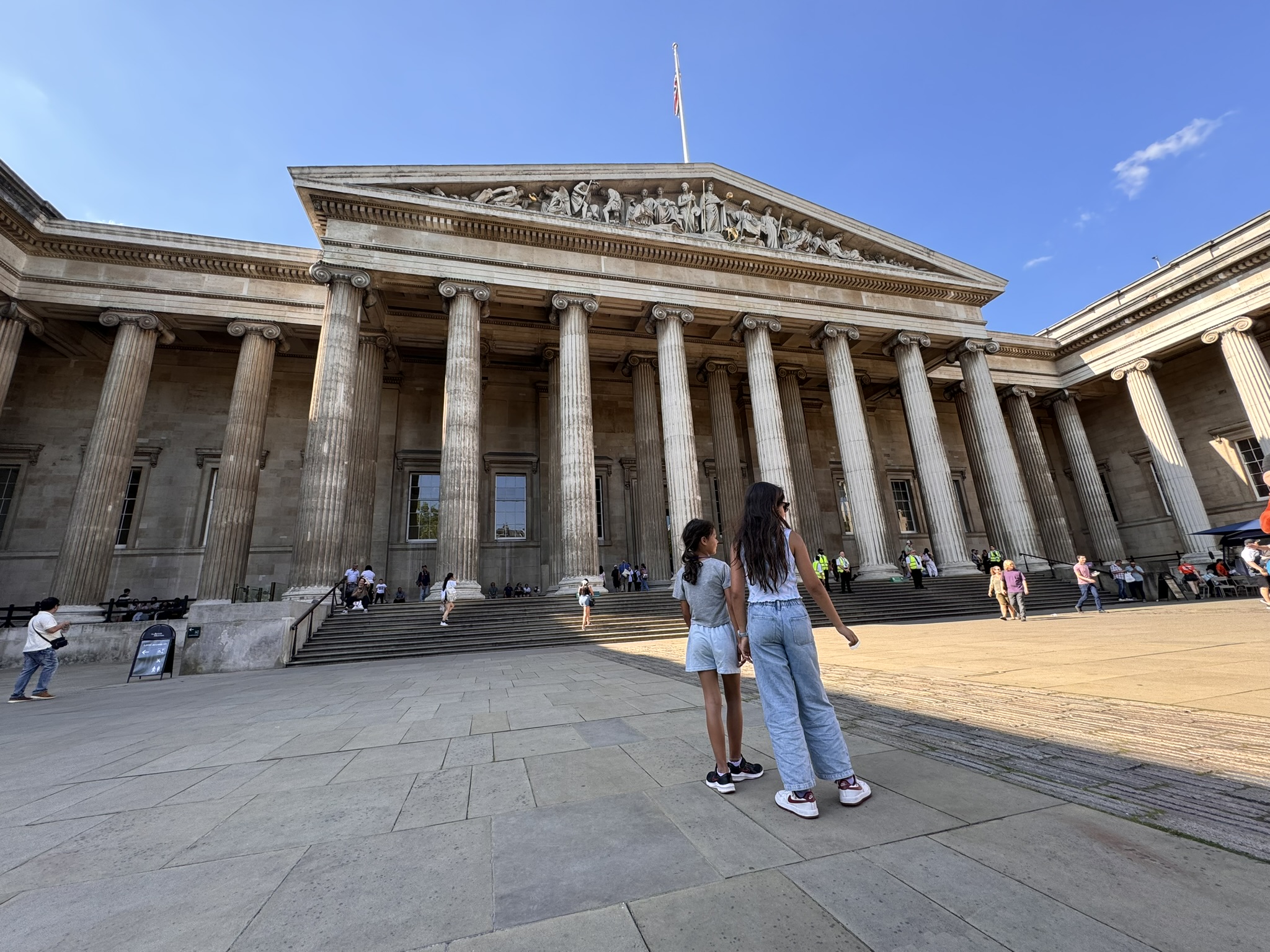
Stop 5 | British Museum
At the British Museum, we looked at objects from different countries and periods. These included ancient Egyptian objects, Greek sculptures and the Rosetta Stone.
We could visit the permanent collection for free. That suited our plan to keep the cost of these few days down.
Cost: free
Stop 6 | From the British Museum to Leicester Square
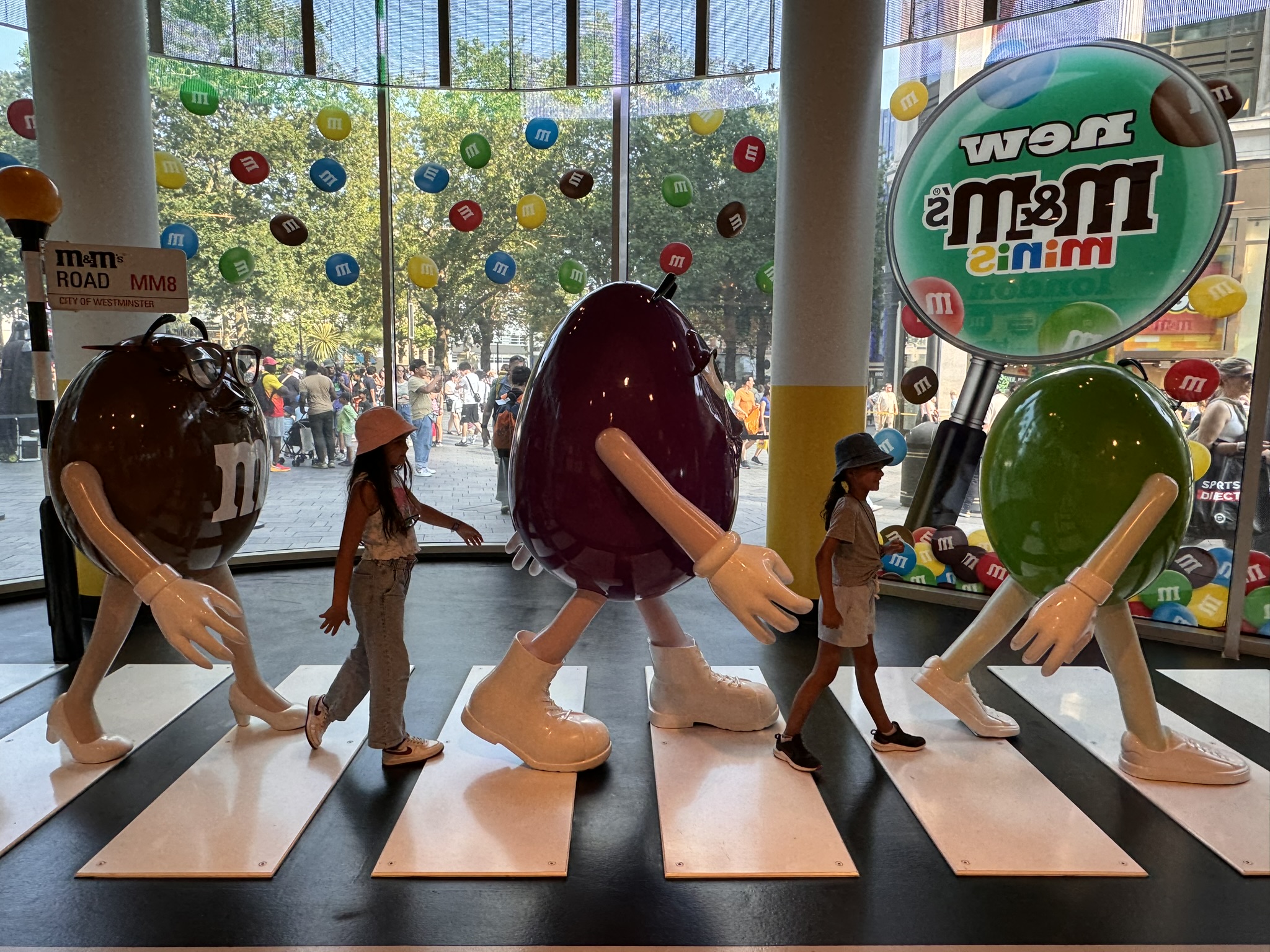
After the British Museum, we walked to Leicester Square. We took the girls into the M&M’s Store: four floors of sweets and M&M’s merchandise.
After the museum, this was a very different stop for the girls. Then we continued towards Trafalgar Square.
Cost: free
Stop 7 | Trafalgar Square
Nelson’s Column and the fountains stand on Trafalgar Square. The National Gallery is on the square too.
We included the square in our walk through the centre. By the end of that first day, we had walked seventeen kilometres.
At a red telephone box, Jaïra recognised what she had seen in Scotland earlier that year. The girls could already read and speak some English. They enjoyed walking around the city, as long as we kept to their pace.
After seventeen kilometres on foot, we decided that was enough and returned to the car. It took around an hour to reach the hotel in Harlow.
Day’s parking:€65
Cost: €65
Day 2 in London, by public transport
Today we were spending a full day in London, without driving into the centre. From Harlow, we could take a bus and then a train. Instead, we drove to Stratford, where the station is next to Westfield shopping centre. During our visit, parking was £8 a day, or £19 on an event day. From there, we took the Underground to Green Park, near Buckingham Palace.
Stop 1 | Changing of the Guard at Buckingham Palace
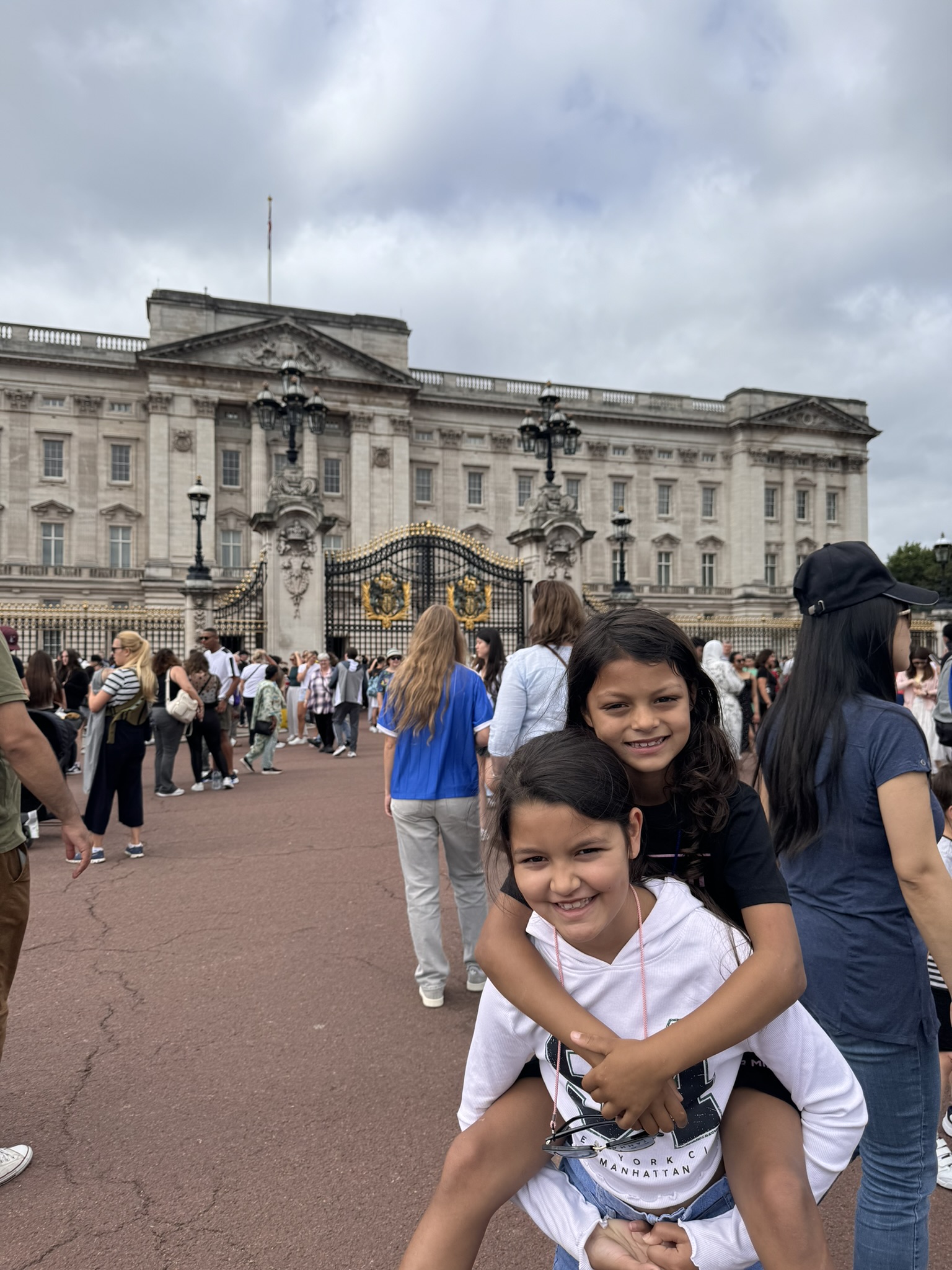
The girls wanted to see the Changing of the Guard at Buckingham Palace. There were plenty of people, but also a little sign: ‘No changing of the guard today’. We were out of luck.
The ceremony did not take place that morning, so we walked on to Horse Guards.
If you want to see the ceremony, check the schedule beforehand. A scheduled day does not guarantee that it will go ahead.
Cost: free
Stop 2 | Horse Guards
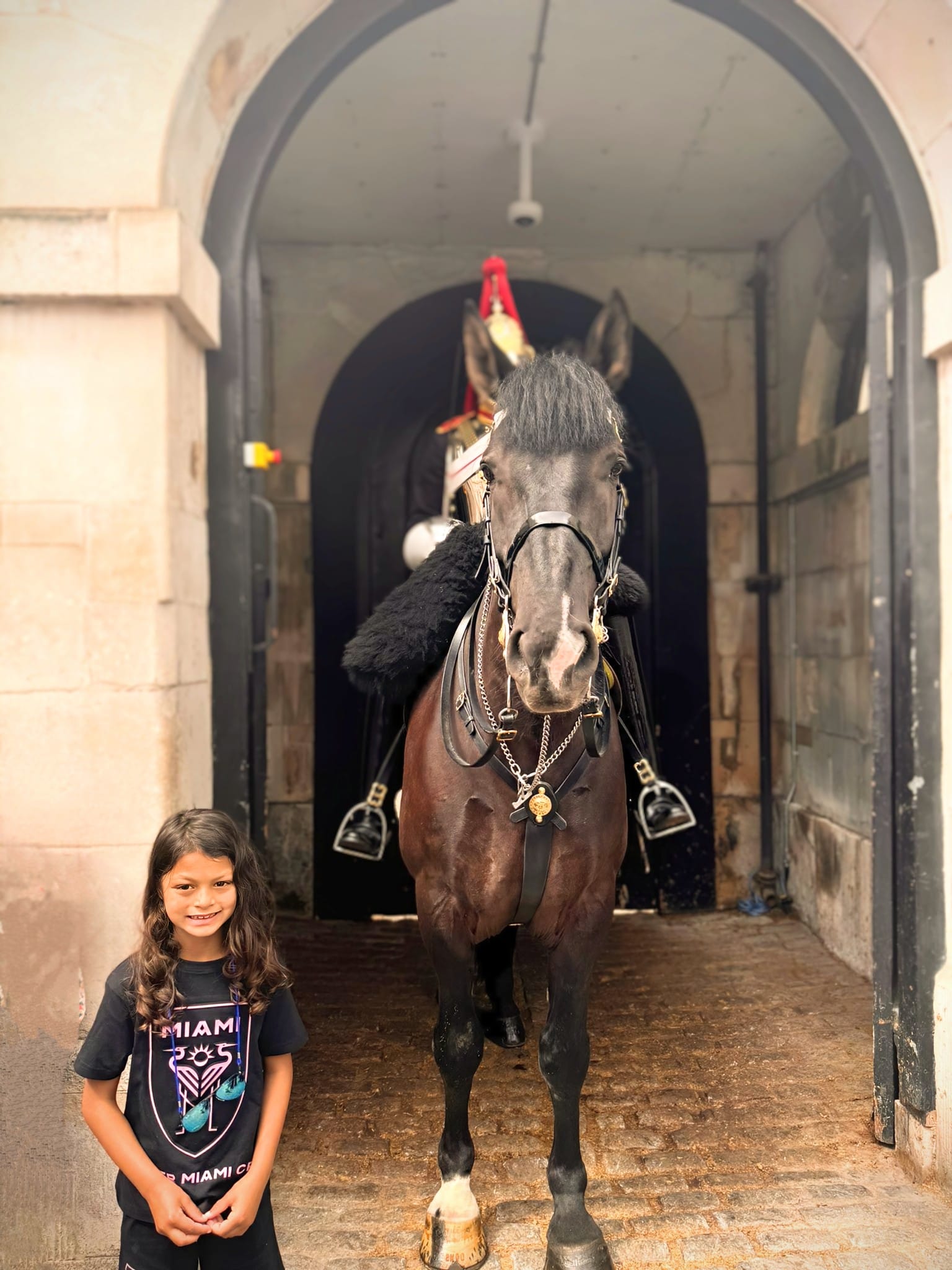
At Horse Guards, we wanted a photo with a mounted guard. That went differently: the horse bolted and there was a commotion. No horse, no guard. Luckily, we had managed to take one photo.
Our morning at Horse Guards ↗ · Current ceremony schedule at Horse Guards ↗
Cost: free
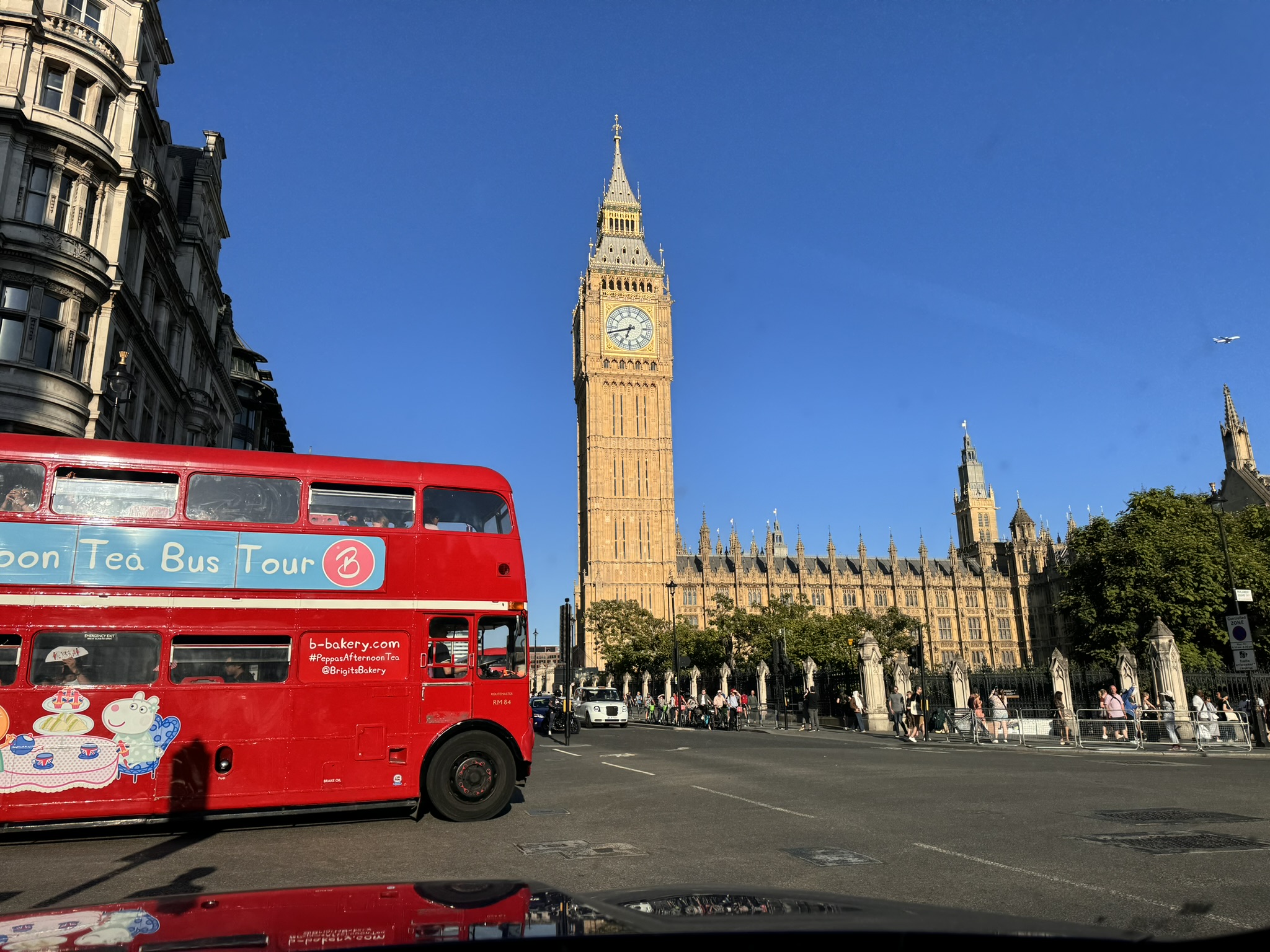
Stop 3 | Westminster Abbey, Parliament and Big Ben
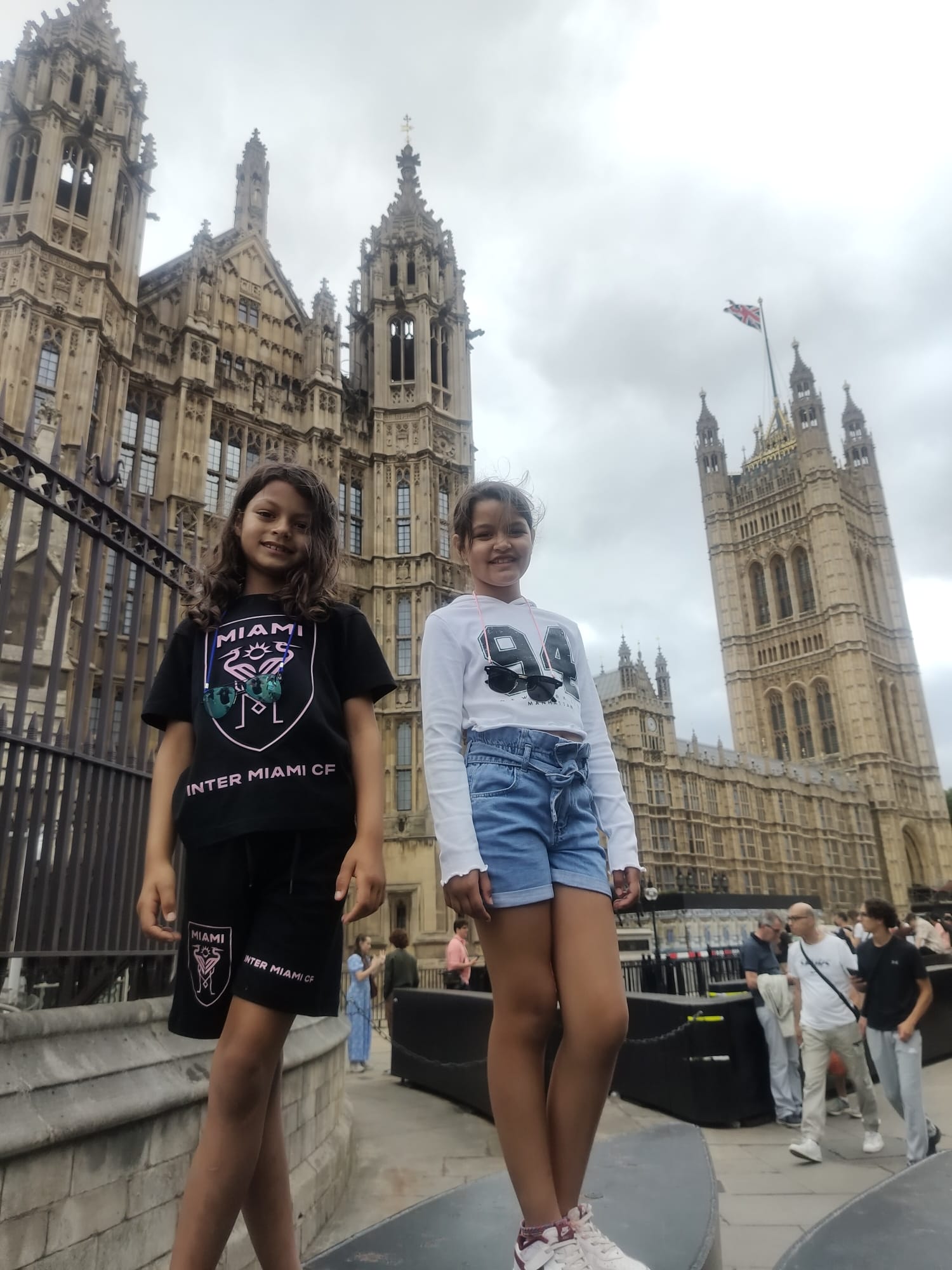
After Horse Guards, we walked via Downing Street towards Westminster Abbey and Parliament. There was little to see of 10 Downing Street from outside. Westminster Abbey is associated with coronations and royal weddings; Charles Dickens and Isaac Newton are buried there too.
The Palace of Westminster stands beside the abbey. The famous tower is called Elizabeth Tower; Big Ben is the great bell. The tower’s major restoration was completed in 2022. History at the Houses of Parliament ↗
These places are close together, so we could easily combine them on our walk.
Cost: free
Stop 4 | Imperial War Museum
Then we walked to the Imperial War Museum on Lambeth Road. The museum tells the story of war and its effects on soldiers and civilians.
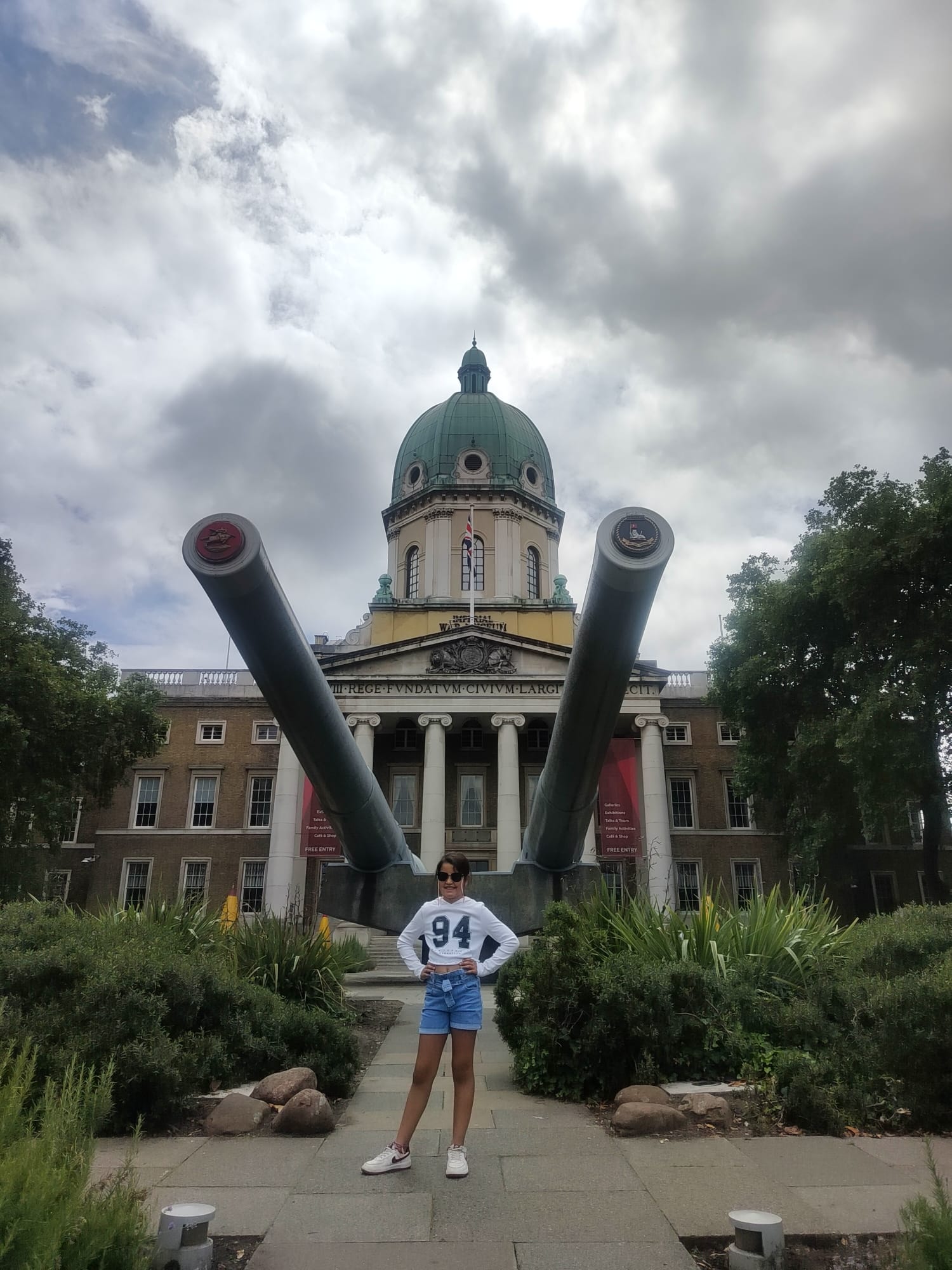
Admission was free during our visit. We saw military vehicles and weapons, as well as personal stories from people who had lived through war.
The children could follow a trail through the museum. There was plenty to see, including a V1 and war art.
Cost: free
Stop 5 | Sri Lankan food at Mercato Metropolitano
We went to Mercato Metropolitano in Elephant and Castle for food. Among all the stalls, we chose Sri Lankan.

Hoppers, curries, kottu roti and sambol: familiar flavours for us. We ate at the tables among the other visitors to the food market.
After eating, we continued towards Tower Bridge.
Stop 6 | Tower Bridge
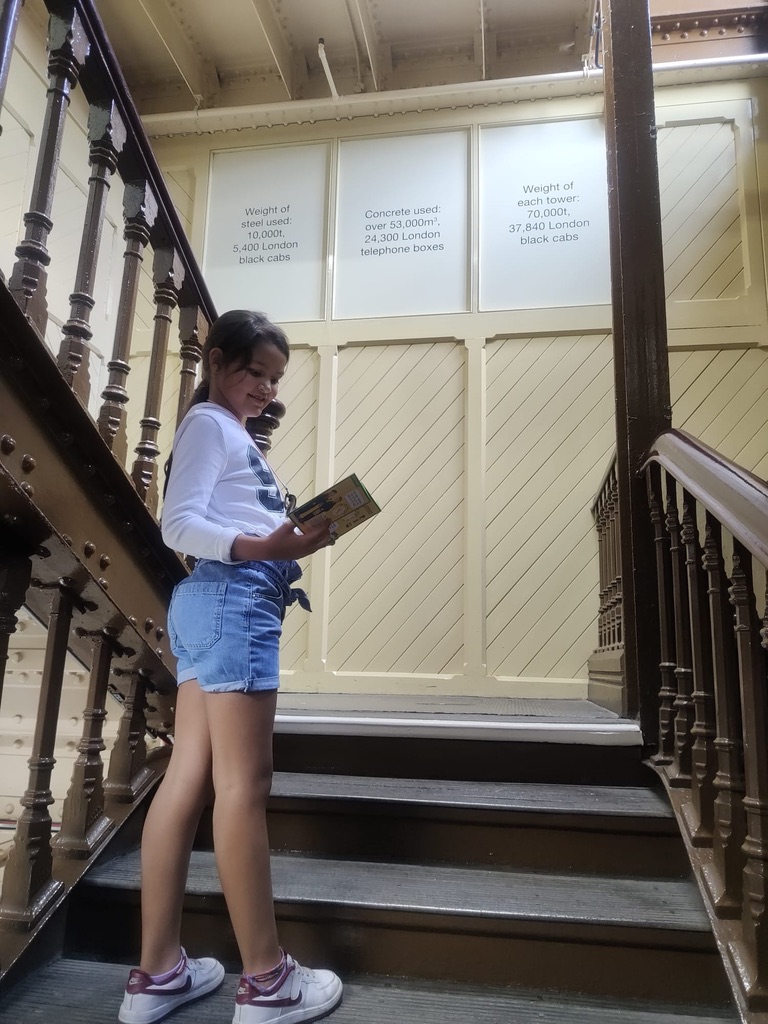
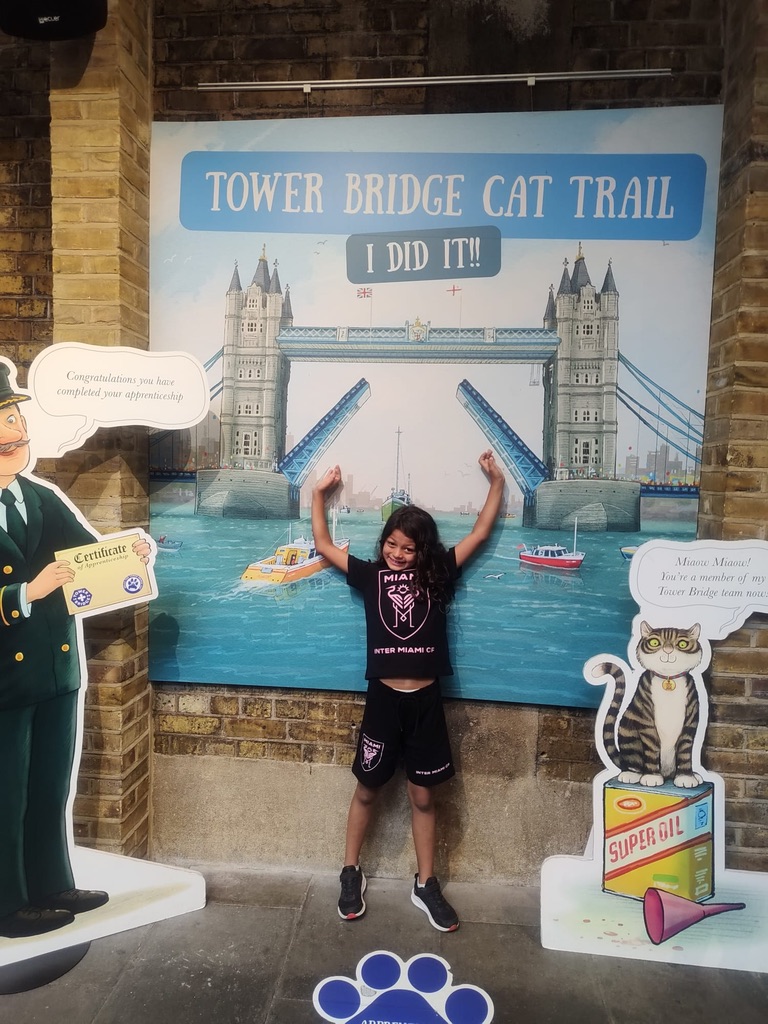
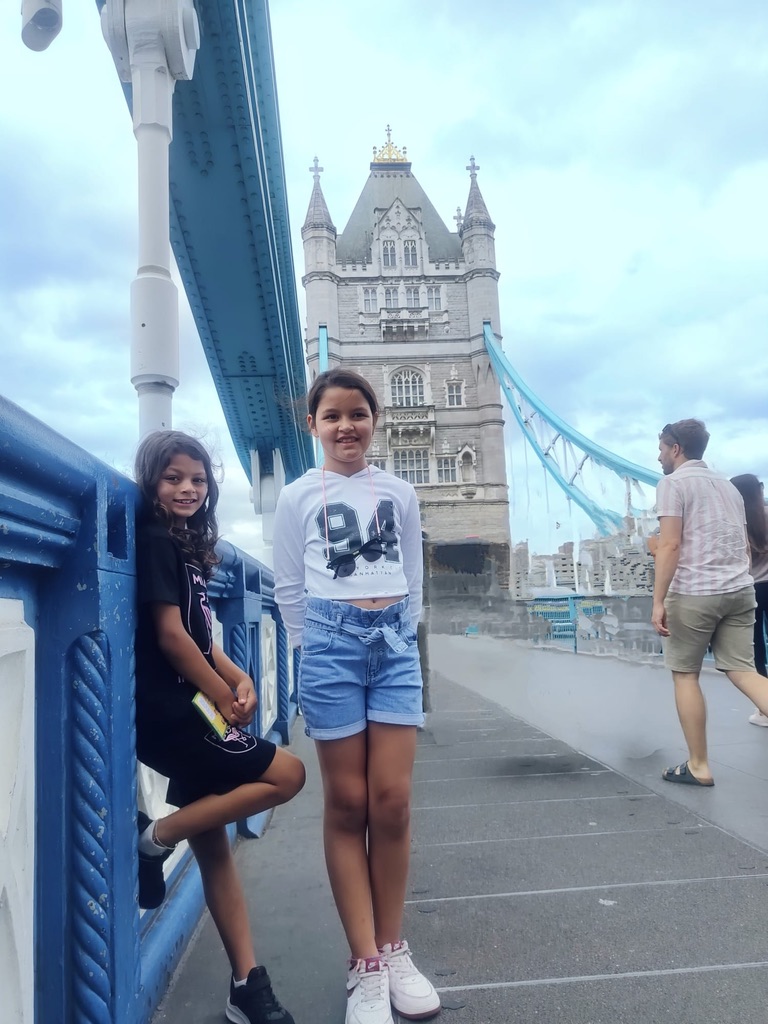
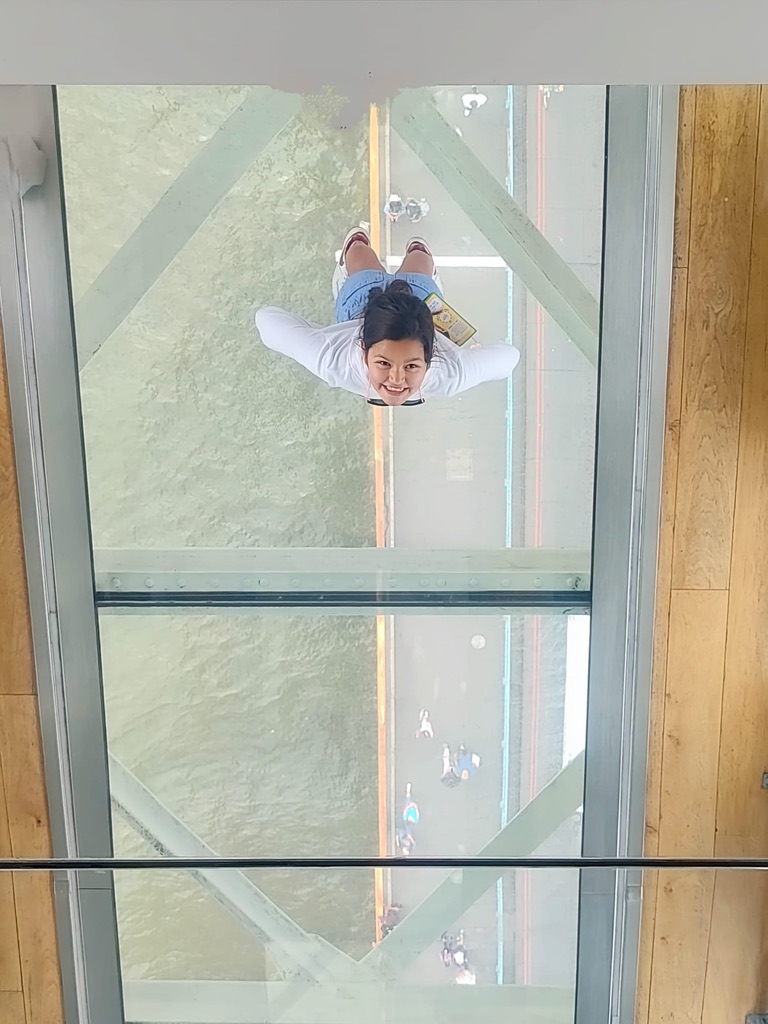
After eating at Mercato Metropolitano we walked to Tower Bridge and bought tickets to go inside.
The children were interested in seeing how the bridge works. We looked at the exhibitions and went up to the high-level walkways.
Through the glass floor, we could look straight down. Inside, we also saw how the bridge was built and how it is operated.
The girls were given a task to find cats. Along the way, they could have their Tower Bridge passports stamped.
Cost: €40
Stop 8 | St Paul’s Cathedral
Then we went to St. Paul’s Cathedral on Ludgate Hill. Its great dome was designed by Christopher Wren.
Inside, we looked at the decorations and artworks. We climbed the dome, visiting the Whispering Gallery and, higher up, the Golden Gallery. From the top, we looked out over London.
Winston Churchill’s funeral and the wedding of Charles and Diana took place in the cathedral.
After St. Paul’s, we called it a day. The children had walked 22 kilometres. On the way back, we had a quick look around the shopping centre in Stratford before returning to the hotel.
Sightseeing at St. Paul’s requires a ticket. Attending a service is free. See the visitor information for St. Paul’s ↗
Day 3 | Windsor
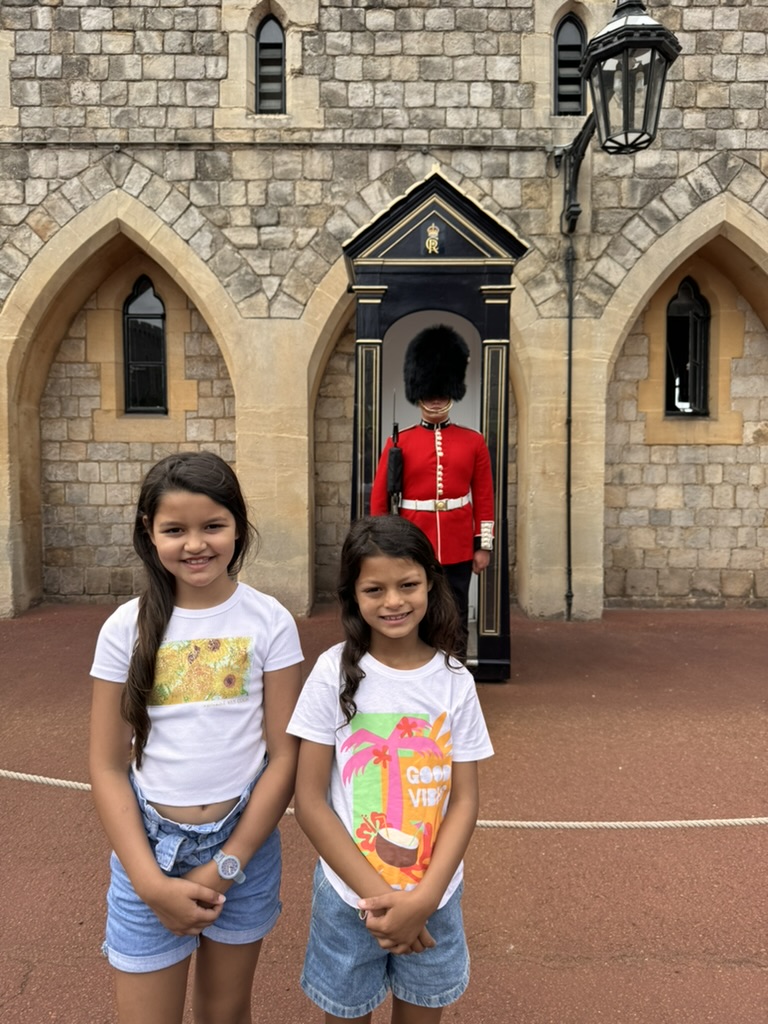
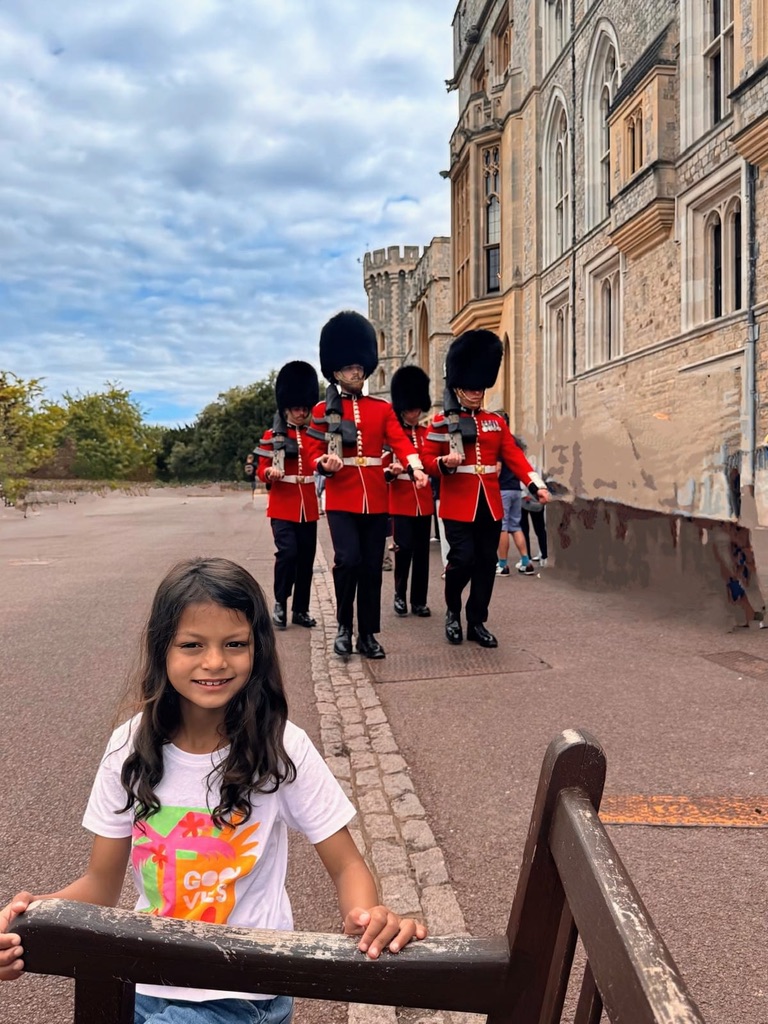
On the third day, we drove to Windsor after breakfast. We wanted to visit Windsor Castle before returning to Dover.
We visited the State Apartments and St George’s Chapel. Several members of the royal family are buried in the chapel, including Henry VIII.
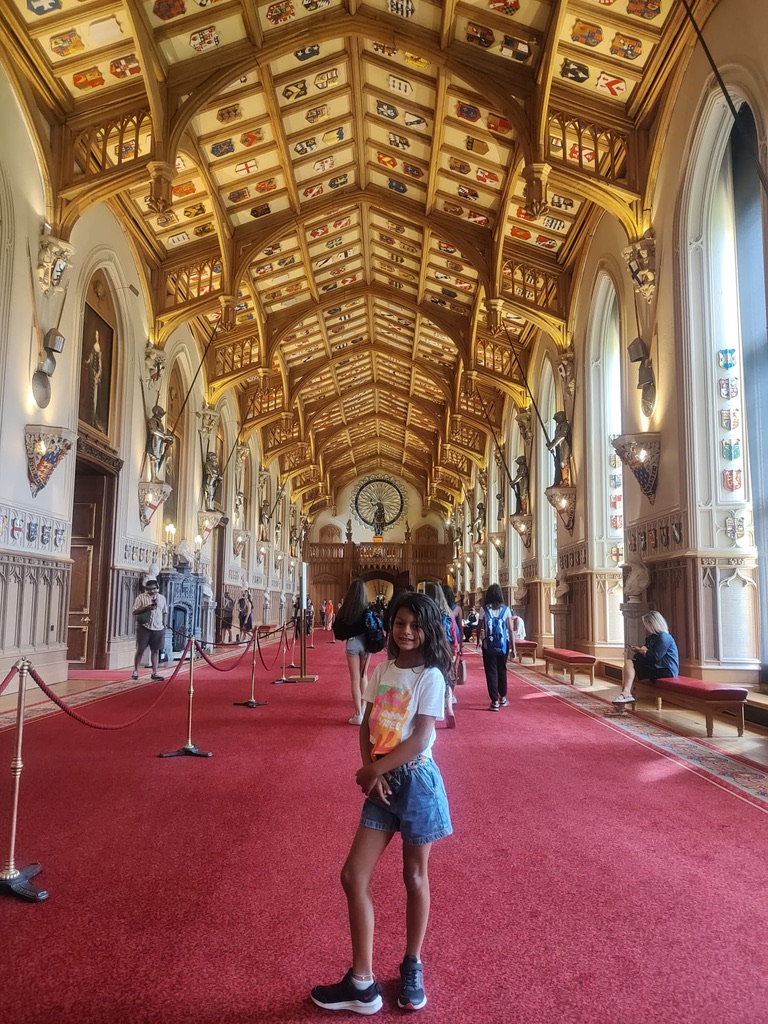
In St George’s Hall, we looked at the high ceiling and coats of arms. The children were impressed. We also visited St George’s Chapel. St George’s Hall ↗ · Our visit to Windsor Castle ↗
After the castle, we walked around Windsor’s streets and shops and had lunch before driving back to Dover for our 17.30 ferry.
Costs:
Ferry: €105
Hotel:€248
Windsor:€130
Tower Bridge:€40
Parking, day 1:€65
Parking, day 2:€19, event rate
Total Underground fares:€12
The costs listed for this trip came to €619 for four people: €51.58 per person per day. Food and drinks were extra.