
🇬🇵 Guadeloupe
Guadeloupe
From the Carbet Falls in the rainforest to the streets of Pointe-à-Pitre. Our photographs and stories from Guadeloupe.
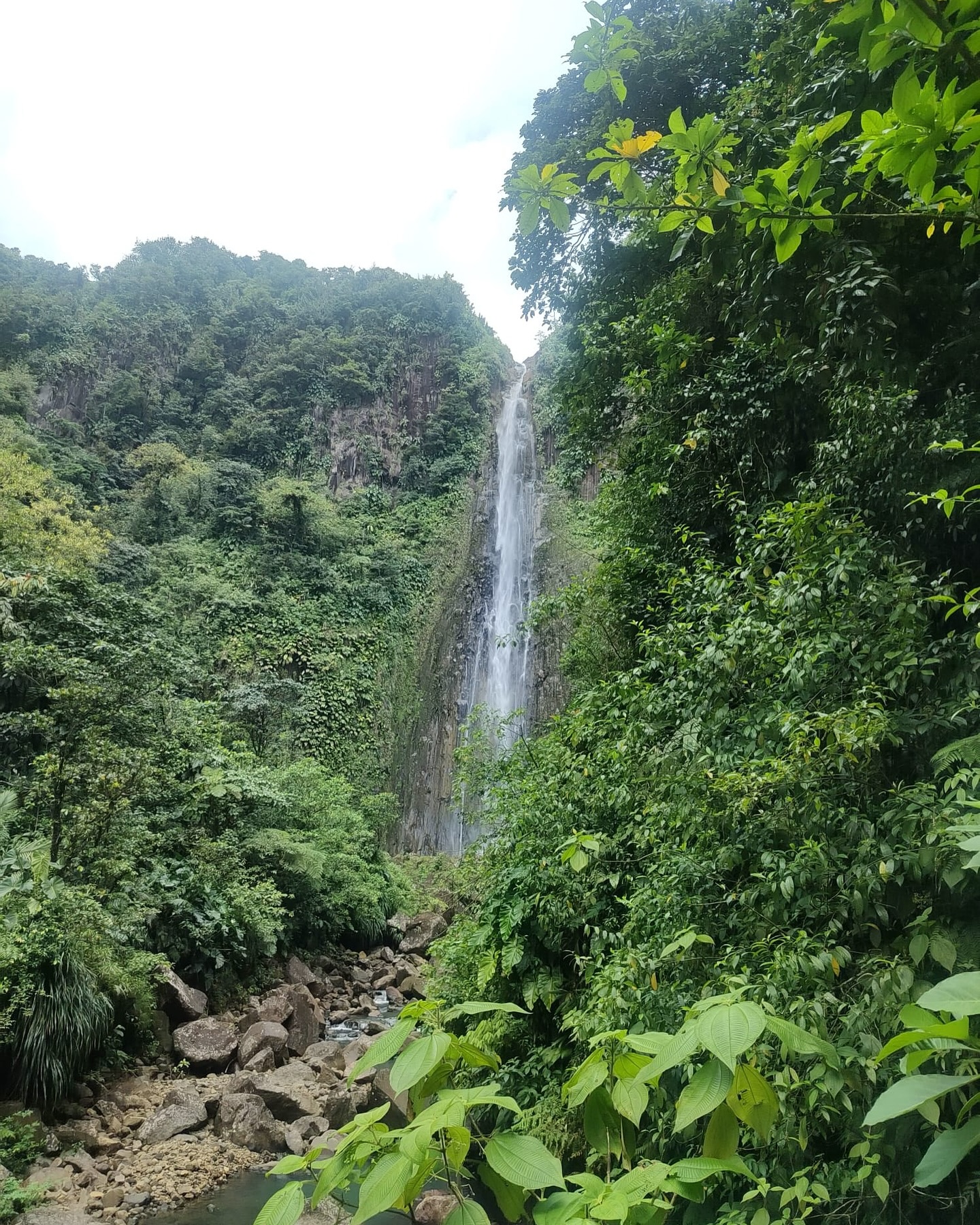
The Carbet Falls
At the Carbet Falls, we were surrounded by green. Through the trees, we could see water dropping down a tall rock face. The forest fills almost our entire photograph. Large boulders lie below the waterfall.
The falls are on Basse-Terre, in Guadeloupe National Park. The Grand Carbet River rises on the slopes of La Soufrière and drops over three major steps along its course. These are three separate waterfalls, reached by different walking routes.
The first and second falls are both more than a hundred metres high. The second is the best-known destination for a shorter walk; reaching the first involves a longer, more demanding hike. Check the national park’s routes and current access information before going. Wear shoes with grip, as rainforest paths can be slippery.
Walking through Pointe-à-Pitre
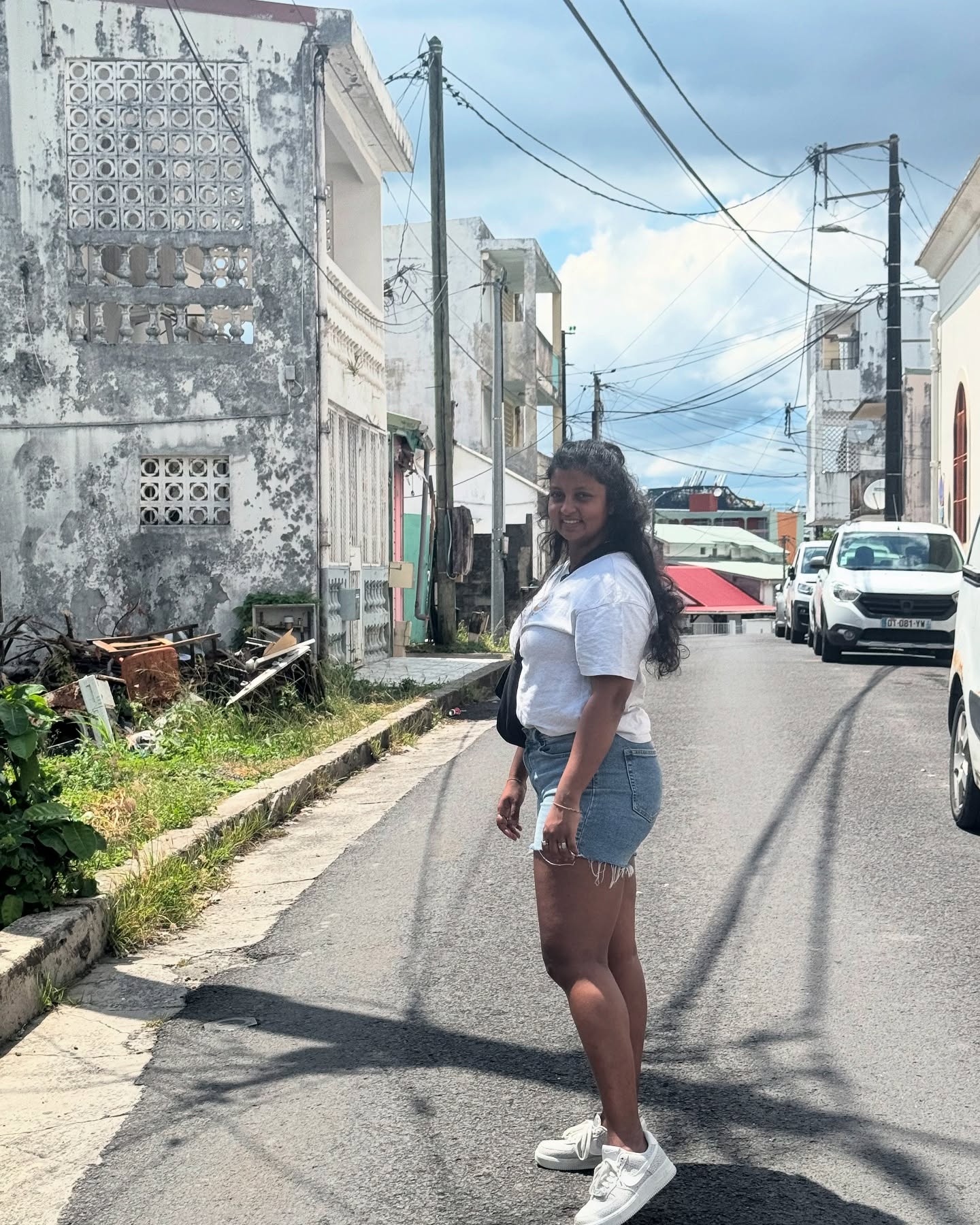
In Pointe-à-Pitre, we walked along streets lined with low houses, balconies and shutters. In the photograph, Shamila is standing in the street. Behind her, electricity cables hang above the road and cars are parked close to the buildings.
We took our time looking around. There are lovely old buildings, peeling walls and properties that could do with some maintenance, all alongside each other. Our walk also brought us to the statue of Vélo, the well-known Guadeloupean percussionist.
Pointe-à-Pitre lies near the narrow channel between Grande-Terre and Basse-Terre. It is a useful starting point for exploring Guadeloupe’s urban side. The islands’ official tourist board has more places and visitor information.
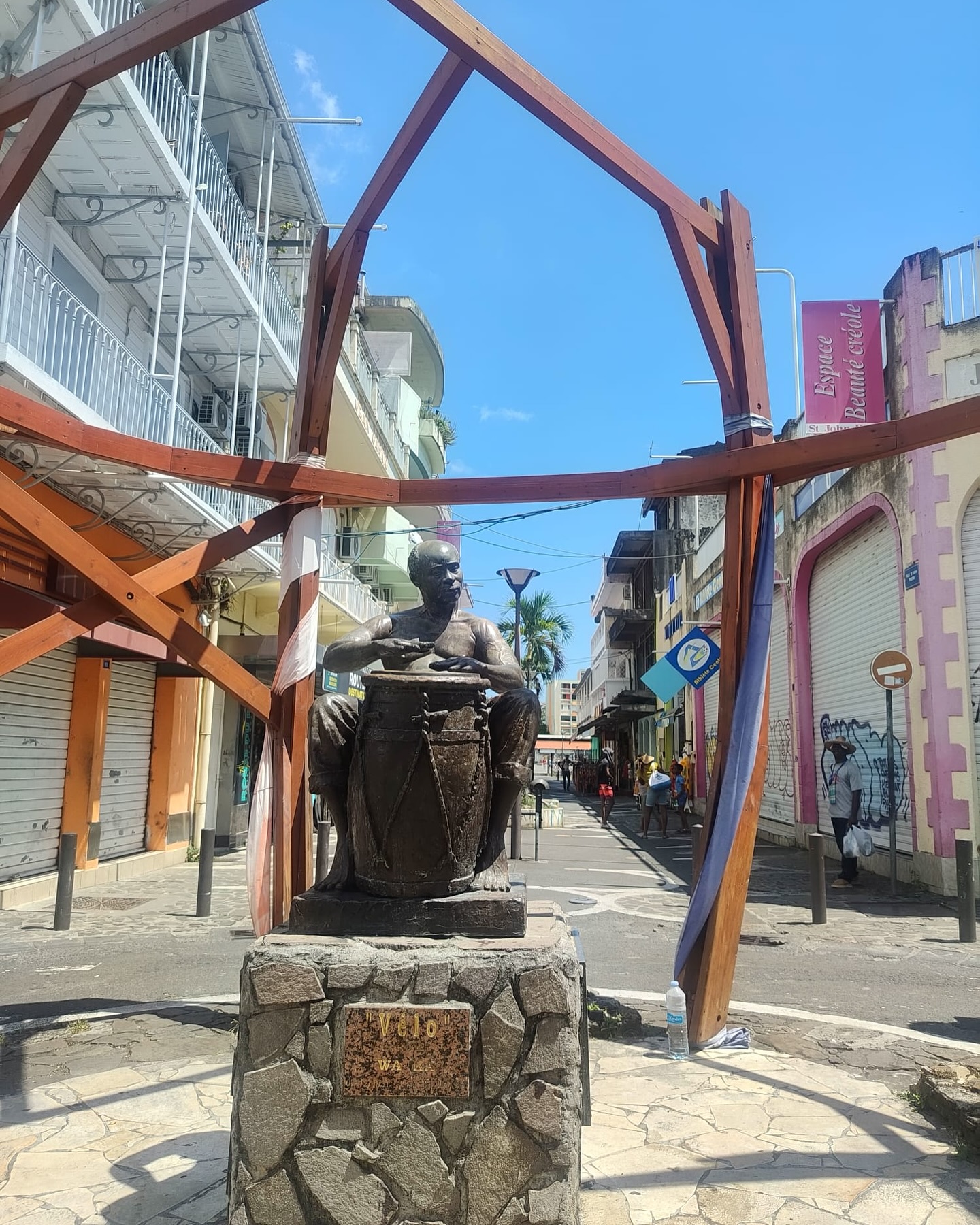
Vélo and his drum
There he was, with his drum between his knees. The bronze statue of Vélo stands in central Pointe-à-Pitre. We photographed him with the shopping street behind him and the wooden structure above his head.
Vélo’s real name was Marcel Lollia. He was an important player of the ka, the drum used in gwoka. This Guadeloupean tradition also includes singing and dancing. Gwoka was added to UNESCO’s list of intangible cultural heritage in 2014.
The statue was made by Jacky Poulier and unveiled in 2004. It is worth pausing here during a walk through the centre. The visitor page has more about Vélo and the location.
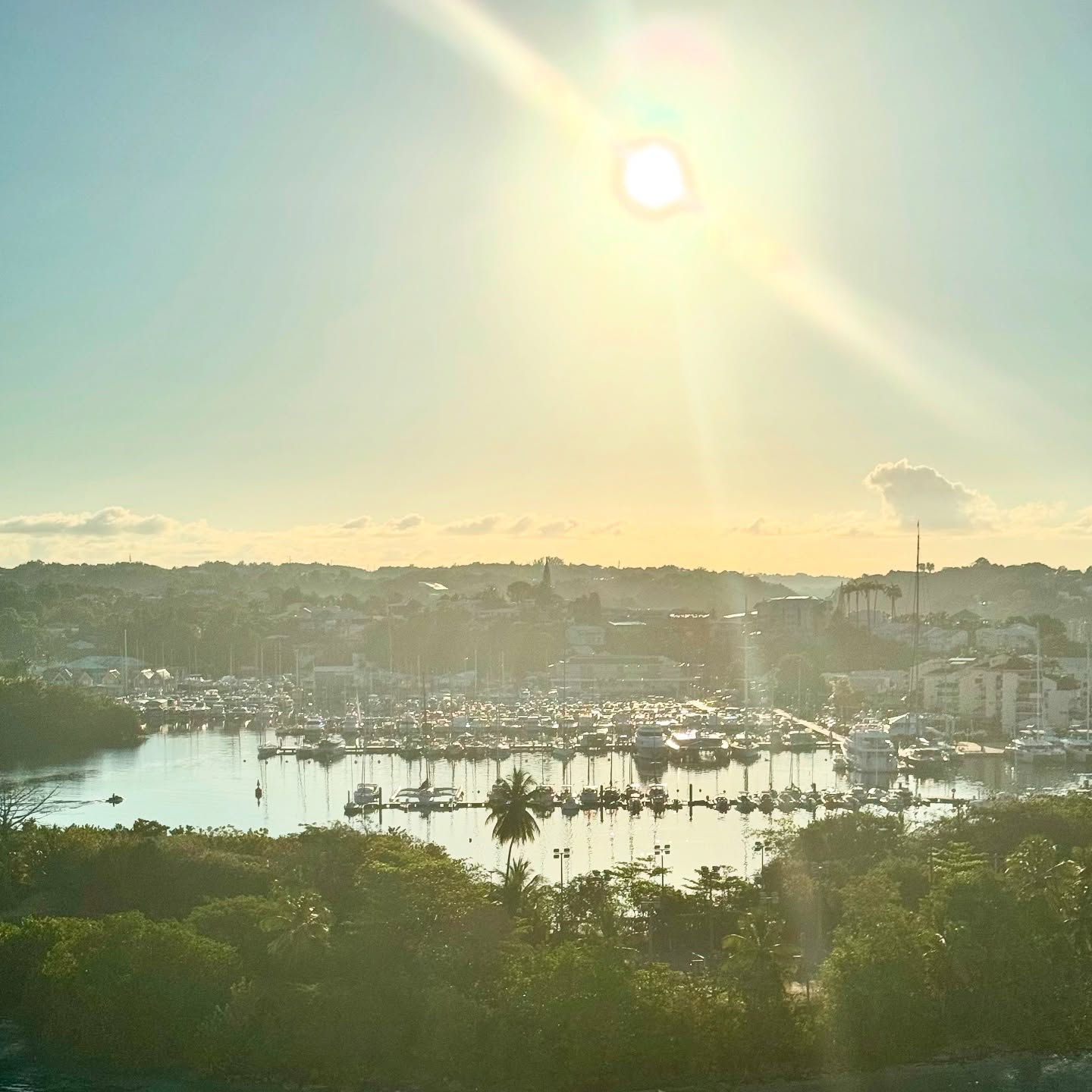
Guadeloupe in the sunshine
“Amazing Guadeloupe!” We did not need many more words for this photograph. The sun is above the water, boats are moored close together and palm trees line the shore.
Our places on the map
The pins show the places approximately, not our exact route or the photographer’s position.