
🇧🇪 Belgium
Belgium: Antwerp and Brussels
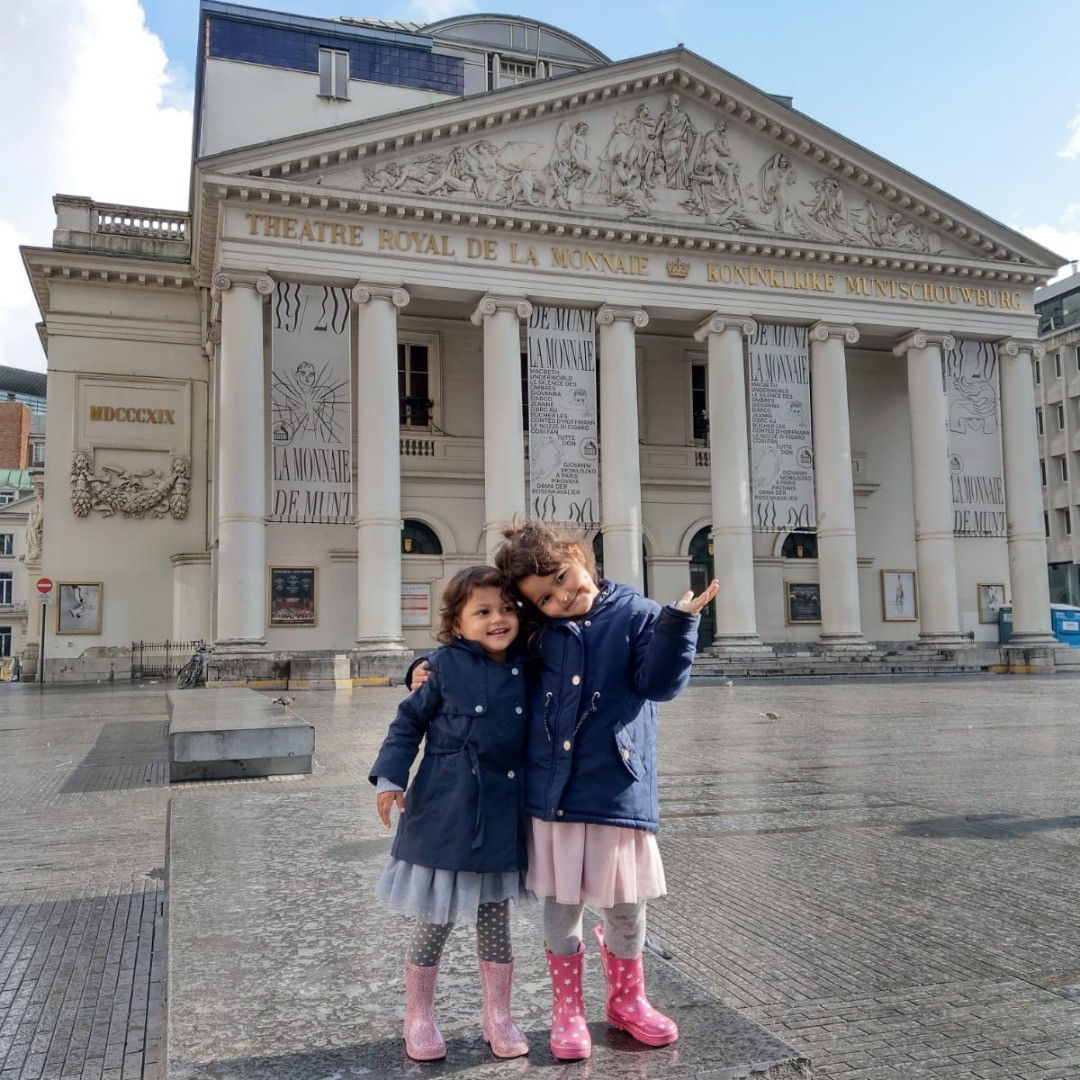
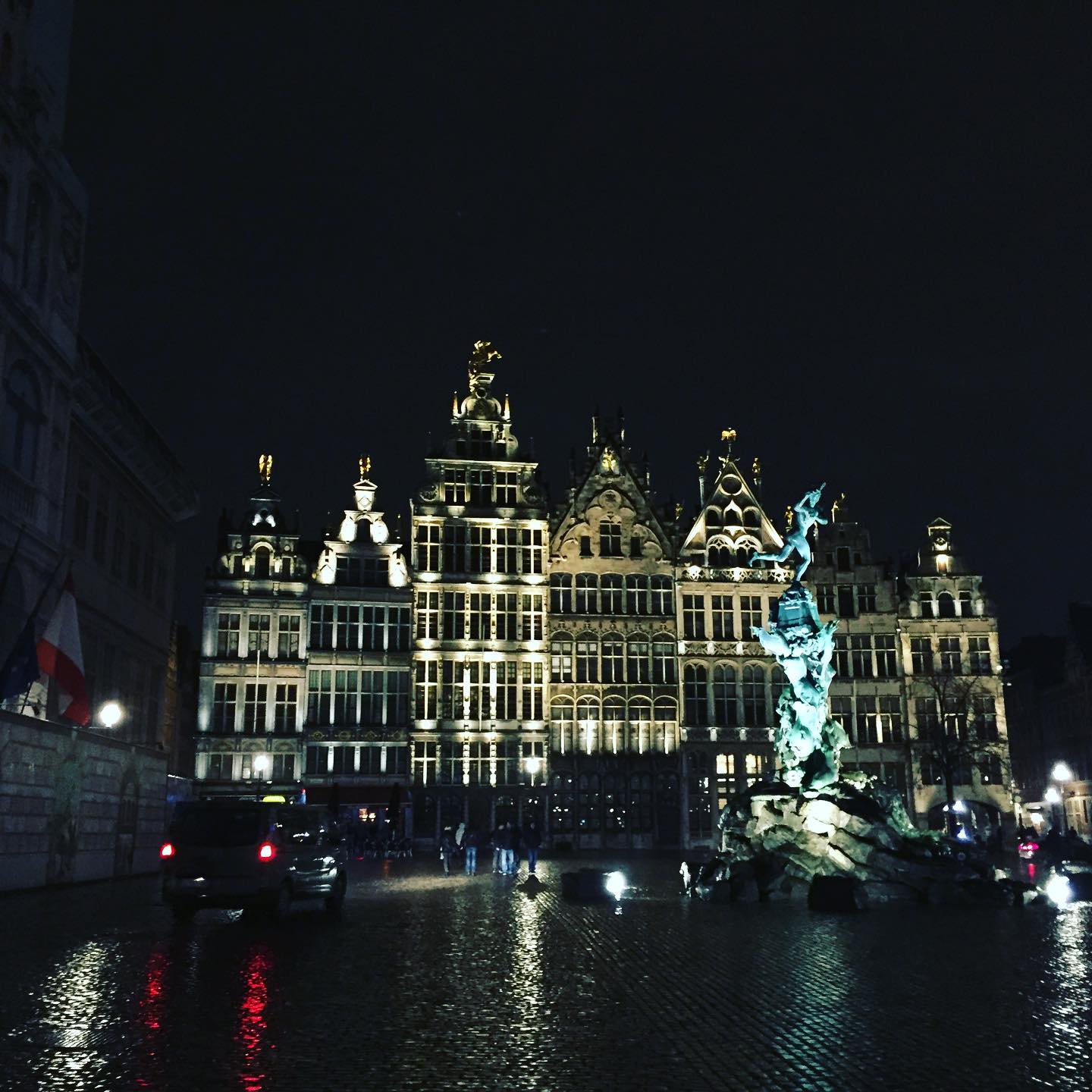
Antwerp’s Grote Markt after dark and the girls outside La Monnaie in Brussels. Two Belgian cities from our travels.
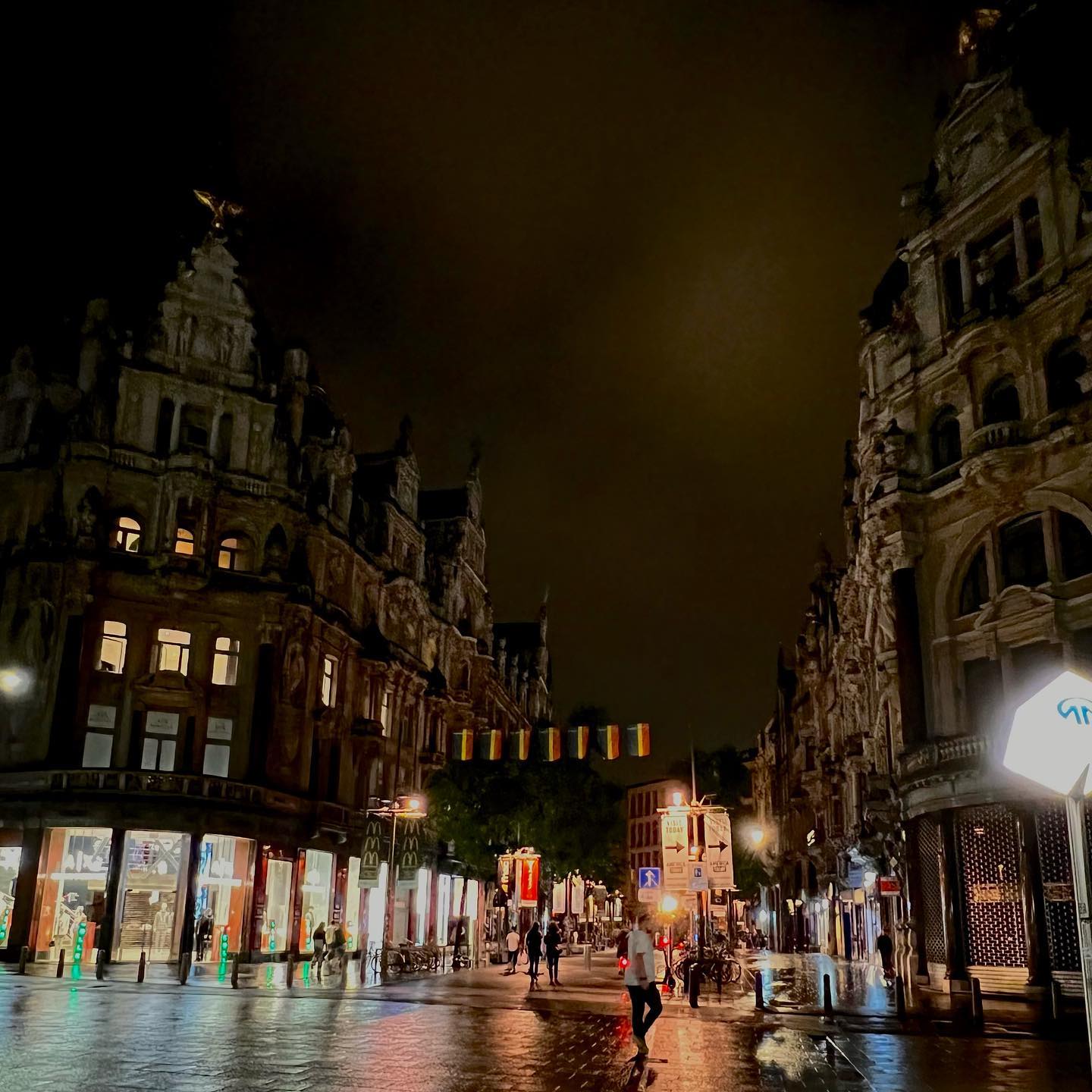
Antwerp after dark
We have seen Antwerp after dark too. On the Grote Markt, the façades were illuminated and the Brabo Fountain stood in the middle of the square. The light reflected off the wet cobblestones. Our photographs show the tall guild houses and the figure on top of the fountain.
The Grote Markt lies in Antwerp’s historic centre. The town hall and guild houses stand around it. Those houses once belonged to the different trades and merchant organisations. Look at the statues on the façades too: some refer to a guild’s patron saint.
This is a useful starting point for a walk around the old centre. Antwerp’s official visitor page explains more about the square and the surrounding buildings.
Brabo and the severed hand
There is a rather gruesome story behind the fountain. According to the legend, the giant Antigoon lived beside the Scheldt. He demanded a toll from passing boatmen. Anyone who refused to pay lost a hand, which the giant then threw into the river.
The young hero Silvius Brabo defeated Antigoon. He cut off the giant’s hand and threw it into the Scheldt himself. That is the moment depicted by the statue on the Grote Markt.
The Dutch words “hand werpen”, meaning “throwing a hand”, supposedly gave Antwerp its name. It is a good city story, but not a proven explanation of the name. The fountain by sculptor Jef Lambeaux keeps the legend alive.
The girls outside La Monnaie
In Brussels, we took a photograph of the girls outside La Monnaie. Blue coats, pink boots and that huge columned façade behind them. They were still little. In the photograph, they are smiling and leaning against each other.
La Monnaie is the opera house in central Brussels. Its Dutch name is De Munt. Both names refer to the mint that once stood on this site. The present theatre building opened in 1819.
The building also played a part in Belgian history. A performance of The Mute of Portici in 1830 became associated with the beginning of the Belgian Revolution. If you would like to see the auditorium or attend a performance, La Monnaie’s website lists its programme and guided tours.
The history of La Monnaie ↗La Monnaie programme and visits ↗
Our places on the map
The pins show the places approximately, not our exact route or the photographer’s position.